Best 14-Inch Chop Saw Blades for Metal: Top Picks and Buyer’s Guide
Choosing the right 14-inch chop saw blade for metal can reduce heat, minimize burrs, and extend blade life. The blades below are designed for cutting mild steel and other ferrous metals with carbide-tipped edges, low heat, and smooth finishes. Whether you’re cutting angle iron, pipe, studs, or tubing, these selections emphasize durability, compatibility with common 14-inch saws, and efficient cutting performance. The list prioritizes blades that deliver clean cuts, fewer sparks, and longer service life for everyday metalworking tasks.
| Product | Brand | Teeth | Kerf | Max RPM | |
|---|---|---|---|---|---|
| Evolution 14BLADEST | EVOLUTION | 66 | Not listed | Not listed | Mild steel blade for chop saws; no heat, no burrs, virtually no sparks |
| FOXBC 72-Tooth 14 Inch | FOXBC | 72 | 0.095″ | 1800 | Fine finish; compatible with Evolution 14″ saws; designed for studs, tubing, and metal |
| DEWALT 14″ Chop Saw Blade | DEWALT | Not listed | Not listed | Not listed | Aluminum oxide grains for long life and fast cutting |
| XMNBL 14-Inch Blade | Xmnbl | 66 | 0.094″ | 1,600 | Carbide-tipped; compatible with Evolution models and other 14″ saws |
| FOXBC 66-Tooth 14-Inch Blade | FOXBC | 66 | 0.095″ | 1800 | Fine finish; broad compatibility with Evolution and other 14″ saws |
Evolution Power Tools 14BLADEST Blade For Mild Steel
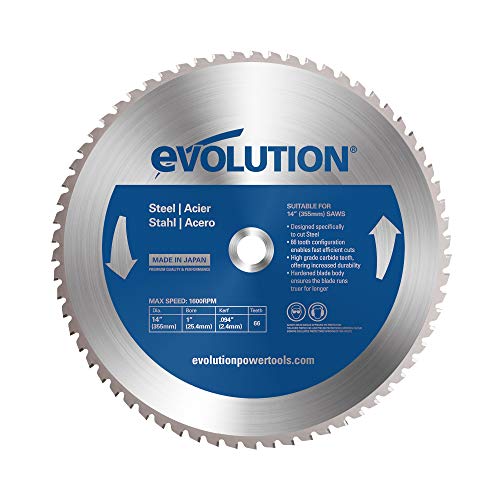
Evolution’s 14BLADEST blade is a 14-inch carbide-tipped TCT blade engineered for cutting mild steel and other ferrous materials. With 66 teeth, it’s designed to minimize heat buildup, burrs, and sparks during cold-metal cutting. The blade’s construction uses high-quality Japanese carbide and is heat-treated for added durability, enabling cleaner cuts and safer handling straight from the cut. It is explicitly recommended for mild steel and ferrous metals, and it should not be used on galvanized, hardened, or high-carbon steels. The design focuses on steady, controlled feed to preserve the edge and reduce heat transfer to the workpiece.
Users benefit from a reliable finish with minimal scorching, allowing quick post-cut handling. The blade’s geometry promotes smooth chip evacuation, which helps reduce the likelihood of burrs and binding in thin-wence applications. For metal fabrication and shop environments where mild steel is a primary material, this blade provides a straightforward replacement option that aligns with standard 14-inch chop saws. Always verify compatibility with your specific saw model and follow safe-cutting practices to maximize blade life and minimize sparking.
FOXBC 14 Inch Metal Cutting Saw Blade 72 Teeth

The FOXBC 72-Tooth blade is designed to deliver fine finishes with smooth chops on metal, featuring a 0.095-inch kerf and a maximum speed rating of 1800 RPM. Its 72 teeth produce a refined cut on studs, tubing, steel plates, and bars, making it well-suited for precise work in wall framing and metal fabrication. The blade’s 1-inch arbor ensures compatibility with many 14-inch chop saw models, including Evolution EvoSaws. Finnish or high-precision cuts are aided by the blade’s TCG (tooth geometry) design, which promotes efficient cutting and reduced burr formation when working with mild steel and similar ferrous materials. When paired with Evolution 14″ saws or compatible machines, it can deliver consistent results across a range of ferrous metals.
Care should be taken to feed at a steady rate and avoid overheating small sections. The 72-tooth configuration favors cleaner finishes over aggressive fast cuts on thicker sections, so it’s ideal for applications where surface quality matters. This blade’s design supports extended blade life under routine shop use, particularly in environments where multiple metal profiles are cut daily. For projects requiring precision and a smooth finish, this blade is a strong option among 14-inch carbide-tipped alternatives.
DEWALT 14-Inch Chop Saw Blade

The DEWALT 14-Inch Chop Saw Blade is built for long life and aggressive metal cutting. It features a high-performance aluminum oxide grain that contributes to a longer blade life and faster cutting action, supporting efficient workflow in metal fabrication. A high grain concentration optimizes material removal and reduces the load on the blade, contributing to smoother operation and less vibration during cuts. The blade’s proprietary material mix is designed to balance wear resistance with durability, making it a practical choice for cutting mild steel, rebar, angle iron, and similar ferrous components where consistent performance matters.
While this blade excels in heavy cutting, it’s best used with saws designed for steel cutting and within the manufacturer’s RPM recommendations. Users can expect dependable service life and robust performance in daily shop tasks. As with any metal-cutting blade, proper clamping, alignment, and feed rates are essential to achieving clean cuts and minimizing heat generation. This blade provides a reliable option for professionals seeking a trusted DEWALT solution for 14-inch metal chopping tasks.
14 Inch Metal Cutting Blade, Replacement For Evolution

The Xmnbl 14 Inch Metal Cutting Blade is designed as a replacement for Evolution’s 14-inch chop saw blades, featuring a 66-tooth carbide-tipped design with a kerf of 0.094 inches and a maximum speed of 1,600 RPM. This blade aims to cover a wide range of applications, including Evolution models S14CPS, S15CPS, S355MCS, S355CPS, and S380CPS. It’s also promoted as compatible with other 14-inch low RPM saws from brands like Dewalt, Milwaukee, Makita, and Ridgid, among others. The blade leverages a high-density titanium carbide ceramic alloy to improve wear resistance and cutting stability, enabling precise cuts in mild steel plates, angle iron, pipes, and various ferrous metals.
Users should ensure compatibility with their specific saw model and verify RPM limits before cutting. The blade’s wide range of fitment can simplify blade selection in mixed-tool environments, potentially reducing the number of different blades needed for various cutting tasks. As with all metal-cutting blades, consistent speed control and appropriate feed rates help maximize blade life and cut quality while minimizing burrs and heat buildup.
FOXBC 14-Inch 66-Tooth Blade For Evolution

The FOXBC 66-Tooth blade offers a balanced option for 14-inch metal cutting with a 66-tooth design and 0.095-inch kerf, supporting precise chopping on mild steel and ferrous metals. With a maximum RPM of 1800 and a 1-inch arbor, this blade is designed to fit Evolution Evosaw 180HD and Evosaw 185-series machines, as well as other 14-inch low-RPM saws. The 66-tooth configuration provides a smoother finish than a lower tooth count while maintaining efficient material removal. This blade is well-suited for steel studs, angle irons, black pipes, and other common metal profiles encountered in construction and fabrication projects.
Users should consider their typical cut type when selecting a tooth count: 66 teeth generally offer a good combination of speed and finish for moderate-precision cuts. The blade’s carbide-tipped construction contributes to wear resistance and longer life under typical shop conditions. Always observe saw speed recommendations and proper clamping to maximize performance and minimize heat and sparking during cutting tasks.
Buying Guide
When selecting a 14-inch blade for metal cutting, consider blade material, tooth count, kerf, RPM compatibility, and saw model compatibility. Carbide-tipped blades generally offer longer life and better wear resistance for mild steel and other ferrous metals. Higher tooth counts deliver smoother finishes but may cut more slowly; lower tooth counts remove metal quickly but can produce burrs. Kerf width affects material waste and heat buildup, while RPM compatibility ensures safe operation with your saw. Finally, compatibility with Evolution and other 14-inch saws expands your options in mixed-tool environments.
Blade Material And Tooth Geometry
- Carbide-tipped (TCT) blades provide long life and better heat resistance for metal cutting.
- Cermet and ceramic alloys offer high wear resistance, but may come at a higher cost or require specific speeds.
- Triple-chip (TCG) grind can deliver burr-free cuts with modest heat, suitable for mild steel.
Tooth Count, Kerf, And Finishing
- Higher tooth counts (e.g., 72) yield finer finishes but can be slower; lower tooth counts (e.g., 66) balance speed and finish.
- Kerf width (0.095″–0.094″) influences material waste and cut quality; thinner kerfs require careful control to prevent deflection on thick pieces.
- Finish quality matters for visible edges or precision assemblies; select tooth geometry based on desired surface quality.
RPM Compatibility And Saw Models
- Match blade RPM ratings to your saw’s maximum operating speed. Running a blade above its rated RPM can cause premature wear or failure.
- Check compatibility with common 14″ saws (Evolution Evosaw, DeWalt, Milwaukee, Makita, Ridgid, etc.).
- Arbor size typically is 1 inch for most 14″ blades; ensure your machine supports the blade’s arbor and arbors nuts are compatible.
Practical Considerations And Safety
- Low heat and minimal sparking blades reduce handling time after cutting and support safer operation.
- Use appropriate guards, clamps, and PPE; avoid forcing the blade and maintain steady feed rates.
- Consider blade availability and compatibility with future saws if you plan upgrades or changes in tooling.