Best Two Stage Air Compressors for Home and Shop
Two-stage air compressors deliver higher CFM at lower RPM, producing more air volume with less heat. They’re ideal for continuous-running tools and finishing jobs where steady performance matters. This guide features five top Amazon picks that embody reliability, durability, and efficient design in two-stage configurations, plus a high-capacity reference for comparison. Use these options to compare pump design, tank size, lubrication, and noise levels to find a model that fits your workshop, garage, or professional shop needs.
| Model | Brand | Stage Type | Key Trait |
|---|---|---|---|
| NorthStar Pump — 2-Stage | NorthStar | Two-Stage | High cooling and long service life |
| Ingersoll Rand 2-Stage | Ingersoll Rand | Two-Stage | Continuous duty, powerful performance |
| EMAX ES07V080V1 | EMAX | Two-Stage | Whisper quiet system, solid airflow |
| EMAX EHI05V080Y1 | EMAX | Two-Stage | High airflow with durable 5 HP motor |
| Campbell Hausfeld 80 Gal | Campbell Hausfeld | Single Stage | Large-capacity tank, space-saving vertical design |
NorthStar Two-Stage Air Compressor Pump

The NorthStar two-stage pump is built with a full cast iron design and a V-style cylinder layout to optimize cooling during high-demand runs. It features FC35 grade cast iron pump heads for durability and reliability under heavy use. The pump delivers about 24.4 CFM at 90 PSI, with a maximum operating pressure around 175 PSI, making it well-suited for tools that require consistent airflow over extended periods. As a two-stage setup, it reduces heat buildup compared with single-stage counterparts, improving service life in demanding shop environments.
Ideal for upgrades or upgrades in larger receiver systems, this pump emphasizes longevity and steady performance. Its robust construction supports long hours of operation, and the design emphasizes straightforward maintenance, cast-iron components, and a proven two-stage flow path. For users upgrading a receiver or assembling a high-capacity air system, this NorthStar option provides a reliable core with strong cooling and efficient air delivery.
Ingersoll Rand Two-Stage Air Compressor

Ingersoll Rand’s two-stage model emphasizes long life and heavy-duty performance. Its cast iron construction supports durability and a long pump life, with an emphasis on continuous-duty operation. Boasting a 7.5 HP two-stage setup, this unit can push air up to 175 PSI, and its 80-gallon ASME receiver provides ample stored air for demanding workshops. The design uses individually cast cylinders and a one-piece connecting rod, simplifying maintenance and service. This combination of rugged construction and high-capacity airflow makes it a solid choice for automotive shops or fabrication environments requiring steady air supply.
The pump and motor arrangement are designed for reliability under extended workloads, reducing the risk of overheating during prolonged use. For users prioritizing low downtime and straightforward servicing, the Ingersoll Rand system offers accessible maintenance features and robust performance, with a focus on providing consistent pressure and airflow across a wide range of tools and applications.
EMAX ES07V080V1 2-Stage 80 Gal
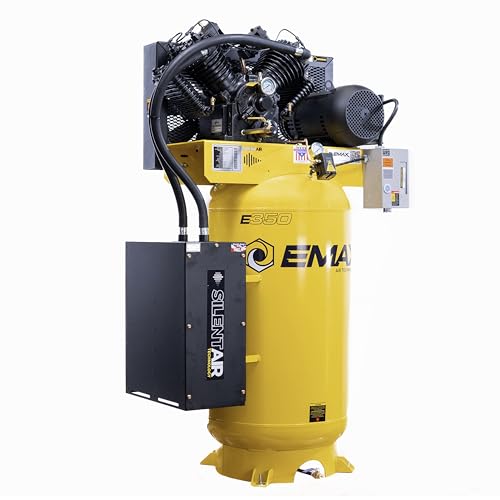
The EMAX ES07V080V1 pairs a 7.5 HP, 2-stage design with an 80-gallon receiver to deliver strong, sustained airflow for demanding industrial tasks. It produces up to 31 CFM, ensuring ample air supply for multiple tools operating concurrently. A standout feature is the Whisper Quiet System, which reduces noise by up to 50%, enhancing worker comfort in smaller shops or shared spaces. The unit also uses pressure lubrication to ensure precise oil delivery to critical pump components, which helps extend pump life and reduce maintenance intervals in busy shop settings.
With a focus on reliable performance and lower workplace noise, this model suits users seeking a balance of power and comfort. The two-stage setup helps maintain higher CFM at pressure while keeping heat levels manageable, which can improve overall tool performance over long sessions or while running air-hungry equipment such as sanders, impact wachs, or spray systems.
EMAX 80 Gal 5HP 2-Stage Compressor
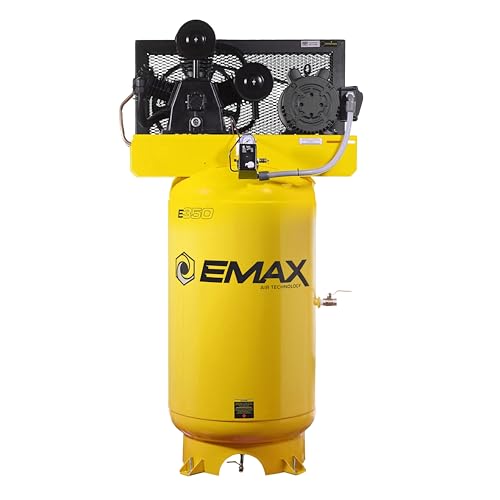
This EMAX model delivers strong airflow with a 5 HP industrial-grade motor and a 2-stage compression design. It provides about 17 CFM at 100 PSI, making it suitable for heavy-duty tools and continuous use within a home shop or light industrial environment. A manual tank drain allows for easy maintenance, and the splash-lubricated pump is designed for longevity, supporting as many as 50,000 hours of service under proper conditions. The unit is built to withstand demanding applications while maintaining reliable performance across a broad range of pressures and flows.
Key maintenance features include a straightforward drain and a robust lubrication approach, which helps minimize downtime. The combination of 2-stage design and durable construction makes this model a strong option for workshops that regularly operate multiple air tools or require steady pressure for painting, sanding, and hammering tasks over long sessions.
Campbell Hausfeld 80 Gal Vertical
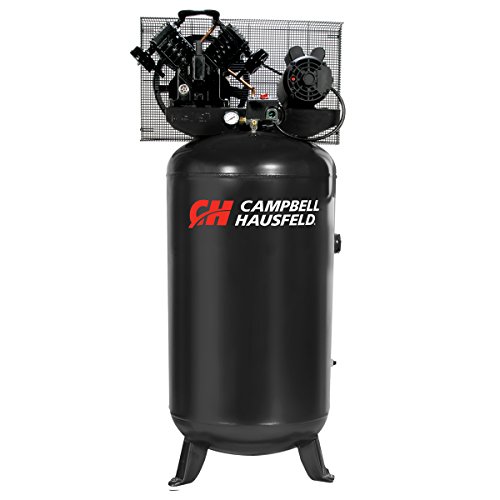
The Campbell Hausfeld 80-gallon vertical compressor emphasizes capacity and space-efficient design. This unit operates as a single-stage model with a vertical tank that saves floor space in tighter shops. A 5 HP electric motor drives the pump, delivering up to 140 PSI. The unit’s 80-gallon receiver provides ample air storage for medium-duty tasks, and the two-cylinder cast iron pump contributes durability and reliable performance in a straightforward, easy-to-maintain package. If your workflow prioritizes a large tank and simple operation, this model remains a solid reference point within a broader two-stage-focused comparison.
While not a two-stage design, the Campbell Hausfeld model offers a proven platform for high-volume air delivery without the complexity of multi-stage pumping. It serves well as a contrast to high-end two-stage systems, illustrating how tank size and motor power influence performance in real-world shop scenarios.
Buying Guide
Key decision factors when shopping for a two-stage air compressor include: intended use, required CFM at a given pressure, tank size, and whether you need oil-lubricated or oil-free operation. Two-stage units typically excel in high-demand environments by delivering higher CFM at lower RPM and maintaining steadier air pressure over longer periods. This helps keep tools running smoothly during finishing or sanding tasks and reduces cycling frequency on your receiver.
Consider the following when evaluating options:
- CFM at 90 PSI: The practical airflow you’ll experience. A higher CFM at 90 PSI means less time waiting for tools to recover pressure.
- Tank size and duty cycle: Larger tanks reduce cycling and support longer tool use between fills. A typical 80-gallon receiver is common for professional-level work; smaller shops can often manage with 60-80 gallons depending on usage.
- Max PSI: Ensure the unit can reach the pressure needed for your tools. Many workshop tools require 125-175 PSI; confirm compatibility with your equipment.
- Lubrication: Oil-lubricated pumps typically offer longer life and greater efficiency under heavy loads but require regular oil maintenance. Oil-free models tend to run cleaner with less mess but may wear sooner under extreme use.
- Maintenance and serviceability: Look for models with accessible cylinder assemblies and serviceable pumps. Easy access to drain valves and filters reduces downtime.
- Noise and footprint: Whisper-quiet configurations are advantageous in shared spaces. Pump and compressor dimensions influence where you can place the system in your shop.
- Durability and warranty: Cast-iron components and quality pump heads extend life. Check warranty terms for motor, pump, and overall assembly.
- Cost vs. value: Two-stage systems typically carry higher upfront costs but offer better efficiency and longer life for continuous-duty workloads. Compare long-term maintenance and energy use to determine overall value.
In short, choose a two-stage model when your tasks demand sustained airflow and higher CFM without excessive heat buildup. If your workload is lighter or space is a constraint, a high-capacity single-stage unit with a vertical tank can still meet many needs while offering straightforward maintenance and a lower initial cost. Always align your choice with tool requirements, space, and expected run times to optimize performance and longevity.