Best 3/4 Bullnose Router Bit for Furniture Edges and Beading Projects
Answering the top buyer question: a 3/4-inch bullnose router bit is ideal for adding rounded, decorative edges to shelves, table tops, and other furniture surfaces. This guide compares five popular options to help you pick the right bit based on shank size, edge profile, and durability. It targets woodworkers seeking a clean, durable bullnose edge, whether you’re crafting traditional furniture or upgrading frames and tops. The table below summarizes the five recommended products to consider first.
| Product | Shank | Bead Radius / Edge | Best For |
|---|---|---|---|
| YONICO Bullnose 13117 | 1/4″ | 3/4″ bead | Fine furniture edges, handrails |
| YONICO Bullnose Beading 13195 | 1/2″ | 3/4″ bead | Shelves and tabletops with medium beading |
| YONICO Bullnose Beading 13195q | 1/4″ | 3/4″ bead | Lightweight setups and smaller tools |
| YONICO Bullnose 13117q | 1/4″ | 1″ bullnose | Thicker edge profiles with guide bearing |
| Freud 82-116 | 1/2″ | 3/8″ radius half round | Stair treads and varied half-round moldings |
YONICO Bullnose Router Bits 3/4-Inch Bead

Best for fine furniture edges, the 13117 features a 3/4-inch bead and a 1/2-inch shank. The premium C3 micro-grain tungsten carbide blades provide a sharper, longer-lasting edge, suited for edge detailing on shelves, tabletops, and similar surfaces. It is compatible with both table-mounted and handheld routers, making it versatile for stationary work and on-site projects. Consider this if you regularly craft classic edge profiles and value durability. A potential limitation is a smaller shank size, which may require compatible collets or adapters for certain machines.
YONICO Bullnose Beading Router Bit 13195

This 3/4-inch bead bullnose bit uses a 1/2-inch shank and two-flute carbide cutters for clean, consistent cuts. The edge is enhanced by premium C3 micro-grain tungsten carbide blades. Best for adding a bevel-like bead on shelves and table edges, it offers strong durability for repeated use. Choose this if you want a robust beading profile with a moderately heavy edge. Limitation: the 1/2″ shank may be less suitable for very lightweight routers unless you have the proper collet setup.
YONICO Bullnose Beading Router Bit 13195q

This 3/4-inch bullnose bead with a 1/4-inch shank is designed for lighter-duty setups while still delivering a crisp edge. It uses two-flute carbide cutters and premium C3 blades. Best for hobbyist projects and smaller routers where portability matters. It’s a practical pick if you need a compact tool with strong edge performance. A caveat is that the 1/4″ shank may limit usage on larger, heavier-duty tasks where more rigidity and routing depth are needed.
YONICO Bullnose 13117q 3/4-Inch Bead

This option creates a 1-inch bullnose with a 1/4-inch shank and includes a guide bearing for precise fence depth setup. It’s ideal when you need a consistent, repeatable edge along longer cuts. Best for projects requiring strict control over depth, such as cabinet doors or furniture edges with an extended run. Caution: the 1-inch bullnose profile may require careful feed rate to prevent tear-out on very hard woods.
Freud 82-116: 3/8″ Radius Half Round
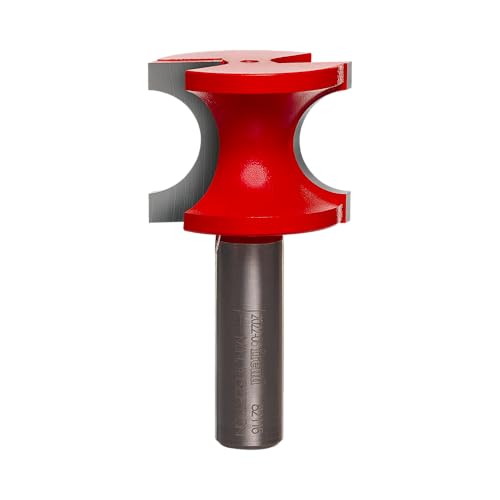
Freud’s 82-116 provides a 3/8-inch radius half-round profile with a 1/2-inch shank. It’s versatile for stair treads and various half-round moldings, capable of handling hardwoods, softwoods, plywood, and composites. Best for broader edge profiles that require a more pronounced curvature. Choose this if you need a classic half-round look with solid carbide performance. Limitation: thicker radius may reduce fine detailing on delicate edges compared to smaller bead routings.
Buying Guide: Key Considerations For 3/4 Bullnose Router Bits
- Shank size and machine compatibility: A larger shank (1/2″) generally offers more rigidity for precise cuts, while 1/4″ and 1/4″-shank options are lighter and better for smaller routers.
- Edge profile and depth: Decide between a 3/4″ bead, 1″ bullnose, or half-round edges based on the furniture style and usability. A guide bearing helps with depth consistency.
- Material and blade quality: Premium micro-grain carbide blades provide sharper edges and longer life. Two-flute designs can offer smooth cuts on softwoods and man-made panels.
- Router type and usage: Table-mounted routers excel for repeatable edge profiles on larger panels; handheld routers offer flexibility for on-site work.
- Wood type and tear-out risk: Hardwoods may require slower feed rates or multiple passes. Bead and bullnose cuts generally produce clean edges with sharp bits; poor technique can cause tear-out.
Frequently Asked Questions
- What is a bullnose router bit used for? A bullnose router bit creates rounded or curved edges, improving safety and aesthetics on shelves, tabletops, and trim.
- Which shank size should I choose? Choose 1/2″ shank for rigidity on larger projects and 1/4″ shank for lighter tasks or compact routers.
- Can I use these bits on handheld routers? Yes, most 3/4″ bullnose bits are compatible with handheld and table-mounted routers, depending on shank size.
- Is a guide bearing necessary? A guide bearing helps maintain consistent depth and alignment, especially for long runs or fence setups.
- Do I need special precautions for hard woods? Yes. Use appropriate feed rates, apply multiple light passes if needed, and ensure sharp bits to minimize tear-out.