Best 3/4 Square Tubing Connectors for DIY Projects
Find reliable 3/4 square tubing connectors that fit common 3/4″ square tubes and deliver solid, straightforward assembly. This guide highlights five fittings that suit outdoor frames, railing projects, and DIY furniture, explaining who benefits most from each option and why. Use the quick comparison table to narrow choices, then read the detailed sections for exact fit notes and potential limitations.
| Product | Size Fit | Best For | Why Selected |
|---|---|---|---|
| KICHOUSE 10pcs Plastic Structural Connector | 20mm square / 3/4″ tubes | Contractors, DIY frames for AC brackets | High load capacity and quick friction-based installation |
| Myard 3/4″ Square Baluster Connectors | 3/4″ square | Deck balusters, railings, outdoor stairs | O-seal design with anti-UV materials for outdoor use |
| SnowTing 8 PCS 1″ Square Tube Connectors | 1″ square | Projects needing a robust right-angle joint | Aluminum alloy, durable for indoor/outdoor applications |
| EZends Premium End Caps for 3/4″ Square Tubing | 3/4″ square (14-20 gauge) | Finish ends, furniture, and fencing projects | Heavy-duty plastic plugs for a clean look |
| LifCratms 12 Pack 3/4″ Square Plastic Plug | 3/4″ square | End caps for tubes, furniture legs, rail posts | Durable, easy installation, good bearing capacity |
KICHOUSE 3/4″ Square Tube Connector Kit

The KICHOUSE kit features a 20mm square tube connector with ribbed inserts designed for quick assembly on standard square brackets. Best for outdoor air conditioning frame builds and heavy-duty DIY projects where a secure connection is essential. The friction-based setup minimizes tools and time, helping maintain alignment with pre-drilled holes. Use this when precise placement and high load capacity are priorities. A potential limitation is compatibility with non-standard tube dimensions outside the 20mm/3/4″ range.
Myard 3/4″ Square Baluster Connectors

Myard offers 100-piece packs in 3/4″ square baluster connectors with an O-seal design. The silicone seal helps minimize corrosion and waggle, while the engineering nylon plus fiberglass with Anti-UV enhances weather resistance. Ideal for outdoor decks, stairs, and railing systems exposed to sun. The product ships with stainless steel screws, which supports durability in rust-prone environments. Choose this if you want a ready-to-use, weather-resistant connector with a sleek baluster appearance; avoid if you need a non-sealed, bare-metal interface for certain metal frames.
SnowTing 1″ Square Tube 2-Way Elbow
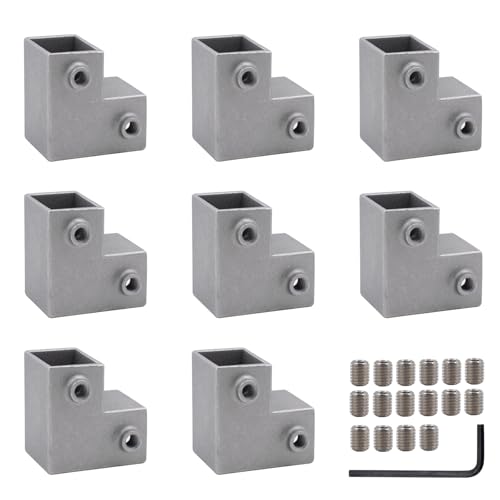
These SnowTing 2-way elbow connectors connect two 1″ square tubes at a right angle, making them suitable for furniture framing, partitions, and guardrails. Aluminum alloy with a 3 mm wall thickness provides robust endurance for indoor or sheltered outdoor uses. Best for projects needing a secure corner without welding and where a neat joint matters. A limitation is the 1″ size, which may not fit smaller 3/4″ tubes without adapters or different connector models.
EZends 3/4 Inch End Caps for Square Tubing

EZends end caps provide a clean finish for 3/4″ square tubing with a flush flush look. Constructed from heavy-duty LDPE plastic, these plugs are designed for long-lasting use in both commercial and residential projects. They fit tubing with wall thickness generally between 14 and 20 gauge. Best for finalizing projects like chairs, rails, or fence sections where a smooth, snag-free edge matters. Limitations include that these are caps, not structural connectors, so they do not contribute to frame strength.
LifCratms 12 Pack 3/4″ Square Plastic Plug

These LifCratms 12-pack square plastic plugs are designed for 3/4″ x 3/4″ tubes, offering simple insertion and strong bearing capacity. They’re suitable for end-capping legs, rails, or furniture supports where a finished appearance is important. They are easy to install, but their function is purely cosmetic and protective, not structural. Consider these when you want a neat, professional finish and reduced risk of snagging or moisture intrusion at tube ends.
Buying Guide
Key considerations when choosing 3/4 square tubing connectors
- Size compatibility: Confirm the exact square tube size (3/4″ vs 20mm) and wall thickness to ensure a snug fit. Some products target 20mm systems, while others are 3/4″ square in imperial sizing.
- Load and environmental exposure: Outdoor projects require UV resistance and corrosion protection. Look for weather-ready materials like UV-stabilized nylon, fiberglass reinforcement, or aluminum components.
- Connection type: Elbows and straight connectors support different frame geometries. Choose elbows for corners, tees for intersections, and end caps for finishing touches.
- Installation practicality: Friction-fit, snap-in, or screw-in options affect assembly time and precision. Consider whether you need pre-drilled holes and included screws.
- Aesthetic finish: If appearance matters, seek products with sleek, museum-grade finishes or color coatings that match railings, decks, or furniture.
- Durability vs. budget: Higher-grade materials typically cost more but deliver longer service life in weather or load-bearing scenarios. Balance needs against cost.
Frequently Asked Questions
- What is the difference between 3/4″ and 20mm square tubing connectors? Answer: They refer to different measurement systems. Confirm your tube size on site to ensure compatibility.
- Can these connectors be used outdoors? Answer: Some are designed for outdoor use with UV stabilization and corrosion resistance; verify material specs before choosing.
- Do end caps provide structural support? Answer: No, end caps primarily finish and protect tube ends; they do not add strength to a frame.
- Is aluminum better than plastic for 3/4″ square tubing connectors? Answer: Aluminum offers higher strength and weather resistance, but may cost more; plastic connectors can be adequate for light-to-moderate loads.
- How many pieces should I buy for a project? Answer: Plan for extra connectors and caps to accommodate mistakes, cuts, or future expansions; a common approach is to buy 10–20% more than the minimum requirement.