Best Axes for Chopping Wood: A Practical Guide
Choosing the right axe for chopping wood can improve safety, efficiency, and enjoyment around the firewood pile. This guide highlights five top-rated models that balance durability, weight, and leverage for both seasoned campers and homeowners. Each option is designed to handle medium to large logs, plus kindling, with features like shock-absorbing handles, forged steel blades, and ergonomic grips. Read on for a concise overview of performance, build quality, and ideal use-cases to help you pick the best axe for your wood-cutting tasks.
| Product | Brand | Length | Type | Key Feature |
|---|---|---|---|---|
| Fiskars X27 Super Splitting Axe | Fiskars | 36″ | Splitting Axe | Shock-absorbing handle; forged steel blade |
| INTERTOOL HT-0264 36 Inch Chopping Axe | INTERTOOL | 36″ | Chopping Axe | Fiberglass handle; balanced head; rust-resistant blade |
| KSEIBI 36-Inch Splitting Axe | KSEIBI | 36″ | Splitting Axe | Ergonomic fiberglass handle; anti-slip grip |
| Edward Tools Wood Splitting Maul 17″ | Edward Tools | 17″ | Maul | 3 lb head; weighted design; rubber sheath |
| DWFKHT 35.4″ Splitting Axe | DWFKHT | 35.4″ | Splitting Axe | 1065 high-carbon steel; wedge-shaped blade |
Fiskars X27 Super Splitting Axe

The Fiskars X27 is a true multi-use axe designed for firewood, yard work, and cleanup. Its 36-inch handle provides added leverage for larger logs, while the hardened forged steel blade supports long-term edge retention. The bevel-convex blade design helps split efficiently, and the shock-absorbing, textured handle reduces hand fatigue and improves control, especially for taller users. This model emphasizes reliability and value through durable construction and a design optimized for one-strike splits when conditions allow.
INTERTOOL 36 Inch Chopping Axe HT-0264

INTERTOOL’s HT-0264 combines a long 36-inch handle with a 2.8-pound carbon steel head for robust chopping performance. The head-to-handle balance is optimized to improve swing accuracy and energy transfer, making it effective for felling logs and splitting firewood. The fiberglass handle provides shock absorption, reducing fatigue, while the textured rubber grip ensures a secure hold in varying conditions. A ready-to-use blade with protective coating helps resist rust and corrosion for continued reliability.
KSEIBI 36-Inch Splitting Axe

The KSEIBI 36-Inch Splitting Axe uses a forged carbon steel blade known for strength and durability. Its ergonomic fiberglass handle provides effective shock absorption, helping to reduce fatigue during extended use. An anti-slip grip ensures secure handling, even in damp conditions. This axe emphasizes reliable performance for repeated chopping and splitting tasks, with a design focused on balance and comfort to improve efficiency on longer cutting sessions.
Edward Tools Wood Splitting Maul 17”
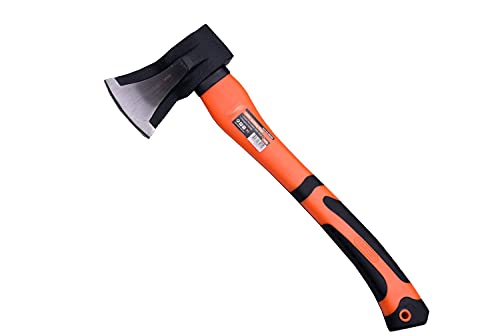
The Edward Tools maul pairs a heavy 3-pound head with a 17-inch overall length to maximize impact on tough wood while offering control for smaller splits and kindling. The slightly heavier head aids faster chopping through dense logs, and the included rubber sheath enhances storage safety. This tool is well-suited for homeowners who require a robust, simple instrument for reliable splitting beyond a standard hatchet.
DWFKHT 35.4-Inch Splitting Axe

The DWFKHT 35.4-inch splitting axe offers a wedge-shaped blade designed for exceptional splitting efficiency. Constructed from 1065 high-carbon forged steel, the head weighs about 4.3 pounds, with the overall tool weighing around eight pounds. The beech wooden handle provides a sturdy grip, and the blade’s geometry supports deep, clean splits with balanced power. This model is aimed at users tackling large logs and heavy-duty wood processing in outdoor settings.
Buying Guide
Choosing the right axe involves balancing blade design, handle construction, and overall weight to fit your typical workload. Consider the following dimensions to determine which tool best suits your needs.
Blade material and edge geometry
High-carbon and forged carbon steel blades resist wear and stay sharper longer, essential for frequent splitting. Wedge-shaped or convex-edged blades can improve penetration and reduce sticking in tough wood. Some models include coatings to slow rust, which matters for outdoor storage.
Handle design and length
Longer handles increase leverage and reduce required effort on large logs, but require more accuracy and swing space. Fiberglass or reinforced composite handles absorb more shock than wood, lowering fatigue during extended use. Textured grips improve control in wet conditions, enhancing safety.
Head weight and balance
Head weights typically range from 2.8 to 4.3 pounds for residential axes. Heavier heads deliver more impact with fewer swings but can tire a user quickly if not well balanced. A well-balanced tool reduces wrist strain and improves precision, especially on repetitive cuts.
Shock absorption and ergonomics
Shock-absorbing features, such as insulated or padded grips and vibration-reducing handles, help minimize fatigue and overstrike risk. Ergonomic design supports natural swing mechanics, contributing to safer operation and longer tool life.
Durability and maintenance
Forged steel blades tolerate repeated sharpening; coatings protect against corrosion. Regular sharpening, occasional oiling, and proper storage extend the lifespan of axes. A protective sheath improves blade safety when not in use.
Safety and storage
Always wear eye protection and sturdy footwear. Use a stable surface for chopping, and store axes with blades covered. Inspect handles for cracks or loosening before each use, and replace components if wear becomes noticeable.
Price and value
Investing in a higher-quality axe with better materials and ergonomic design often pays off in reduced fatigue, faster cutting, and greater longevity. Compare total cost with expected usage to determine long-term value rather than upfront price alone.
Use-case mapping
For firewood-intensive tasks, prioritize longer handles and heavier heads to maximize leverage and splitting power. If camping or backpacking is common, a lighter, more compact axe with a durable blade and reliable grip may be preferable. Home yard work might require a balanced mid-weight option that handles both chopping and kindling with comfortable, repeatable swings.