Best Band Saw Blades for Precision and Durability
The right band saw blade makes metal, wood, and plastic cuts cleaner, faster, and safer. This guide highlights five top-performing blades that balance durability, speed, and versatility. From cobalt-enriched high-speed steel to bi-metal constructions, these options cover common workshop tasks—re-sawing, curved cuts, and long runs on portable and benchtop saws. Each blade profile emphasizes wear resistance and cutting stability, helping you choose the best match for your material and machine capacity. The table below summarizes key specs to help compare at a glance.
| Product | Brand | Blade Size | Tooth Count (TPI) | Key Benefit |
|---|---|---|---|---|
| DEWALT DW3984C | DEWALT | 44-7/8″ length | 24 | Heat and wear resistance with cobalt alloy |
| POWERTEC 13601 | POWERTEC | 62″ length | 6TPI / 14TPI | Versatile for wood and curves; precise cuts |
| MK Morse 001182 / ZWEP441418MC | MK Morse | 44-7/8″ length | 14/18 | Made in USA; shock resistant; broad metal range |
| DEWALT DW3983C | DEWALT | 32-7/8″ length | 18 | Matrix II steel with cobalt; compact option |
| LENOX 8010738PW145 | Lenox | 44-7/8″ length | 14 | Bi-metal, shatter resistant; economical pack |
DEWALT 44-7/8-Inch 24 TPI Blade

DEWALT’s 44-7/8-inch blade with 24 TPI is designed for metal cutting with maximum wear resistance. The Matrix II high-speed steel edge provides heat resistance and long life, while the 8% cobalt content increases durability under frequent or heavy cuts. With Rc 65-67 tooth hardness, this blade maintains cutting stability and reduces tooth wear in tougher machinable metals. The .020-inch kerf allows precise material removal and smoother finishes, especially on thinner stock. This blade excels in persistent, high-speed metal work on portable and floor-standing band saws, offering reliable cutting performance across projects.
POWERTEC 62-Inch Bandsaw Blades Set

This POWERTEC three-pack covers a broad woodworking toolkit with 62-inch blades in three configurations. Included are a 1/4 inch by 6 TPI wood blade for general ripping, a narrow 1/8 inch by 14 TPI blade ideal for scroll cuts and intricate curves, and a 3/8 inch by 6 TPI blade for robust wood cutting and re-sawing. The set demonstrates a thoughtful tooth geometry designed for seamless cutting at higher speeds, helping to minimize chatter and heat buildup. It’s a practical starter kit for shops that regularly switch between straight cuts, curves, and re-sawing tasks on various wood species.
MK Morse Cobalt Bi-Metal Portable Blade

MK Morse’s cobalt bi-metal blade is built for portable metal cutting with a focus on durability. Made in the USA, it features a shock-resistant cutting edge that helps maintain blade life when cutting machinable metals. The blade’s variable tooth pitch broadens its applicability, enabling both smoother finishes and efficient metal removal across a range of thicknesses and alloys. The 44-7/8 inch length with a 1/2 inch width and .020 inch kerf offers a balance between aggressive material removal and control, making it suitable for demanding workshop tasks that involve frequent blade changes or varied stock.
DEWALT 32-7/8-Inch 18 TPI Blade

This DEWALT 32-7/8-inch blade delivers a solid mid-range option with 18 TPI for metal cutting and machining applications. With Matrix II high-speed steel and 8% cobalt, the blade provides excellent heat and wear resistance. The .020 inch kerf offers good balance between material removal rate and cut quality, while Rc 65-67 tooth hardness supports endurance under repetitive cuts. The shorter length makes it compatible with compact portable saws or benchtop units, giving users a dependable choice for small to medium projects without sacrificing durability.
LENOX 44-7/8″ x 1/2″ x .020″ 14 TPI Blades
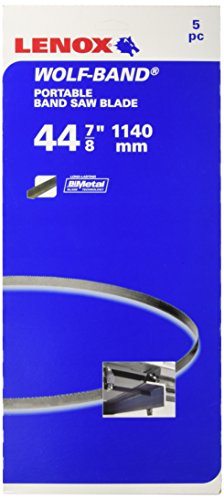
Lenox’s 14 TPI blades in a 44-7/8 inch length provide a versatile, economical option for general-purpose cutting. The high-speed steel teeth deliver a durable cutting edge, while the bi-metal construction enhances shatter resistance during re-sawing or when handling tougher stock. The 1/2 inch width favors stability during straight cuts and helps maintain accuracy on longer runs. The 0.020 inch kerf minimizes material loss and produces clean edges on soft and medium-density woods, some plastics, and light non-ferrous stock, making it a practical all-around blade for shop use.
Buying Guide
Choosing the right band saw blade depends on the material you cut, the saw you own, and the finish you need. The following considerations help align blade characteristics with typical workshop tasks.
Blade length, width, and thickness must match your machine’s capabilities. Longer blades (e.g., 62″ or 93-1/2″) are common on larger floor-standing saws, while shorter blades suit benchtop units. A wider blade (such as 1/2″) increases stability and is better for straight cuts and resawing, whereas a narrow blade (like 1/8″ or 1/4″) excels at tight curves and intricate contours. Check your saw’s manual for the exact allowed blade dimensions and recommended widths for various operations.
Tooth pitch and geometry drive cut quality and aggressiveness. Higher TPI (teeth per inch) blades (like 24 TPI) yield finer finishes and smoother edges, especially on metal or thin stock, but remove material more slowly. Lower TPI blades (6-14 TPI) cut faster and are well-suited for thick stock and rough cuts in wood, but may require more finishing. Variable-pitch blades modulate tooth spacing to balance smoothness and aggressive cutting, reducing noise and chatter on challenging curves.
Material composition determines durability under heavy use. High-speed steel blades with cobalt content provide enhanced wear resistance and heat tolerance for metal cutting, while bi-metal blades combine flexibility and resilience, reducing the risk of tooth breakage when re-sawing or cutting harder stock. For metal-heavy workflows, cobalt-enriched HSS and bi-metal designs deliver longer blade life and more consistent performance under load.
Application scope matters. Woodworking blades prioritize clean finishes and efficient stock removal, while metal blades emphasize stability and wear resistance. If your work blends metals and plastics, a versatile blade with a mid-range TPI and reliable wear resistance can reduce blade changes and downtime. For detailed curves, choose a narrow blade with a finer TPI; for straight, fast cuts, a wider blade with a coarser pitch is typically more productive.
Maintenance and safety are essential for longevity. Keep blades clean and dry to prevent corrosion, tension blades correctly according to the machine’s guidance, and avoid forcing blades through material at excessive speeds. Inspect blades for cracks or missing teeth before use, and store spares in a dry, organized kit to minimize downtime. Following manufacturer recommendations helps maximize blade life and cut quality while reducing the risk of accidents.