Best Knife to Cut on a Butcher Block: Top Cutting Boards for Precision
Choosing the right cutting board can improve knife performance, keep your blades sharp, and simplify kitchen cleanup. For serious cooks who cut on butcher blocks, durability, surface quality, and practical features like juice grooves or reversible surfaces matter. This guide highlights five highly relevant options that blend end-grain and sturdy construction with user-friendly designs. Each board is designed to handle meat, vegetables, and more, while offering dependable long-term use.
| Product | Brand | Size (approx.) | Notable Feature |
|---|---|---|---|
| FANICHI End Grain Cutting Board | FANICHI | 17 x 13 x 1.5 in | End grain, reversible with juice groove |
| Raised End Grain Butcher Block | OLE GEORGE | 14 x 18 in; 2 in thick | Raised block with bun feet for height and stability |
| Ziruma End Grain Acacia Board | Ziruma | 16 x 11 in; 1.5 in thick | Non-toxic, end grain, knife-friendly |
| Axeman Walnut Cutting Board | Axeman | 24 x 18 in | Premium American black walnut; juice groove |
| GlowSol Acacia Cutting Board | GlowSol | 24 x 18 in; 1.2 in thick | Reversible with juice groove; knife-friendly |
FANICHI End Grain Cutting Board With Juice Groove
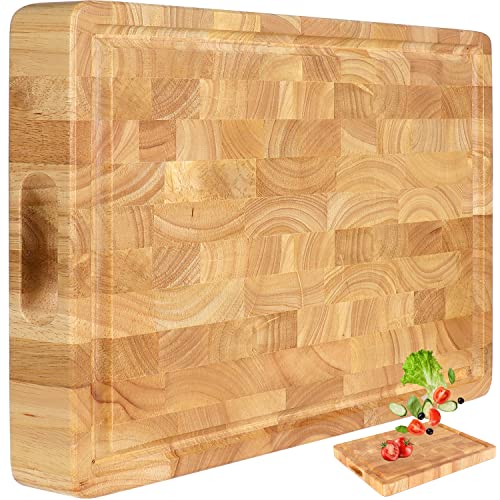
The FANICHI board measures 17 by 13 inches with a thickness of 1.5 inches, offering a sturdy, end-grain surface designed to handle heavy chopping and carving. One edge features a juice groove to catch liquids, while the reverse side serves as a serving tray or dicing surface. Inner handles make it easy to lift and move, and the natural wood finish showcases unique grain patterns. With proper care, this board is built to outlast many standard cutting boards.
- End grain construction provides a self-healing surface that’s gentle on knives.
- Reversible design: cutting surface on one side, serving/dicing option on the other.
- Juice groove helps contain liquids and reduce countertop mess.
- Inner handles for easy transport and maneuverability.
Raised End Grain Butcher Block For Meat And Prep

This raised butcher block is built from cherry, beech, poplar, walnut, and maple hardwoods, measuring 2 inches thick and 14 by 18 inches. The raised design elevates the cutting surface for comfortable chopping and easy food transfer, while bun feet help prevent moisture buildup and keep the board stable. Its end-grain construction provides durability against knife blades, making it a solid choice for heavy-duty prep and carving tasks.
- 2 inches thick for robust durability.
- End grain construction protects knife edges and hides cuts over time.
- Raised design with bun feet reduces moisture accumulation and provides stability.
- Generous 14 x 18 inch surface supports large cuts and roasts.
Ziruma End Grain Acacia Cutting Board 16×11

The Ziruma board is an end-grain cutting surface crafted from acacia wood, sized at 16 by 11 inches with a 1.5-inch thickness. It emphasizes non-toxic, food-safe materials and knife-friendly performance. The end-grain construction helps minimize knife dulling and self-heals over time, making it suitable for daily kitchen use while maintaining a clean, attractive appearance.
- 100% natural acacia wood; non-toxic and food-safe.
- End grain construction protects knives and resists visible cuts.
- Thick profile (about 1.5 inches) for stability and durability.
Axeman Walnut Wood Cutting Board 24×18″

The Axeman board is a 24-by-18-inch surface made from 100% American black walnut. It features a juice groove to catch liquids and safeguard countertops during meat and vegetable prep. The board’s generous dimensions make it suitable for large cuts, whole roasts, or expansive charcuterie spreads, providing a versatile work surface for kitchen and entertaining needs.
- Premium walnut wood with natural, elegant grain.
- Integrated juice groove helps keep counters clean.
- Large 24 x 18 inch surface supports big tasks and displays.
GlowSol Large Acacia Cutting Board 24×18

This GlowSol cutting board uses acacia wood for a robust, knife-friendly surface. At 24 by 18 inches with a reversible design and a wide juice groove, it accommodates large chopping tasks and serves as a striking charcuterie board. The handle-cut sides and rounded edges contribute to comfortable handling and easy storage, while the wood’s natural resilience helps maintain a flat, stable cutting plane over time.
- Acacia wood offers durability and knife-friendly performance.
- Reversible surface with a large juice groove.
- Extra-large 24 x 18 inch area for big tasks or serving.
Buying Guide
Materials And Construction
End-grain boards, like many of the options above, are gentler on knife edges because the grains close up after a cut. Wood types such as acacia, cherry, walnut, and maple each have distinct hardness, density, and resistance to moisture. End-grain boards excel at self-healing from knife marks, while bamboo variants tend to be harder on knives but can be less expensive. Consider a board that suits your knife collection and maintenance routine.
Size And Thickness
Size should match typical meal prep tasks. Larger boards (20+ inches) provide ample space for roasts, whole chickens, and large vegetables, but they require more storage and weight management. Thickness adds stability and longevity; boards around 1.5–2 inches thick offer durable cutting surfaces that resist warping when properly cared for.
Juice Groove And Reversibility
Juice grooves minimize countertop mess by catching liquids from meats and fruits. Reversible boards extend life by giving you two cutting surfaces in one, effectively doubling the usable surface before refinishing is needed. If serving from the board is a concern, a thick, wide surface (and a stable edge) helps prevent tipping when transporting food.
Maintenance And Oil
Wood boards require periodic oiling to protect against drying and cracking. Food-grade mineral oil or specialized cutting-board oils help preserve the surface and prevent moisture absorption. Avoid soaking boards in water, and clean with mild soap and in-room temperature water to maintain integrity. Regular maintenance extends the life of end-grain boards and keeps them food-safe.
Safety And Knife Care
A knife-friendly surface reduces edge dulling and preserves blade geometry. End-grain boards tend to be kinder to knives, while harder woods may still be acceptable with proper maintenance. Always dry boards after washing and ensure a stable, non-slip surface during use to prevent accidents in busy kitchens.