Best Caulk for Shower Corner Seams: A Practical Guide
Choosing the right caulk for shower corners helps prevent leaks and keeps bathrooms tidy. This guide reviews five popular, easy-to-install options designed to seal gaps around showers, tubs, and sinks. From self-adhesive caulk tapes to splash guards, these products are made to handle moisture and temperature changes in American homes. We evaluate material quality, adhesion, ease of use, and how well each option performs on typical shower corners and tile edges. Use the summary table to compare at a glance, then read the detailed product sections for installation tips and durability notes.
| Product | Brand | Type | Why It’s Good For Shower Corners |
|---|---|---|---|
| Fixmend Caulk Tape | Fixmend | Self-Adhesive Caulk Tape | Waterproof PVC, widely applicable, easy heat-and-press installation |
| Aqzfeuy White Caulk Tape | Aqzfeuy | Self-Adhesive Caulk Tape | Creased design for easy folding; clean, waterproof seal; not for silicone caulk |
| Solikdm White Caulk Tape | solikdm | Self-Adhesive Caulk Tape | PE material with strong adhesion; longer roll; easy to trim and install |
| Effectlife White Caulk Tape | effectlife | Self-Adhesive Caulk Tape | Four-roll kit; quick, clean replacement; leaves no mess |
| Spidfee Shower Splash Guards | Spidfee | Shower Corner Guards | Keeps water inside shower area; strong silicone base; removable |
Fixmend Self-Adhesive Caulk Tape
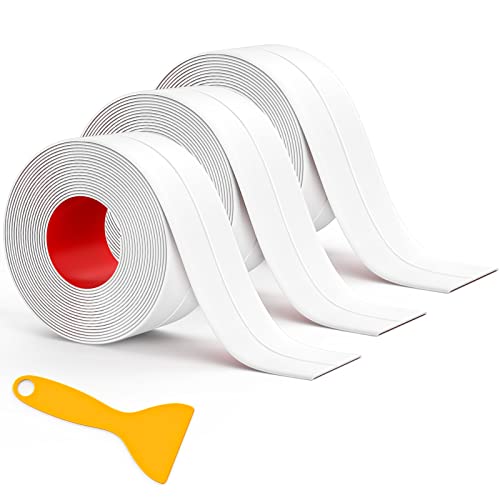
The Fixmend caulk strip is a PVC-based, waterproof self-adhesive tape designed to seal joints around showers, sinks, and tubs. It emphasizes strong adhesion and ease of use. Application begins with cleaning the surface and drying it thoroughly. For better viscosity, users heat the tape with a hair dryer before pressing it firmly with a sealing tool. The kit typically includes three rolls measuring 1.5 inches wide and 10.5 feet long, making it suitable for sealing several corners or gaps in a typical shower. It performs well on smooth tile, glass, and ceramic surfaces commonly found in American bathrooms.
- Material: PVC; waterproof and durable against bathroom moisture.
- Installation: Clean, dry surface; heat to increase adhesion; press and smooth with a tool.
- Coverage: Three rolls provide multiple corner applications per bathroom.
Aqzfeuy White Caulk Tape

Aqzfeuy’s white caulk tape offers a clean, waterproof seal for bathroom and kitchen edges, including toilets, bathtubs, showers, sinks, and tile corners. The tape comes in a 1.5-inch width and about 10.5 feet in length, with a crease in the middle to help fold around corners. It is designed to provide a neat, professional look while avoiding silicone mess. Importantly, it does not adhere to silicone caulk or old caulking. Prep is similar to other tape products: dry, clean surfaces yield the best results. This tape is particularly convenient for those who want quick, tool-free installation.
- Crease design enables easy folding at corners.
- Not compatible with silicone caulk or existing old caulk.
- Long length and visible white finish for a clean look.
Solikdm White Caulk Tape
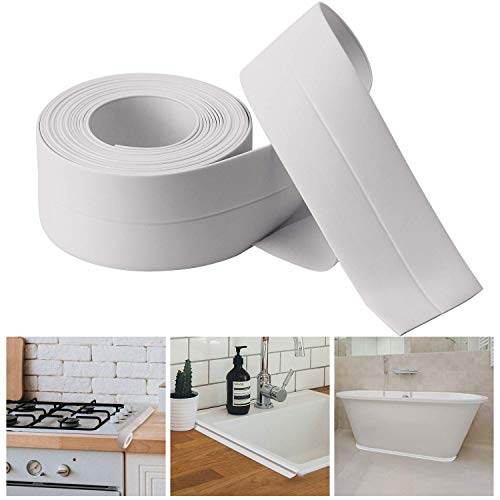
Solikdm markets a white caulk tape designed for bathroom and kitchen edges. The tape is described as 38mm wide (about 1.5 inches) and 3.2 meters long, with PE material noted for durability and moisture resistance. The backing adhesive is claimed to offer strong adhesion, and the tape is designed to be easier to apply than traditional caulk tubes. The product notes that it can be folded with a sealing tool to create tight joints, and it emphasizes family-friendly use with a focus on clean aesthetics. Some users should be aware that PE-based tapes may interact differently with certain old caulks, so testing a small area first is prudent.
- Material: PE; waterproof and durable.
- Size: 1.5″ width, 10 ft (approx.) length for substantial coverage.
- Compatibility: Designed for bathroom and kitchen seams; not recommended where silicone caulk is already used.
Effectlife White Caulk Tape

Effectlife offers a four-roll package of white caulk tape meant to simplify bathroom remodeling and maintenance. The product highlights an upgraded self-adhesive, providing a long-lasting seal that blocks water from seeping into bathrooms, floors, tiles, and other joints. Installation is described as easy and mess-free—peel and press to form a seal, with the tape designed to be cut to fit corners precisely. Replacement is straightforward, and the tape claims to leave no residue or marks when removed. This kit is ideal for frequent bathroom updates or when multiple corners require sealing at once.
- Packaging: 4 rolls for broad coverage.
- Adhesion: Upgraded self-adhesive with strong bond.
- Maintenance: Easy removal without leaving marks.
Spidfee Shower Splash Guards

Spidfee’s shower splash guards are designed to address water escaping around the shower curtain and wall junctions. The kit includes large guards and uses a silicone-based base with robust waterproof adhesive, offering a secure fit that resists moisture and wear. The guards are described as scratch-resistant and strong, helping to keep water where it belongs. They can be removed if needed without damaging the bathtub or tile, a valuable feature for renters or those who frequently re-tile. These guards are a complementary option for shower corners where a strip alone may not suffice to stop splashing.
- Material: Silicone base with waterproof adhesive.
- Function: Blocks water between curtain and wall; reduces splash.
- Removability: Can be detached without damage.
Buying Guide
When choosing caulk solutions for shower corners, consider material compatibility, installation effort, and long-term performance. Different bathroom setups demand different approaches, from flexible tapes that cover perimeter gaps to rigid splash guards that stop splashes at the source. The following factors help you compare options objectively and select the best fit for tile edges, shower seams, and corner transitions.
Materials And Adhesion
Caulk tapes typically use PVC or PE, which offer moisture resistance and flexible sealing. PVC tapes are common and highly adhesive, but may require heat to maximize stickiness on porcelain or ceramic surfaces. PE-based tapes can be gentler on certain finishes and still provide strong adhesion, though performance may vary with older caulk or silicone. Splash guards rely on silicone-based bases for a snug, water-tight fit and often provide a more robust barrier against jets and spray in corner areas.
Surface Compatibility And Prep
Surface prep is essential for reliable results. Surfaces should be clean, dry, and free of old caulk or silicone residue where applicable. Tape products often require careful alignment, a crease to negotiate 90-degree corners, and light heat to activate the adhesive. Guards may need sturdy mounting with appropriate adhesive or clips. If you have silicone caulk present, some tapes may not adhere well, so testing a small patch first is wise.
Ease Of Use And Installation
Self-adhesive tapes offer quick, tool-free installation: measure, trim, peel, and press. Many users appreciate the ability to cut strips to fit irregular corners. Installation with heat (hair dryer) can improve bond strength for high-moisture zones. Splash guards require initial adhesion and sometimes trimming; the payoff is a physical barrier that contains water at the source rather than relying solely on a sealant.
Durability And Maintenance
Durability depends on moisture exposure and temperature fluctuations. Tapes tend to be corrosion-resistant and easy to replace if they lose adhesion. They may become brittle over time in very hot or humid environments and require periodic inspection. Splash guards typically offer longer-term performance but may require occasional cleaning and reapplication of adhesive if they begin to lift. Consider the expected lifespan in a busy shower and whether replacement parts are readily available.
Cost And Value
Caulk tapes usually come in multipacks and are relatively affordable, making them a good value for routine repairs and perimeter sealing. Splash guards are often a bit more expensive upfront but provide tangible splash control and can reduce water damage risk in high-use showers. For rental or short-term scenarios, tapes may offer the best balance of cost and convenience, while homeowners seeking more robust splash control may prefer guards, especially in stubborn corners.
Installation Scenarios And Recommendations
For new installations or major bathroom refreshes, using tapes on all edge seams can yield a neat finish with minimal mess. In older bathrooms with uneven walls or existing silicone residue, test adhesion on a small area first; if adhesion is weak, consider applying a primer or choosing a guard solution in corner zones. In damp climates, regularly inspect seals for peeling and replace promptly to avoid mold growth around corners. Finally, balance aesthetics with practicality: white tapes blend with light-colored tile, while guards offer a more pronounced weatherproof barrier in high-traffic showers.