Best Chop Saw Wood Blades for Precise, Clean Cuts
When choosing a chop saw blade, look for carbide teeth, appropriate kerf width, and the right arbor size to match your saw. This guide highlights five blades that cater to common wood-cutting tasks, from fine finishes to aggressive rips. Best for professional finish work, hobby carpentry, and DIY projects alike, these options balance cut quality with durability. Each blade’s strengths are explained, along with who should choose it and potential limitations to watch for in your shop.
| Product | Brand | Arbor | Diameter | Best For |
|---|---|---|---|---|
| WEN BL1080 | WEN | 5/8 inch | 10 inch | Fine finish projects on soft and hard woods |
| OSTTE 14-Inch 80-Tooth | OSTTE | 1 inch | 14 inch | High-precision finish work on large boards |
| WEN BL1060 | WEN | 5/8 inch | 10 inch | Fine finish on various woods |
| TOYAKI 10-Inch 120-Tooth | TOYAKI | 5/8 inch | 10 inch | Very smooth and precise cuts |
| Revvstark 10 Inch 80T | Revvstark | 5/8 inch | 10 inch | Efficient, clean edge for frequent crosscuts |
WEN BL1080 10-Inch 80-Tooth Carbide-Tipped Blade
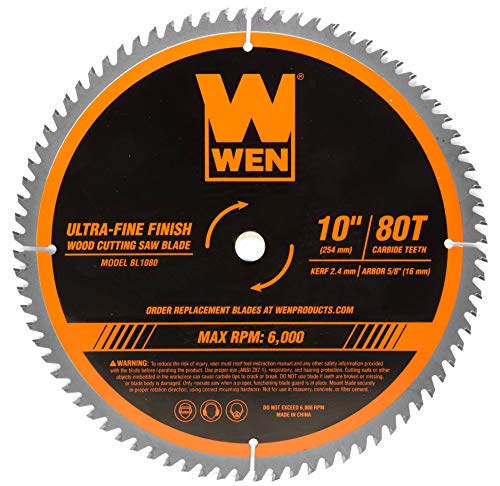
Features a 10-inch diameter and 5/8-inch arbor, rated up to 6000 RPM. Ultra-thin 1/10-inch kerf (2.4 mm) minimizes waste and delivers clean cuts in hard and soft woods. Best for finish carpentry and precise crosscuts where material conservation matters. A potential limitation is compatibility with very aggressive ripping tasks on thicker stock, where a dedicated ripping blade may perform better.
OSTTE 14-Inch 80-Tooth Miter Saw Blade

Designed for a wide range of woods, including softwood, hardwood, plywood, and laminates. Features alternating top bevel to reduce tear-out on both sides and four-face precision grinding for longer blade life. Best for large-panel finishing projects and hardwood crosscuts. Caution: 14-inch blades require compatible saws and larger cutting capacity.
WEN BL1060 10-Inch 60-Tooth Finishing Blade
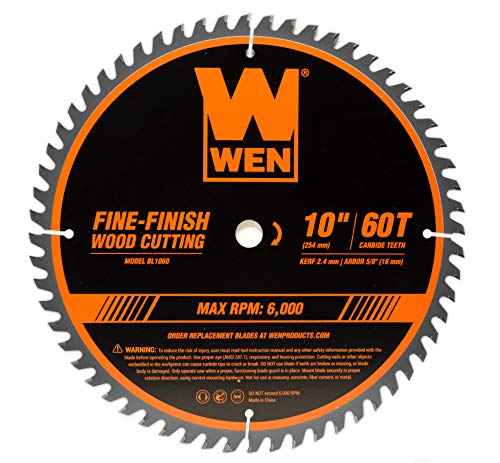
10-inch blade with 60 teeth and ultra-thin kerf supports clean, smooth cuts in a variety of woods. Adequate for finishing jobs where a finer cut surface is desired. Best for general-purpose fine finish work on miter and table saws. Limitation: fewer teeth than premium finesse blades may require slower feed rates for ultra-gloss finishes.
TOYAKI 10-Inch 120-Tooth Fine-Finish Blade
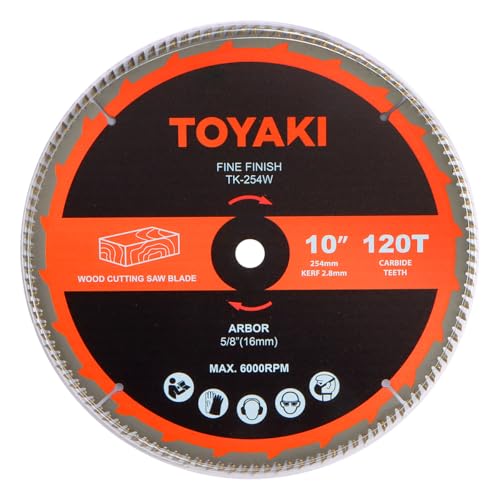
A 120-tooth blade designed for fine finishes on wood, including crosscuts in cabinets and trim. The high tooth count helps minimize tear-out and provides consistent cutting quality across the blade’s life. Best for finish carpentry and detailed work. Limitation: slower cutting speed and more heat generation in hard woods compared with lower-tooth options.
Revvstark 10-Inch 80T Table Saw Blade
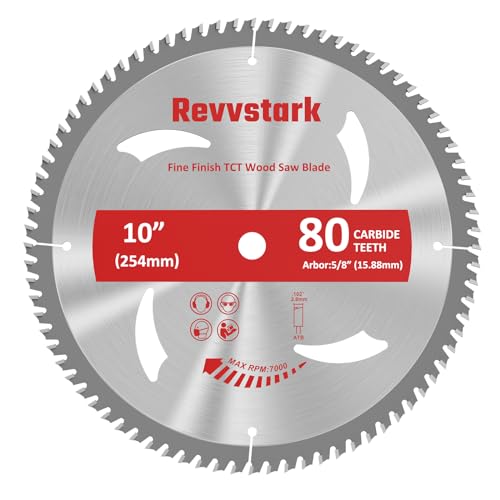
80-tooth blade with a 10-inch diameter and 5/8-inch arbor for true cuts with reduced kerf. Durable carbide teeth provide heat resistance for extended cutting sessions. Best for crosscuts and finishing work on softwood and hardwood. Caution: higher tooth count can reduce cutting speed on very thick stock.
FOXBC 12-Inch Combination Blade

This 12-inch, 60-tooth combination blade (1-inch arbor) handles both ripping and crosscutting with a smooth finish. Each set of teeth includes large gullets to clear waste efficiently. Best for mixed tasks where one blade must perform several functions. Limitation: designed for general use; may not rival dedicated high-tooth finish blades for ultra-fine cabinet work.
Buying Guide: Key Considerations For Choosing A Wood Blade
Blade diameter and arbor size align with your saw’s specifications. A larger diameter offers deeper cuts, while the arbor must match your tool’s shaft to avoid wobble or misalignment.
Tooth count impacts cut quality and speed. Higher teeth (60–120) yield smoother finishes but cut more slowly and generate more heat. Lower tooth counts (40–60) cut faster and are better for ripping.
Kerf width matters for material waste. Ultra-thin kerfs reduce wastage and require less power, but may be more prone to deflection on very hard stock. Consider the balance you need between precision and rigidity.
Material and tooth geometry influence performance on hardwoods, softwoods, plywood, and laminates. Carbide tips extend blade life and maintain sharpness under repeated use. Some blades are optimized to reduce tear-out on fragile edges.
Compatibility and usage: ensure the blade is suitable for your miter or table saw, and that the blade’s rating (RPM) aligns with your saw’s capability. Avoid forcing a blade beyond its intended power or recommended speed.
FAQ
- What blade is best for fine finish work on wood? A high-tooth-count blade (60–120 teeth) designed for finish work is ideal for clean, smooth cuts.
- Can I use a 12-inch blade on a 10-inch saw? Only if the saw supports that diameter. Check your saw’s manual for permissible blade sizes and arbor compatibility.
- What is kerf and why does it matter? Kerf is the width of the cut blade makes. A thinner kerf reduces material waste and power needed, but can be less rigid.
- Is carbide-tipped blade better than standard steel? Yes, carbide teeth stay sharp longer and resist wear, especially for hardwoods and repetitive cuts.
- How do I choose between ripping and crosscut blades? Ripping blades have fewer teeth and a larger gullet for faster cuts along the grain; crosscut or fine-finish blades have more teeth for smoother ends perpendicular to the grain.
- Should I choose a combination blade? Combination blades cover both ripping and crosscutting tasks, offering convenience when you need versatility in one blade.