Best Circular Saw Blades for Cutting Aluminum: Top Picks
When cutting aluminum and other non-ferrous metals, using the right circular saw blade is essential for clean edges, minimal burrs, and longer blade life. Aluminum presents unique challenges such as heat buildup, galling, and tear-out if the tooth geometry isn’t suited to brittle materials. The blades below are designed specifically for aluminum, copper, plastics, and other soft metals, with carbide teeth, optimized grind geometries, and coatings that reduce friction and sticking. Each option is compatible with common 5/8-inch arbors found on many circular saws and miter saws.
Summary table of chosen blades
| Product | Brand | Diameter | Teeth | Best For |
|---|---|---|---|---|
| Echo Corner 7-1/4″ Aluminum Blade | Echo Corner | 7-1/4 in | 60 | Thin aluminum sheets, non-ferrous metals |
| CRALY 6-1/2″ Aluminum Blade | CRALY | 6-1/2 in | 54 | Thin aluminum, plastics, laminates |
| DEWALT 7-1/4″ 68T Blade | DEWALT | 7-1/4 in | 68 | General metal cutting, durable cuts |
| IVY Classic 7-1/4″ 128T Blade | IVY Classic | 7-1/4 in | 128 | Light gauge aluminum, plastics |
| TOMAX 7-1/4″ 60T Blade | TOMAX | 7-1/4 in | 60 | Aluminum and non-ferrous metals |
Echo Corner 7-1/4″ Aluminum Blade

The Echo Corner 7-1/4″ blade is built for clean, chip-free cuts in aluminum and other non-ferrous materials. It uses a 60-tooth configuration with a Triple Chip Grind (TCG) tooth style to minimize chipping and tear-out when cutting brittle materials. The blade handles metals and composites like copper, polycarbonate, and MDF with smooth edges. It’s designed for a 5/8-inch arbor, offering stable performance on common circular saws without excessive vibration. This blade suits sheet metal and plate cuts where a refined finish matters.
Users should feed steadily to maximize the TCG grind’s effectiveness and keep heat down. For aluminum sheeting or thin plates, make several light passes rather than forcing a single deep cut. The blade’s geometry reduces friction and helps prevent gumming, especially when cutting harder plastics or laminates alongside metal.
CRALY 6-1/2″ Aluminum Blade

The CRALY 6-1/2″ blade features 54 carbide-tipped teeth and a thin kerf design that favors clean, precise cuts in thin aluminum and non-ferrous metals. Its 5/8″ arbor matches most standard saws, while laser-cut expansion slots and stabilizer vents help manage heat and reduce blade warping during longer cuts. The non-stick coating assists in reducing buildup, and the blade’s hard-wearing carbide teeth deliver a long service life for frequent aluminum work on projects such as panels or extrusions.
This blade excels for sheet metal work and lightweight plastics, where a smooth edge and minimal burrs are critical. Always verify feed rate and maintain steady pressure to avoid chatter on thicker sections and to preserve the integrity of the cut surface.
DEWALT 7-1/4″ 68T Blade

DEWALT’s 7-1/4″ 68-tooth blade blends durability with fast, smooth cuts through metal. The blade features a coating that resists rust and reduces friction, extending its life under repeated use. A thicker body adds rigidity, making it suitable for heavy-duty metal cutting while preserving cut quality. The 68 teeth strike a balance between fast cutting and a clean edge, particularly for aluminum and soft metals where a finer blade may chatter.
For best results, ensure your saw is properly aligned and the blade is sharp. Use steady feed pressure and let the blade do the work to minimize burrs along the cut line. This blade is well-suited for remodeling, electrical, and plumbing applications that require reliable metal cuts with minimal edge damage.
IVY Classic 7-1/4″ 128T Blade
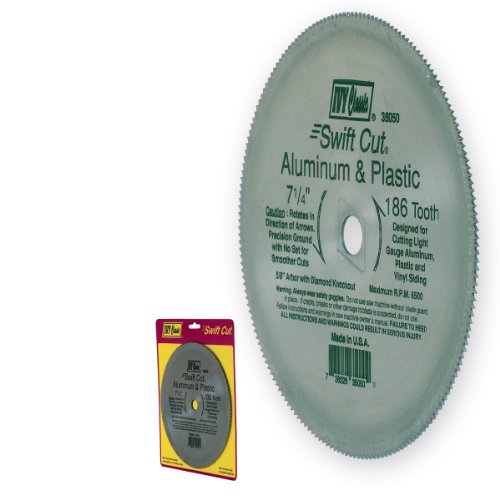
IVY Classic offers a swift-cut blade with 128 teeth, optimized for thin aluminum and plastics. The high tooth count produces exceptionally smooth finishes on sheet metal and delicate composites, often reducing the need for secondary deburring. The blade features a 5/8″ arbor and high-carbon alloy-steel construction with precision-ground teeth and no set, which supports consistent cuts and reduced vibration. A caution from the manufacturer is to rotate the blade in the direction of the arrows for safe operation and optimal results.
Despite the higher tooth count, the blade remains suitable for light gauge aluminum where a clean edge is critical. When cutting thicker aluminum profiles, consider a blade with larger teeth or another blade in this guide to prevent edge tearing and heat buildup.
TOMAX 7-1/4″ 60T Blade
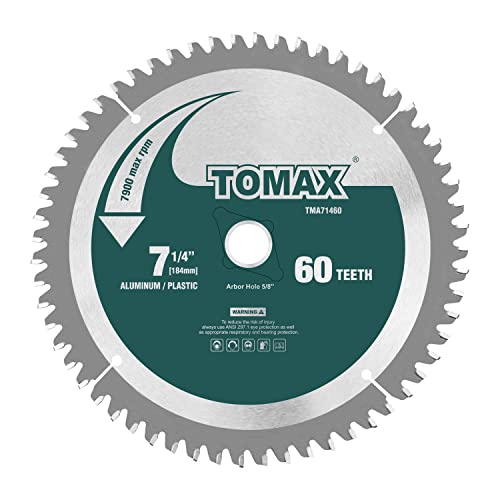
TOMAX’s 7-1/4″ blade is tailored for aluminum and non-ferrous metals with a 60-tooth TCG design. The Electrophoretic coating helps reduce rust and corrosion during long cutting sessions. The 5/8″ DMK arbor ensures compatibility with a wide range of saws, while the TCG geometry maintains a smooth cut through brittle materials. This blade is a strong choice for general-purpose aluminum fabrication, sheet metal work, and light structural cuts where consistent finishes matter.
To maximize life, maintain proper clearance and avoid forcing the cut. Pair this blade with steady feed and occasional gentle cooling passes to minimize heat, which can affect edge quality and tool wear on aluminum and related materials.
Buying Guide
Choosing the right blade for aluminum involves weighing tooth geometry, kerf, coating, and compatibility with your saw. Aluminum tends to heat quickly and can gum up blades, so geometry and coatings matter as much as tooth count. The blades above emphasize carbide teeth and specialized grind (TCG) to reduce tearing, chipping, and surface burrs. Consider the following factors when selecting a blade for aluminum cutting.
- Material and thickness: For thin aluminum or sheet metal, choose blades with higher tooth counts and thin kerf. For thicker sections, select blades designed for metal cutting with durable coatings and robust carbide teeth.
- Tooth geometry: Triple Chip Grind (TCG) helps prevent chatter and reduces burrs on brittle metals. It’s a reliable choice for aluminum, copper, and plastics when edge quality is critical.
- Kerf and arbors: Thin kerf blades reduce material waste and heat; confirm the arbor size (commonly 5/8″), or ensure your saw can accommodate other sizes without adapters.
- Coatings and heat management: Anti-friction coatings minimize material buildup and heat. Some blades feature non-stick coatings to mitigate gumming on plastics and laminates.
- Durability and construction: Carbide-tipped teeth offer longer life under repeated cuts. Look for blades with a thicker body for heavy-duty metal work and for reducing deflection during plunges and curves.
- RPM compatibility: Ensure your tool’s RPM range aligns with the blade’s maximum RPM. Over-spinning can shorten blade life or cause failure, especially on high-tooth blades.
- Compatibility with non-ferrous materials: If your projects include copper, brass, polycarbonate, or MDF, pick blades explicitly rated for non-ferrous metals to minimize tear-out and edge chipping.
Practical guidance for use:
- Feed rate matters. Use steady, moderate pressure and let the teeth do the work. Pushing too fast can cause heat buildup and burrs.
- Cooling is beneficial for prolonged cuts, especially on thicker aluminum. Small, periodic stops to allow heat dissipation can extend blade life.
- Make multiple passes when cutting thick sections. For example, cut shallow passes to reach the final depth gradually, which improves edge quality and reduces blade loading.
- Inspect teeth and replace when signs of wear appear. Dull teeth increase heat and produce rough edges.
- Keep your saw clean. Aluminum dust and fragments can accumulate and degrade cut quality if not removed regularly.
In summary, the best blade for cutting aluminum balances a high-quality carbide tooth count with geometry designed to minimize tear-out and heat buildup. The five blades featured here provide options across common saw types, thicknesses, and aluminum alloys, enabling clean edges, improved finish quality, and longer blade life for repetitive aluminum work.