Best Circular Saw Blades for Wood: Clean, Fast, Precise Cuts
Selecting the right circular saw blade is essential for clean, accurate wood cuts and longer tool life. The best blade choice depends on the job, from framing and rough cuts to fine finish work. This guide highlights five well-regarded blades that cover common woodworking needs in American workshops, from contractors’ sites to DIY projects. You’ll find blades suited for framing lumber, plywood, and sheet goods, along with features that minimize sticking, reduce vibration, and extend blade life. Use this overview to pick a blade that fits your saw, project, and budget without sacrificing performance.
| Product | Brand | Blade Size | Teeth | Notable Feature |
|---|---|---|---|---|
| Diablo Tracking Point 7-1/4-Inch 24-Tooth Blade | Diablo | 7-1/4 in | 24 | Tracking Point tech, TiCo carbide, non-stick coating |
| DEWALT 7-1/4-Inch 40-Tooth Wood Blade | DEWALT | 7-1/4 in | 40 | Tungsten carbide, Tough Coat anti-stick, thin kerf |
| Echo Corner 5-1/2-Inch Combo Pack | Echo Corner | 5-1/2 in | 48 / 24 | Two blades: finish and rip blades, 10mm arbor |
| DEWALT 6-1/2-Inch 18 & 24-Tooth Blade | DEWALT | 6-1/2 in | 18 / 24 | ToughTrack tooth design, tungsten carbide, anti-stick |
| CRAFTSMAN 7-1/4-Inch 140-Tooth Fine Finish Blade | CRAFTSMAN | 7-1/4 in | 140 | Fine finish, precision-ground teeth, hardened plate |
Diablo Tracking Point 7-1/4-Inch 24-Tooth Blade

Diablo’s Tracking Point technology enables smoother, more stable cuts through wood, reducing drift on framing and construction tasks. The blade uses TiCo Hi-Density carbide for long-lasting durability, helping it cut through hardwoods and softwoods with fewer sharpenings. Laser-cut stabilizer vents minimize noise and vibration, giving you greater control for cleaner, more accurate results. The 24-tooth configuration provides a balanced mix of speed and edge quality for common framing and panel-cutting jobs, while the non-stick coating helps prevent gumming when cutting resinous woods or laminated plywood.
Sold as a 2-pack, this blade offers value for multi-saw setups or replacement blades in busy job sites. The combination of a stable cut, durable carbide, and anti-stick properties makes it a versatile choice for general-purpose wood cutting, especially where consistent performance matters more than ultra-fine finishes.
DEWALT 7-1/4-Inch 40-Tooth Wood Blade

This blade is built with high-density tungsten carbide for toughness and long life, resisting wear through heavy-duty cutting. The Tough Coat anti-stick coating reduces friction and gum-up, while the thin kerf design makes it easier to push the saw through material, resulting in smoother cuts with less material waste. The 40 teeth strike a balance between fast, efficient cutting and clean edge quality, suitable for framing lumber, plywood, and other common wood panels commonly encountered on American job sites.
The blade’s combination of durability, reduced friction, and efficient kerf makes it a reliable option for contractors and DIYers who want dependable performance without frequent blade changes. Its versatility means it can handle a wide range of wood types, from soft pine to harder hardwoods, with predictable results.
Echo Corner 5-1/2-Inch 48-Tooth + 24-Tooth Blade Set

This combo pack provides two blades designed for different tasks: a 48-tooth ATB finish blade that yields smooth, clean edges, and a 24-tooth ripping blade that can cut through wood along the grain quickly and efficiently. The blades use a 10mm arbor, a common size among compact saws, enabling broad compatibility. The high-tooth 48T blade is optimized for fine finishing on plywood, hardwood, and MDF, while the 24T blade handles quick work on framing lumber and sheet goods with reduced resistance and high feed rates.
The dual-pack approach lets woodworkers switch between fast rough cuts and refined finishes without changing blades frequently, improving workflow on small projects, cabinetry work, and trim installations. Overall, the Echo Corner set emphasizes versatility and practical uptime for shop and job-site use.
DEWALT 6-1/2-Inch 18 & 24-Tooth Wood Blade
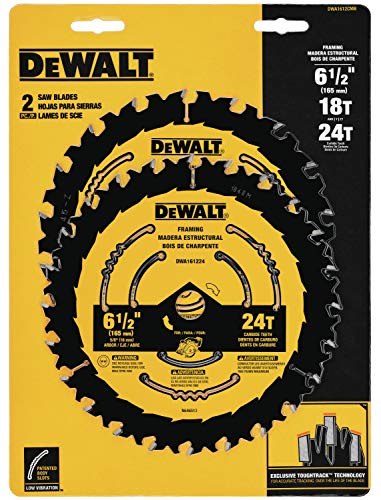
This blade features an exclusive ToughTrack tooth design intended to help maintain true cuts over the life of the blade, supporting accuracy especially on repetitive crosscuts. The blade is built from high-density tungsten carbide for durability and wear resistance, with Tough Coat anti-stick to minimize friction and binding. The 18-tooth option provides fast removal for roughing cuts, while the 24-tooth option offers better edge quality for finished work, making it versatile for framing, plywood, OSB, and similar wood products.
Designed for practicality, this DEWALT blade balances speed and precision. It suits carpentry projects where both efficiency and cleaner edges matter, such as deck framing, shelving, and cabinet framing, while maintaining reliability through longer use between sharpenings.
CRAFTSMAN 7-1/4-Inch 140-Tooth Fine Finish Blade

The 140-tooth blade is designed for fine finish cutting, delivering smooth, splinter-free edges on plywood, OSB, and plastic laminates. It features a fully hardened plate to maintain true cuts over time and precision-ground teeth for smooth, accurate results. The high-carbon steel blade enhancing rigidity extends blade life under heavy crosscutting and finishing tasks, making it a strong choice for cabinetry, shelving, and trim work where edge quality is paramount.
Although optimized for fine finishing, this blade remains robust enough for occasional crosscuts in softwoods and engineered wood products. It helps reduce tear-out and ensures a consistent cut line, which is particularly valuable in projects where product appearance matters, such as kitchen cabinetry or built-ins.
Buying Guide
Blade Tooth Count and Cut Type
The tooth count determines how aggressively a blade cuts and how clean the edge will be. Higher tooth counts (e.g., 40T–140T) yield smoother finishes and less tear-out, which is ideal for plywood, veneer, and cabinetry. Lower tooth counts (e.g., 18T–24T) cut faster and are well-suited for framing and ripping where edge quality is less critical. For versatile shop use, keep a 40–60T blade for general cutting and a 140T blade for finish work.
Kerf, Speed, and Feed Rate
Kerf width affects the amount of material removed and the force required to push the saw through stock. Thin-kerf blades require less power and produce less waste but can be more delicate. Thick-kerf blades remove more material per pass and are steadier for heavy stock, but require more power. Choose based on your saw’s motor, stock type, and desired finish. For framing and quick cuts, a lower tooth count with a thin kerf is often ideal; for finishing, a high-tooth blade provides superior edge quality.
Coatings and Build Quality
Coatings such as anti-stick or non-stick surfaces reduce gumming when cutting resinous woods and laminated plywood. Carbide grades (e.g., TiCo, tungsten carbide) determine wear resistance and blade life. Look for blades with reinforced plates, precision-ground teeth, and coatings that suit your typical material mix. A tougher build reduces the frequency of sharpening and blade changes on busy job sites.
Arbor Size and Compatibility
Arbor compatibility is essential for safe and efficient cutting. Common sizes include 10 mm and 3/8 inch. Ensure the blade’s arbor matches your saw’s arbor, or use an appropriate adapter. Compatibility also includes the saw’s motor power: heavy stock and high tooth counts demand sufficient horsepower to maintain clean cuts without bogging down.
Durability, Longevity, and Maintenance
Durability comes from carbide quality, plate hardness, and coating resilience. Regularly inspect blades for chipped teeth, warping, or coating wear. Clean blades after use to remove pitch and resin; store blades dry and flat to prevent bending. A well-maintained blade lasts longer, maintains true cuts, and reduces the risk of kickback and binding during operation.
Safety and Handling
Always wear eye and hearing protection. Use clamps to secure stock, avoid cross-cutting warped boards, and follow the saw manufacturer’s guidelines for blade installation and maximum RPM. A sharp, properly mounted blade contributes to safer operation and higher-quality results, particularly on long rip cuts or detailed finish work.