Best Circular Saw Blade Sharpener: Top Picks for Sharp, Precise Blades
Choosing the right circular saw blade sharpener can extend blade life, improve cut quality, and reduce downtime. This guide reviews five capable options that cover budget-friendly models and pro-grade gear. Each featured sharpener offers unique strengths, from fast grinding and precise angle control to versatile blade sizes. Read on to compare capacity, adjustability, and safety features to help pick the right tool for your workshop.
| Product | Brand | Best For | Arbor Range |
|---|---|---|---|
| YWTR 120V Electric Circular Saw Blade Sharpener | YWTR | Fast, versatile sharpening with adjustable tilting | Arbor up to 1 in. |
| VEVOR Circular Saw Blade Sharpener | VEVOR | Wide blade sizes with six centerings | φ3.15″– φ27.5″ |
| Chazcool Circular Saw Blade Sharpener | Chazcool | High-density wheel for carbide/hardened steel | 125 mm wheel |
| TECHTONGDA Circular Saw Blade Sharpener | TECHTONGDA | Adjustable angles and copper motor | 4.92″ wheel; 1.26″ bore |
| YARRD Hand Saw Sharpening Tool Feather Shaped Files | YARRD | Portable hand-saw sharpening solution | 260 mm overall; 28 mm width |
YWTR 120V Electric Circular Saw Blade Sharpener

The YWTR sharpener is designed to accommodate circular saw blades with arbors up to 1 inch in diameter. The motor block tilts 25 degrees left and right, enabling sharpening of diverse tooth configurations and bevel angles. A blade indexing arm speeds setup and helps maintain consistent sharpening results. Users can quickly reset to common tooth geometries, reducing trial-and-error adjustments on tough-to-sharpen blades. The compact footprint fits in a home workshop while delivering professional-grade precision for frequent blade refinishing.
Performance and maintenance notes: The device uses standard diamond and emery wheels to deliver burr-free, razor-sharp cuts while minimizing heat buildup. For safety, ensure blades are properly secured before sharpening, and wear eye protection during operation. The YWTR sharpener’s alignment system supports consistent results across blade types, from standard 7-¼ inch blades to specialty carbide blades. This model is well-suited for hobbyists and small shops that value quick turnaround on dull blades.
VEVOR Circular Saw Blade Sharpener
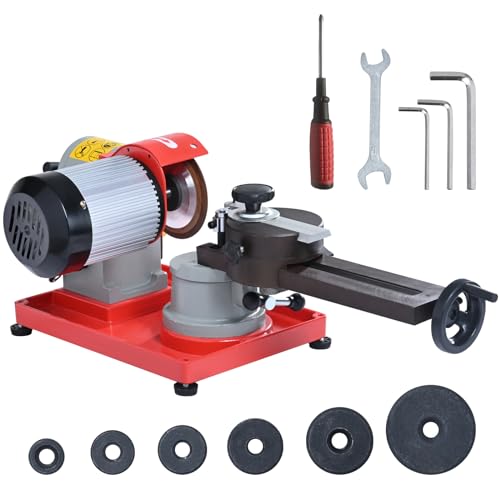
The VEVOR sharpener delivers 370W of power and runs at up to 3600 RPM, designed to restore carbide-tipped circular saw blades. It includes six centerings to handle a broad range of blade diameters, from small to larger professional blades. A 5-inch grinding wheel supports carbide teeth and dense tooth sets. The machine offers adjustable down/up movement of the grinding wheel by 20 degrees, and the handle can be turned 30 degrees left or 45 degrees right, allowing the wheel to stay level for precise sharpening. This capacity makes it suitable for dense or loose tooth patterns.
In use, the VEVOR sharpener emphasizes efficiency and durability. It supports φ3.15″ to φ27.5″ blades, accommodating most common circular saw blades used in woodworking and carpentry. The design focuses on stable operation and saw-tooth restoration without excessive material removal. For shops that frequently recondition dull blades, this model balances power, flexibility, and user-friendly adjustments. Maintenance involves occasional wheel dressing and ensuring centerings remain clean to prevent wobble.
Chazcool Circular Saw Blade Sharpener

The Chazcool sharpening wheel is 125 mm in diameter with an 8 mm bore, designed for a wide range of blade grinding tasks. The wheel uses high-density resin material, offering wear resistance and stable balance for precise cuts. It is suitable for sharpening carbide and hardened steel, as well as other metal materials, enabling consistent edge refinement. The tool is aimed at professional manufacturing and repair shops that require dependable wheel performance, with a structure tailored to minimize vibration and maximize grinding stability. This model supports quick, repeatable sharpening tasks across various blade types.
In practice, users emphasize the wheel’s wide application and its ability to deliver a polished edge with reduced chatter. The resin composition helps resist heat buildup, preserving tooth geometry during sharpening. Depending on blade size, operators should adjust feed pressure and wheel speed to prevent gouging of teeth. For best results, pair the wheel with appropriate guards and clamps to ensure safe, efficient sharpening sessions.
TECHTONGDA Circular Saw Blade Sharpener
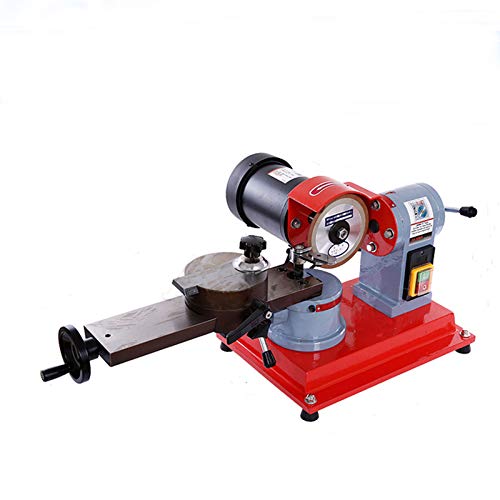
The TECHTONGDA sharpener is a 110V rotary angle mill grinder designed for carbide-tipped saw blades. It features a 4.92-inch grinding wheel (about 12.5 cm) with a 1.26-inch bore and a shrewd combination of positive and negative 20-degree rotation to accommodate oblique edge sharpening. A copper motor rated around 250W delivers reliable performance with lower heat buildup. The worktable supports adjustable angles, enabling a left rotation of 30 degrees and a right rotation of 45 degrees, ensuring consistent sharpening alignment for irregular tooth patterns. The unit suits hobbyists seeking precise edge restoration on various blade types.
Tip: The robust copper motor offers ongoing reliability and reduced noise versus some plastic-bodied units. The grinder’s sturdiness makes it a good choice for workshops that frequently sharpen carbide blades and need a flexible setup for different tooth geometries. As with all sharpening equipment, maintain proper guard usage and protective equipment during operation.
YARRD Hand Saw Sharpening Tool Feather Shaped Files

The YARRD sharpening tool offers a feather-shaped taper file designed for hand saw teeth and pruning tools. It is especially useful for professionals who service a wide range of saws, from hand saws to garden tools. The tool’s 260 mm overall length, 110 mm handle, and 28 mm file width provide a comfortable grip and broad contact area. Fabricated from high-quality steel with TPR grip, the tool supports fast, dry sharpening without oil or water. While not a power sharpener, it provides a precise edge restoration for a variety of blade styles, making it a versatile addition to a workshop toolkit.
Users note that this sharpener excels for fieldwork and bench use where quick, manual sharpening is required. For consistent results, maintain even pressure and follow the tooth pattern, avoiding excessive metal removal. This option complements powered sharpeners by enabling on-site maintenance of hand saw teeth and pruning blades, a common task in carpentry and landscaping projects.
Buying Guide
Blade Compatibility And Arbor Size
Before selecting a sharpener, verify the maximum arbor size it accommodates. Circular saw blades vary from around 7-1/4 inches to 10 inches and beyond, with arbors typically spanning 1/2 inch to 1 inch. A sharpener that accepts blades with larger or irregular arbors reduces the need for adapters or multiple tools. If you frequently sharpen carbide blades, ensure the machine provides a robust grinding action that preserves tooth geometry without overheating the edge.
Wheel Size, Material, And Tooth Geometry
Grinding wheel diameter and bore influence how aggressively you can remove dull material. Larger wheels remove material more evenly, but require more space and power. Wheel material matters—diamond and high-density resin are common for carbide teeth and hardened steel. Consider whether you sharpen straight teeth, alternate top bevel (ATB), or other tooth geometries; a sharpening setup that supports multiple tooth profiles can save time and improve consistency across blades.
Adjustability And Precision Features
Sharpening accuracy improves with adjustable angles, wheel position, and blade clamping. Look for features that keep blades level during sharpening, such as a tilting motor block, indexing arms, and positive/negative rotation options. The ability to fine-tune left-right tilt, wheel height, and centerings helps accommodate a variety of blade styles, including thin-kerf and dense-tooth patterns. Precision aids reduce chatter and ensure uniform tooth geometry across all teeth.
Power, Durability, And Safety
Power ratings (220V vs 110V, wattage) determine how quickly you refresh dull teeth and how well the unit handles heavier carbide blades. Durability matters in busy shops; look for sturdy frames, quality motors, and reliable bearings. Safety features such as blade guards, secure clamps, and emergency stops protect users during operation. If possible, choose a model with dust protection and simple maintenance steps to extend tool life.
Maintenance, Accessories, And Warranty
Maintenance needs vary by wheel type and usage. Regularly dress or replace grinding wheels, keep centerings clean, and inspect clamps for wear. Check included accessories like spare wheels, guards, and alignment gauges. A reasonable warranty or service support helps cover wear parts and ensures longer-term reliability.
Quick Scenario Comparisons
- Home hobbyist: Prioritize compact size, lower power, and simple wheel options for occasional blade sharpening.
- Small shop: Look for adjustable angles, multiple centerings, and stable frames to handle diverse blade inventories.
- Pro shop: Favor higher power, larger wheels, precise alignment, and durable construction for daily use and quick turnaround.