Best Desktop CNC Mills for Aluminum Projects
Choosing a desktop CNC mill for aluminum involves balancing rigidity, precision, and a safe workspace with cost and ease of use. This guide highlights five well-regarded options, including three compact milling machines and two comprehensive tooling sets. Each pick is evaluated for build quality, enclosure safety, software compatibility, and maintenance needs to help makers, hobbyists, and small shops select a machine that fits their space and projects—from precise aluminum parts to small-scale prototyping. A concise product table is provided to compare core specs at a glance.
| Product | Type | Work Area | Notable Feature |
|---|---|---|---|
| Carvera Air Desktop CNC Machine | 3-Axis Desk Mill | 11.8″ x 7.9″ x 5.1″ | Enclosed, Quick Tool Change, Auto Probing |
| Genmitsu 3018-PROVer V2 | Desktop CNC Milling Machine | 11.2″ x 7.1″ x 1.6″ | Upgraded Drivers, Easy Setup, Redesign Z Carriage |
| CNCTOPBAOS 1610 PRO CNC Milling Machine | Desktop CNC Router | 7.08″ x 3.93″ x 1.77″ | Offline Controller, Emergency Stop, GRBL 1.1f |
| Genmitsu 40Pcs End Mills Set | End Mill Tool Kit | Various small sizes | Nano Blue/Titanium Coatings, 2- and 3-Flute Options |
| SpeTool 1/8 End Mills for Aluminum | End Mills Set | 1/8″ Shank, 1/8″ Dia | 3 Flutes, DLC Coating, Five-Piece Pack |
Carvera Air Desktop CNC Machine
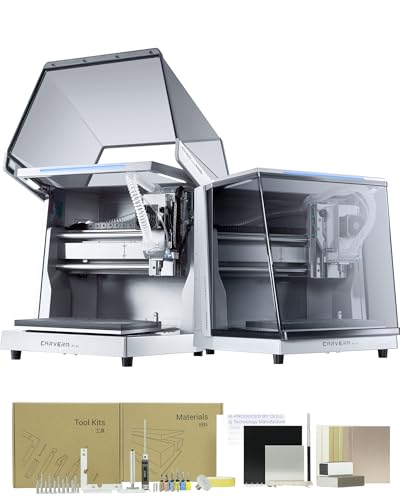
The Carvera Air from MAKERA CARVERA is a compact, enclosed 3-axis desktop mill designed for precise aluminum work and general carving tasks. Its 11.8″ x 7.9″ x 5.1″ work area supports detailed aluminum engraving and pocketing on small parts, making it suitable for sign fabrication, prototypes, and decorative components. The fully enclosed footprint helps control noise, dust, and debris while maintaining a safer operation environment in shared spaces. A quick tool changer minimizes downtime when switching between operations, which is valuable for multi-tool aluminum projects.
Key workflow enhancements include auto probing and leveling, which improves first-pass accuracy on uneven stock. Optional upgrades like a fourth axis and laser expand capabilities beyond 3-axis milling, enabling more complex geometries and multi-material projects. The machine’s space-saving enclosure, combined with an all-in-one CAM software package, provides a comparatively streamlined path from concept to finished part. Overall, Carvera Air focuses on reliable, compact aluminum milling with practical safety features for home shops and classrooms.
Genmitsu 3018-PROVer V2 CNC Milling Machine

The Genmitsu 3018-PROVer V2 represents an accessible entry point for enthusiasts seeking aluminum capability with solid value. Its semi-preassembled design reduces setup time, and the one-piece machined aluminum spoilboard provides a stable, reusable surface that resists warping during cutting. With a working area around 11.2″ x 7.1″ x 1.6″, it’s well-suited for small aluminum parts, hobbyist fixtures, and educational projects. The model includes limit switches and an emergency stop, adding essential safety for learning environments and busy workbenches alike.
Upgrades over prior iterations include more capable Toshiba TB6S109 drivers with 32-bit processing, expanded I/O options, and a redesigned Z-axis carriage to improve engraving accuracy and reduce vibration. Compatibility with popular CAD/CAM ecosystems such as Carveco, Fusion 360, and Easel enables flexible workflows from initial sketches to finished parts. The ProVer V2 balances ease of use with upgrade potential, making it a practical choice for those who want to grow their metal-cutting capabilities over time.
CNCTOPBAOS 1610 Pro CNC Milling Machine

The CNCTOPBAOS 1610 PRO is a compact desktop CNC router designed for hobbyists and small workshops needing reliable aluminum milling performance. Its working area of about 7.08″ x 3.93″ x 1.77″ remains compact, while the overall footprint accommodates a range of small aluminum projects and signage. The 45mm spindle with ER11-3.175mm tooling supports solid material removal, and the upgraded GRBL 1.1f control board enables smooth, programmable operation via USB or standalone control boards.
Safety and reliability are enhanced by an outer casing, emergency stop port, and multiple ports for tools and probes. The system is compatible with up to 20,000 RPM spindles with appropriate attachments, expanding opportunities for aluminum engraving and light milling. A robust frame, accessible electronics, and straightforward setup make this model a practical choice for users who need a compact machine that still delivers repeatable aluminum cuts and room to evolve with upgrades.
Genmitsu 40Pcs End Mills Set
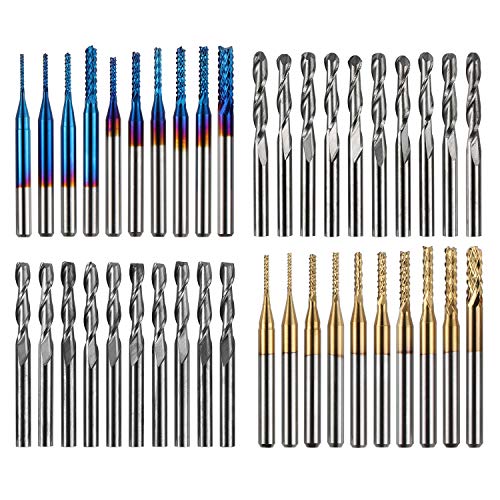
The Genmitsu 40-piece end mill set provides a broad range of carbide cutters with protective coatings designed to maintain sharpness and reduce heat during aluminum milling. The collection includes 2-flute flat nose and ball nose tools with a 3.175mm shank and diameters spanning 0.8 to 3.0mm. Nano Blue and Titanium coatings enhance hardness and wear resistance, helping to preserve tool life on compact desktop mills with limited spindle power.
Manufactured with high-precision grinding and durable construction, these end mills support roughing and finishing passes. The coating reduces heat buildup, which is particularly beneficial when working aluminum. Operators should select the right diameter and flute count to optimize chip evacuation and surface finish. When paired with a solid vise and proper workholding, these cutters enable repeatable aluminum prototyping on smaller machines.
SpeTool 1/8 End Mills For Aluminum

SpeTool’s 1/8″ end mills for aluminum feature three flutes and a long 1-1/2 inch overall length, with a 1/8″ shank and 7/16″ cutting length. The five-piece set covers common aluminum cutting scenarios, supporting pockets, slots, and profiling tasks on desktop mills. The three-flute geometry helps achieve smoother finishes and reliable chip removal at the moderate feed rates typical of hobbyist machines. Coatings and carbide grade contribute to edge retention and stable performance across repeated passes.
To maximize aluminum results, users should consider appropriate coolant or air blast to manage chips and heat, and tune feeds and speeds for the material and machine. Proper fixturing and level surfaces further improve repeatability, enabling consistent prototypes and parts on limited-form factor CNCs.
Buying Guide
When choosing a desktop CNC mill for aluminum, consider how you will balance workspace, budget, and project scope. The following perspectives help cover key purchase considerations and practical trade-offs:
- Work envelope versus machine rigidity: Larger work areas allow bigger parts but can trade off with rigidity and enclosure size. Enclosures help contain dust and noise, which matters in home or classroom settings.
- Spindle power and speed: Aluminum milling benefits from higher spindle speed and adequate torque. Machines with upgradeable spindles or capable control boards typically handle a wider range of alloys and tool geometries.
- Control system and software: Offline controllers offer standalone operation, while PC-based systems enable broader CAM options. Software compatibility with popular CAD/CAM ecosystems (Easel, Fusion 360, Carveco) reduces setup friction.
- Accuracy and repeatability: Features such as limit switches, rigid Z-axis assemblies, and high-quality ball screws or leadscrews improve repeatability—crucial for aluminum tolerances and finishing passes.
- Enclosure and safety: A dust and debris shield protects users and keeps the work area cleaner, which is especially important for aluminum chips and long milling sessions.
- Tooling quality and availability: A solid set of carbide end mills with coatings extends tool life and performance. Consider additional tool kits for different aluminum alloys and finishing needs.
- Upgrade path and ecosystem: Some models offer straightforward upgrade routes (extra axes, laser attachments, larger spindles). Check for compatibility with your preferred CAM workflows and available community support.
- Maintenance and spare parts: Accessibility of replacement parts, spares for wear items, and user communities can lower long-term ownership costs and downtime.
- Use-case alignment: For hobbyists focused on small aluminum parts, a compact, easy-to-use mill with solid safety features may be preferable. For educational or prototype-heavy workloads, consider models with robust enclosures, auto-probing, and reliable repeatability.
- Budget vs performance: The best option balances upfront cost with necessary capabilities. Higher upfront spend can yield longer-term capability and fewer bottlenecks for aluminum projects.
In sum, the right desktop CNC for aluminum depends on your target parts, available workspace, and willingness to invest in tooling and software. The selections above offer a spectrum of capabilities—from entry-level machines with essential safety and setup features to more capable platforms that support growing aluminum workflows. Assess your projects, plan for the required tolerance, and choose a solution that aligns with both current needs and future expansion.