Best Flush-Cut Saw Blades for Precise Trims and Clean Finishes
Flush-cut saw blades deliver clean, flush cuts in wood, plastic, and specialty materials. This guide highlights five top options that balance durability, accuracy, and value for different projects. Best for finish carpentry, hobbyists, or professionals replacing worn blades, these picks cover general-purpose cuts, hardwood and softwood tasks, and challenging materials.
The following table compares the five featured products, focusing on blade length, TPI, kerf, and intended use to help you pick quickly.
| Product | Blade Length | TPI | ||
|---|---|---|---|---|
| Hangzhou Great Star Indust 176216 Replacement Flush Blade | 2 Pack | Not specified | Not specified | General flush-cut tasks; solid replacement pack |
| SUIZAN Replacement Blade for Flush Cut Saw 6″ | 6″ | 17 / 20 | 0.018″ | Flush cuts in medium-length projects |
| SUIZAN Replacement Blade for Flush Cut Saw 7″ | 7″ | 30 | 0.008″ | Fine-to-medium cuts in wood |
| Diablo Flush Cut Bi-Metal Reciprocating Saw Blades – 9″ | 9″ | High tooth count | Not specified | Nail-embedded wood and metal scenarios |
| JORGENSEN 5 Inch Flush Cut Saw Replacement Blade | 5″ | 18 & 25 | 0.016″ | Versatile hardwood and softwood cuts |
Hangzhou Great Star Indust 176216 Replacement Flush Blade (2 Pack)

The Master Mechanic 176216 replacement blades come in a durable 2-pack for routine maintenance of 3 in 1 flush-cut saws. The blades are designed for flush-cut tasks with double-ground teeth, offering steady performance in general carpentry and trim work. Best for users who want a ready-to-use backup option for standard flush cuts. A potential limitation is that specific tooth geometry isn’t listed, making it harder to match exact cut material assumptions.
SUIZAN Replacement Blade for Flush Cut Saw 6″

This SUIZAN 6″ replacement blade is built for flush-cut tasks, featuring two tooth configurations (H 17, S 20) and a kerf of about 0.018″. It is ideal for medium-length flush cuts in hardwood and softwood. Best for Woodworking enthusiasts who need a precise edge with reliable material removal. Limitations include the need to confirm compatibility with your specific flush-cut saw model before purchase.
SUIZAN Replacement Blade for Flush Cut Saw 7″

The 7″ SUIZAN blade provides a finer tooth configuration with 30 TPI, featuring a thin kerf of 0.008″. It is well-suited for precise flush cuts in softwoods and delicate hardwoods. Choose this if you need smoother, finer cuts in tight spaces. A caveat is the higher tooth density may reduce aggressive material removal in very hard woods.
Diablo Flush Cut Bi-Metal Reciprocating Saw Blades – 9″ Length

Diablo’s 9″ flush-cut blades use bi-metal construction with a patented variable tooth technology, delivering smoother cuts with reduced vibration. The design is optimized for nail-embedded wood and metal, making it a strong choice for demolition or remodeling tasks where materials vary. Best for tough, mixed-material projects; a limitation is that specific tooth counts aren’t listed, which can affect cut feel in very fine work.
JORGENSEN 5 Inch Flush Cut Saw Replacement Blade
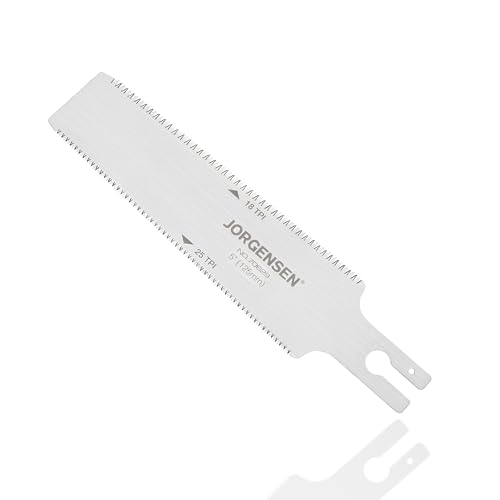
JORGENSEN’s 5″ blade uses SK5 steel, with 18 and 25 TPI on opposite sides, and a 0.016″ kerf. The double-edge design supports fast removal on hardwoods (18 TPI) and smoother cuts on softwoods (25 TPI). Best for versatile woodwork where you switch between different species. A potential drawback is that edge strength must be maintained with regular sharpening to preserve performance.
Buying Guide: Key Considerations For Flush-Cut Blades
- Blade length and compatibility: Match blade length to your saw model and the depth of cut you need. Longer blades reach into deeper gaps but may be harder to control in tight spaces.
- Tooth configuration and TPI: Higher TPI yields finer cuts but can remove material more slowly. Mixed TPI or dual-sided blades offer versatility for hardwood and softwood.
- Kerf width: A thinner kerf wastes less material and often provides cleaner cuts in delicate work, but may be prone to bending on coarse cuts.
- Material type and durability: Bi-metal blades combine flexibility and toughness for challenging applications, including nail-embedded wood and metal.
- Intended use: Consider whether you need general-purpose replacements, precise flush-cutting for cabinetry, or demolition-ready blades for mixed materials.
- Compatibility and availability: Check blade shank type, tooth geometry, and whether replacements come in multi-packs for ongoing projects.
FAQ
- What is flush-cut blade used for?
– They are designed to cut flush with the surface, ideal for trimming dowels, trim molding, and joints without leaving a protruding edge. - Which blade is best for hardwoods?
– Blades with finer teeth (higher TPI) and a durable construction, such as bi-metal designs, are better for hardwoods and tough materials. - Are replacement blades universal for flush-cut saws?
– Not always. Blade length, kerf, and tooth configuration must match your specific saw model and application. - Should I choose a dual-side blade?
– Dual-side blades with different TPI on each side provide versatility for switching between hardwoods and softwoods without changing blades. - Do I need a long blade for flush cuts in cabinets?
– Yes, longer blades reach deeper cavities and allow flush cuts in tight cabinet spaces, but require steadier handling.