Best Forced Air Kerosene Heaters for Workspaces
Choosing the right forced-air kerosene heater can keep workspaces, barns, and outdoor job sites warm and productive through cold seasons. This guide reviews five top models that balance heat output, fuel flexibility, safety, and portability. Each unit is selected for reliability in demanding environments, easy maintenance, and clear temperature control. Compare practical heat coverage, fuel options, and setup requirements to find the best fit for your space and climate.
| Product | Brand | BTU | Fuel | Key Advantage |
|---|---|---|---|---|
| VEVOR Kerosene Forced Air Heater | VEVOR | 215,000 | Kerosene / Diesel (dual fuel) | Wide workspace heat; thermostat; fuel gauge |
| Mr. Heater 185k BTU Forced Air Kerosene Heater | Mr. Heater | 185,000 | Multi-fuel (kerosene, diesel #1 & #2, fuel oil #1 & #2, Jet A) | Massive heat output with built-in thermostat |
| Pro-Temp 175,000 BTU Kerosene Diesel Heater | Pro-Temp | 175,000 | Kerosene / Diesel | High heat with portable design |
| Towallmark 125k BTU Diesel & Kerosene Heater | Towallmark | 125,000 | Kerosene / Diesel / Heating oil / Jet fuel | Flexible fuel options and long runtime |
| DEWALT F340675 75k BTU Forced Air Heater | DEWALT | 75,000 | Kerosene | CSA certified; recessed controls for tight spaces |
VEVOR 215k BTU Forced Air Heater

Heat large, open spaces with the VEVOR 215,000 BTU forced air heater. It warms areas up to 44,496.6 cubic feet (1,260 m3), making it suitable for workshops, barns, or garages. The unit supports kerosene or diesel fuels, but only one type should be used at a time. A thermostat knob and room temperature display let you set and monitor comfort levels from 40°F to 110°F. Built-in overheat protection stops the heater at 176°F to prevent unsafe conditions.
Operational safety and maintenance features reduce downtime. The heater auto-shuts off on low fuel and includes a fuel gauge for quick monitoring. Dual fuel filters help minimize smoke and odor, with a pressure gauge assisting system checks. For best results, use 1-K kerosene and maintain proper ventilation for indoor use. Follow recommended clearances and routine servicing to prolong life. With rugged construction, this model stands up to daily use in workshops, barns, or construction sites.
Mr. Heater 185k BTU Forced Air Kerosene Heater

Mr. Heater’s 185,000 BTU forced-air heater delivers robust warmth for large spaces such as barns, shops, or garages. This multi-fuel unit accepts kerosene, plus diesel #1 and #2, fuel oil #1 and #2, and Jet A (JP8), giving flexibility when fuel availability changes. With a built-in thermostat and LED troubleshooting diagnostics, operators can maintain consistent temperatures while diagnosing issues quickly. The heater can warm areas up to about 4,625 square feet, depending on insulation and climate. Its design emphasizes durability, with features intended for long shifts and outdoor job sites.
Practical operation notes focus on safety and maintenance. The integrated controls simplify adjustments, while diagnostics help identify faults without specialized tools. Wide fuel compatibility reduces downtime waiting for a specific fuel. However, proper ventilation is essential to avoid fumes, and regular inspection of fuel lines and filters is recommended. The unit’s portability and sturdy construction support frequent relocation between work areas. When choosing this heater, consider space size, fuel logistics, and whether you need Jet A compatibility for aviation fuels in certain settings.
Pro-Temp 175k BTU Kerosene Diesel Heater

Pro-Temp’s 175,000 BTU kerosene/diesel forced-air heater is designed for demanding spaces such as large garages, barns, and outdoor job sites. It heats up to about 4,300 square feet, depending on ventilation and insulation. The unit supports clean-burning kerosene or diesel and includes a built-in thermostat, a digital temperature readout, and LED diagnostics to simplify operation. Its rugged, portable frame features heavy-duty wheels and an easy-lift handle, making it straightforward to move between locations. This combination of high heat output and easy mobility targets professionals who need reliable warmth on multiple sites.
Maintenance and safety considerations focus on fuel management and equipment durability. The thermostat maintains steady temperatures, while digital readouts help monitor performance. LED diagnostics enable quick troubleshooting on the job but require periodic checks of filters and fuel lines. When using this heater, follow manufacturer guidance for fuel type, fueling procedure, and ventilation. The two-fuel capability offers flexibility in fuel availability, but ensure you select a single fuel at a time to avoid contaminating the system. Pro-Temp emphasizes portability without sacrificing heat output.
Towallmark 125k BTU Diesel & Kerosene Heater
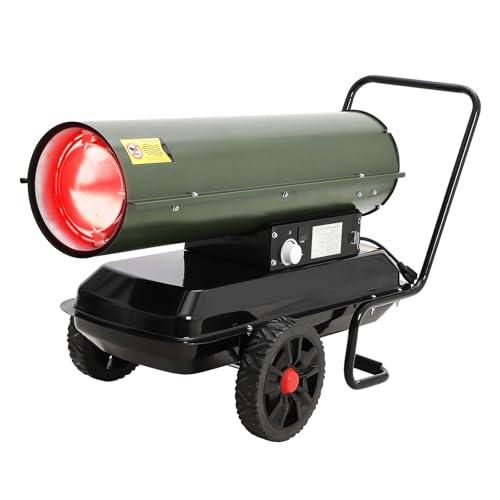
Towallmark’s 125,000 BTU unit delivers solid warmth for medium-to-large spaces up to about 3,125 square feet. It supports multiple fuels, including kerosene, diesel, home heating oil, and jet fuel (gasoline is not recommended). The heater runs for up to eight hours on a full tank, helping crews stay productive between refueling. With a compact footprint for its capacity (35.2 x 21.5 x 26.4 inches) and a weight around 53.8 pounds, it offers a practical balance of mobility and power. A thermostatic temperature control keeps spaces comfortable in varying weather.
Fuel compatibility broadens supply options but requires careful fuel selection and handling. The included thermostat provides steady heating; ensure adequate ventilation when used indoors. The unit’s durable build suits job sites and outdoors, with clear instructions on fuel storage and refueling intervals. Consider run time, fuel availability, and the need for frequent topping-up in cold climates. The Towallmark model provides reliable heat in spaces between small shops and larger work areas, and its portability makes it adaptable for temporary or moving projects.
DEWALT F340675 75k BTU Forced Air Heater

DEWALT’s F340675 model provides a compact 75,000 BTU forced-air heater suited for smaller shops, barns, or garages. The unit features recessed controls, helping workers keep a clean, accessible workspace while maintaining safety. CSA certified, it adheres to recognized standards for electrical and industrial equipment, offering a reliable option for personnel who require compliance. Although smaller than larger industrial units, this heater still delivers steady warmth for operations where space is limited or where mobility matters.
Ease of use and portability are emphasized through lighter weight and simpler controls. For job sites with space constraints, the Dewalt unit can be deployed quickly and moved as needed. Fuel flexibility is typically kerosene, with attention to ventilation and proper fuel storage. As with any forced-air heater, regular maintenance—checking filters, fuel lines, and vents—helps ensure consistent performance. This model provides a practical balance of safety, certification, and portability when large, high-output units are unnecessary.
Buying Guide
Space, BTU Needs, and Layout
Match heat output to space size and insulation. Larger spaces with poor insulation require higher BTU models, while well-insulated rooms can be effectively heated with mid-range units. Ceiling height, ventilation pathways, and the presence of drafty doors or windows all influence actual performance. If you plan to move the heater between locations, prioritize portability features such as wheels, handles, and a balanced weight. For open workshops or barns, consider models offering rapid warm-up times and consistent output rather than peak BTU alone.
Fuel Options and Availability
Most of these heaters offer kerosene as a primary fuel, with some dual-fuel options including diesel or Jet A. Dual-fuel models provide flexibility when one fuel is scarce, but always operate on a single fuel type at a time to prevent cross-contamination. Consider local fuel prices, storage capacity, and the availability of clean-burning kerosene. If you work indoors, prioritize units with effective odor control, built-in filters, and good ventilation practices to minimize emissions and fumes.
Safety, Controls, and Certifications
Key safety features include built-in thermostats, overheat protection, auto shut-off on low fuel, and clear fuel gauges. Recessed controls reduce accidental adjustments in crowded workspaces, while CSA UL or similar certifications indicate compliance with recognized safety standards. Always observe manufacturer clearance requirements, ensure proper ventilation, and keep detectors in appropriate locations. For outdoor work, choose equipment with rugged construction and weather-resistant components to withstand temperature swings and dusty environments.
Maintenance, Durability, and Spare Parts
Regular maintenance extends life and maintains efficiency. Check fuel lines, filters, vents, and thermostats periodically, and replace worn parts promptly. Heaters with simple maintenance procedures and widely available spare parts simplify long-term ownership. Wheels, handles, and casings should tolerate frequent moves between sites. Consider warranty terms and the availability of local service centers. A robust unit with straightforward diagnostics can reduce downtime and keep crews warm during critical project windows.
Mobility, Noise, and Comfort
Weight and maneuverability influence how often you relocate a heater on a job site. Lighter units are easier to move but may carry lower heat output. Noise levels vary and can impact comfort in enclosed spaces; consider models with better sound insulation or intake/exhaust design for quieter operation. Comfort-related features like a precise thermostat, temperature display, and clear status indicators help maintain productive work conditions without overshooting target temperatures.
In summary, the best choice depends on space size, how often you need to relocate the heater, and availability of fuels. For very large, open areas with consistent access to kerosene or Jet A, high-BTU models deliver rapid warm-up and strong continuous heat. For smaller spaces or frequent moves, compact, certified, and easy-to-service units provide practical warmth with easier maintenance. Cross-check fuel economy, safety features, and warranty coverage to optimize long-term reliability in American job sites and workshops.