Best Gas Leak Detectors for Home Safety
Gas leaks pose serious safety risks in homes, RVs, and workshops. Quick, reliable detection can prevent explosions, reduce exposure to toxic fumes, and provide peace of mind. This guide highlights five top-rated gas leak detectors available on Amazon, focusing on real-world performance, ease of use, and how each model fits different spaces and needs. From handheld sniffer tools to plug-in detectors with dual sensors, these picks cover a range of detection methods, alarms, and power options. Read on to compare features, understand what matters most, and choose a detector that fits your living space and safety goals.
| Product | Brand | Primary Gases Detected | Notable Features |
|---|---|---|---|
| TopTes PT199 Natural Gas Detector | TOPTES | Natural gas, methane, propane, butane, LPG | Visual and audible alarms within 0.5 seconds; LCD turns red at high levels; includes 2x AAA batteries; ~30s warm-up; auto-off after 5 minutes; low-battery indicator |
| NICGOL 4‑in‑1 Gas & CO Detector | NICGOL | Natural gas, CO (plus temperature and humidity) | Dual sensors and dual alarms; loud ≥85 dB alarm with flashing red light; 110–220V plug-in with low power consumption |
| TOPTES PT520A Natural Gas Detector | TOPTES | Methane, propane, natural gas, LPG, butane | 17-inch gooseneck for hard-to-reach areas; 0.5s response; 7 colored bars; 75dB alarm; detection 50–10,000 ppm |
| TopTes PT210S Gas Leak Detector | TOPTES | Natural gas, methane, propane, butane | 4-inch probe; percent LEL display; red screen with rising bars; 75dB audible alert; 100–5,000 ppm (1–10% LEL) |
| Klein Tools ET120 Gas Leak Detector | KLEIN TOOLS | Combustible gases (general) | 18-inch gooseneck; 50–10,000 ppm range; adjustable sensitivity; 85dB alert with five red LEDs |
TopTes PT199 Natural Gas Detector
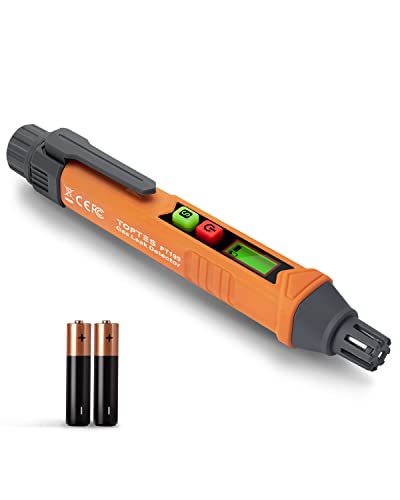
The TopTes PT199 is a compact, portable gas detector designed for quick leak localization. It detects natural gas, methane, propane, butane, LPG, and similar fuels, helping users identify leak sources near appliances, pipes, or storage areas. Response is fast, with alarms and alerts triggered within about 0.5 seconds, and the LCD turns red when gas levels rise. The unit ships with two AAA batteries and requires roughly a 30-second warm-up before use. A low-battery indicator appears below 2.4V, and the detector automatically powers off after five minutes of inactivity or no detection, conserving battery life while maintaining readiness.
NICGOL 4‑in‑1 Gas & CO Detector

The NICGOL 4‑in‑1 detector combines natural gas and carbon monoxide detection with ambient temperature and humidity sensing in a single plug-in unit. Dual sensors and loud dual alarms ensure rapid alerts when gas levels or CO reach dangerous thresholds. It detects CO at higher risk levels (e.g., CO ≥ 150 PPM or natural gas ≥ 5% LEL) and provides a visual cue via a flashing red light alongside sound. The plug-in design supports 110V–220V AC power and is designed for energy efficiency (low power consumption, ≤ 2W), making it a durable, long-term safety solution for homes and RVs alike.
TOPTES PT520A Natural Gas Detector

The PT520A from TopTes emphasizes reach and precision in locating gas sources. Its 17-inch gooseneck helps access tight spaces such as behind appliances, pipelines, storage areas, and basements. It detects methane, propane, natural gas, LPG, and butane, with rapid response in 0.5 seconds and a 75dB alarm that increases in intensity as gas concentration grows. The device provides a clear readout showing detection range from 50 to 10,000 ppm (Methane) and a direct, easy-to-interpret bar indicator. This model is ideal for professional or DIY scenarios where distance and reach matter.
TopTes PT210S Gas Leak Detector

The PT210S offers a compact, pen-shaped form with a practical four-inch probe for detecting hidden leaks in hard-to-reach areas. It displays the current gas leakage in Percent LEL, enabling a precise assessment of leak severity. The device furnishes rapid alarms within 0.5 seconds; the display turns red as gas concentration increases, and a 75‑dB audible buzzer provides an audible alert. Its detection range spans 100 ppm to 5,000 ppm (1% LEL to 10% LEL), making it suitable for quick spot checks around kitchens, basements, and utility spaces.
Klein Tools ET120 Gas Leak Detector

The Klein Tools ET120 combines professional-grade features with a practical design. It uses an 18-inch gooseneck to reach behind appliances, cabinets, and other tight spots, making it versatile for multi-room inspections. It covers a wide detection range from 50 to 10,000 ppm (based on methane) and offers adjustable sensitivity—High (50–1,000 ppm) and Low (1,000–10,000 ppm)—to tailor detection to the environment. Five red LEDs deliver visual alerts while an 85dB audible alarm intensifies as the gas concentration rises, helping users quickly gauge danger levels during inspections.
Buying Guide
Key Purchase Considerations
- Detected gases and sensor complexity: Decide whether you need detection for natural gas, methane, propane, CO, or multiple gases. Multi-sensor units (like NICGOL) provide broader coverage but may be bulkier and pricier.
- Detection range and sensitivity: Look for models with clear ranges (e.g., 50–10,000 ppm) and adjustable sensitivity if you need to tailor alerts in different spaces or contexts.
- Response time and alarms: Fast response times (0.5 seconds) and reliable audible (dB level) plus visual indicators are essential for timely action.
- Power source and convenience: Battery-powered devices are portable but require battery management, while plug-in detectors provide continuous power but limit placement options.
- Form factor and reach: Gooseneck and probe lengths (e.g., 17″ or 18″) are important for inspecting behind appliances or in confined areas.
- User interface and readability: A clear display showing concentration (Percent LEL) or gas indicators helps users interpret results quickly.
- Durability and safety certifications: Look for devices designed for homes and RVs, with durable housings and compliance with relevant safety standards.
- Maintenance and battery life: Consider warm-up times, auto-off features, and battery replacement needs to minimize downtime.
How To Choose Between Plug-In And Portable Detectors
- Portable detectors (like PT199, PT210S, ET120) are ideal for quick spot checks, DIY projects, and travel between rooms or vehicles.
- Plug-in detectors (like NICGOL) offer continuous monitoring and can include additional sensors (temperature, humidity), making them suitable for longer-term safety in kitchens, living areas, and RVs.
Comparison At A Glance
| Model | Best For | Gases Detected | Alarm Type | Power | Special Feature |
|---|---|---|---|---|---|
| PT199 | Portable spot checks | Natural gas, methane, propane, butane, LPG | Visual + audible; red LCD at high levels | 2x AAA (included) | Fast 0.5s response; 30s warm-up; auto-off |
| NICGOL 4‑in‑1 | Home RV monitoring | Natural gas, CO (plus temp & humidity) | Dual sensors + dual alarms | Plug-in 110–220V | Energy-efficient; low power consumption |
| PT520A | Hard-to-reach spaces | Methane, propane, natural gas, LPG, butane | Visual bars + 75dB alarm | Includes batteries | 17″ gooseneck; long reach |
| PT210S | Detailed leak assessment | Natural gas, methane, propane, butane | Visual + audible; red screen | Batteries included | 4″ probe; Percent LEL display |
| Klein ET120 | Professional inspections | Combustible gases | Visual LEDs + audible | Batteries included | 18″ gooseneck; wide 50–10,000 ppm range |
Gas detectors are vital safety tools, but choosing the right model depends on your space, usage patterns, and the kinds of leaks you expect to encounter. For quick checks around appliances and cabinets, portable units with a fast alarm and easy-to-read displays are ideal. If you want continuous monitoring in a kitchen or RV, a plug-in detector with additional sensors (temperature, humidity) can provide ongoing protection with fewer battery concerns. Consider gooseneck length for hard-to-reach areas, detector range for accurate readings, and the type of alarm that will prompt a timely response in your environment. Prioritize models that clearly communicate gas levels and offer reliable, rapid alerts to ensure a proactive safety routine.