Best Hand Belt Sander Picks for DIYers and Pros
Choosing the best hand belt sander involves evaluating power, weight, belt size, and dust control. The five models below represent a mix of corded and cordless options designed for handheld use, with belt sizes from 3×18 to 3×21 inches. Each model suits detail work, edge finishing, and portable projects where a larger sander feels bulky. Read on for concise specs, practical considerations, and how these tools compare on speed, ergonomics, and maintenance.
| Product | Brand | Key Feature |
|---|---|---|
| WEN 6307 Detailing File Sander | WEN | 1080–1800 fpm speed; auto-tracking; 50° tilt |
| WEN 6321 Belt Sander | WEN | 7-amp motor; light; detachable dust bag |
| WEN HB321V Belt Sander | WEN | 620–1200 fpm; lock-on switch; quick belt tension |
| DEWALT DCW220B Belt Sander | DEWALT | Brushless; up to 22% more power; 95% dust collection ready |
| SKIL 7510-01 Belt Sander | Skil | Pressure control; 6-amp; micro-filtration |
WEN 6307 Detailing File Sander
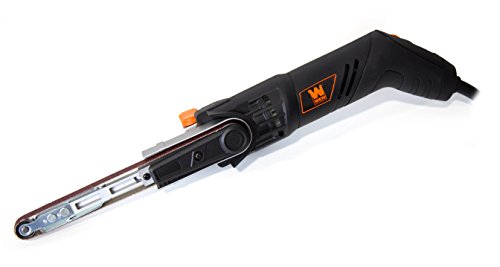
The WEN 6307 is a compact handheld sander designed for precision work where access is tight. Its belt system accepts a 1/2-by-18 inch belt, making it ideal for edging, molding, and contour work. The adjustable speed range supports both delicate finishing and faster material removal, while the auto-tracking belt eliminates the need for constant belt tension adjustments.
- Variable speed from 1080 to 1800 feet per minute
- Auto-tracking belt system requires no tensioning
- 50° range of motion with belt tilting up to 55°
Designed for comfort during extended use, the 1/2-by-18 inch belt is easy to change, and the slim body helps reduce user fatigue on crown moldings and curved surfaces. This model emphasizes control and convenience for detail-oriented projects.
WEN 6321 Belt Sander
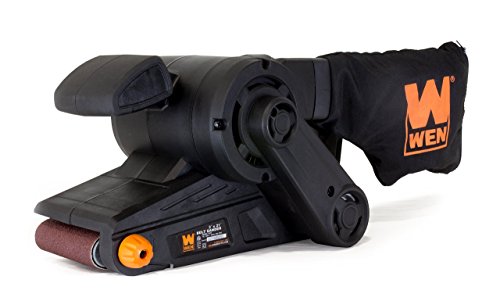
The WEN 6321 combines portability with a capable sanding surface. It features a 7-amp motor that drives the belt at a brisk pace, making it suitable for smoothing large areas and removal of material on medium-duty projects. At roughly six pounds, this model minimizes user fatigue during longer sessions and includes a detachable dust bag to simplify cleanup.
- 7-amp motor drives belt at over 13 feet per second
- Compact design; weighs about six pounds
- Detachable dust bag minimizes cleanup after sanding
With a balance of power and maneuverability, the 3×21 inch belt area allows faster work on flat surfaces while maintaining enough control for edges and corners. This sander suits workshops that require a middle-ground option between compact detail work and heavier stock removal.
WEN HB321V Belt Sander

The HB321V from WEN packs a bit more speed control into a handheld belt sander. Its 7.5-amp motor delivers a belt speed range from 620 to 1200 feet per minute, offering a solid combination of material removal and surface finish. A lock-on power switch helps stage longer sanding tasks without fatigue, while a quick-release tension lever facilitates quick belt changes.
- 7.5-amp variable speed motor; 620–1200 fpm
- Lock-on switch for continuous sanding
- Quick-release belt tension lever for fast belt changes
This model emphasizes steady control and ease of use for furniture refinishing, cabinetry work, and medium-duty stock preparation, while maintaining a comfortable grip and straightforward belt changes.
DEWALT DCW220B Belt Sander

The DEWALT DCW220B is a cordless, brushless belt sander designed for mobility and efficiency. Its brushless motor delivers power with longer runtime, supporting heavier sanding tasks without frequent battery swaps. The tool integrates with DEWALT’s dust collection ecosystem to help keep the workspace cleaner, and it offers a generous sanding surface for rapid material removal on larger panels.
- Brushless motor for power and runtime efficiency
- Up to 22% more power versus comparable brushed models
- Up to 95% dust collection efficiency with compatible systems
With a 3×18 inch belt area, this model balances portability with surface area. Cordless operation makes it ideal for projects away from power outlets, such as cabinet reworks, trim work, and outdoor woodworking where plug access is limited.
SKIL 7510-01 Belt Sander

The SKIL 7510-01 is a compact handheld belt sander that emphasizes control and safety. It uses a 6-amp motor to handle a variety of wood finishing tasks and includes pressure control technology to warn the user when too much pressure is applied, helping to prevent gouging and burnishing on softer woods.
- Pressure control technology reduces gouging risk
- 6.0 A motor handles common woodworking tasks
- Micro-filtration system helps capture fine dust
Suitable for edge work, small panels, and finishing touches, the SKIL model combines an accessible form factor with features that protect the workpiece while maintaining consistent results during longer sessions.
Buying Guide
Power Source and Performance
Consider whether you need a corded or cordless option. Corded models provide consistent power and are suitable for continuous use, while cordless models offer mobility for outdoor projects or spaces without outlets. Brushless motors generally deliver higher efficiency and longer runtime, though they can add to the upfront cost. Look for a belt speed range that matches your typical tasks; higher speeds remove stock quickly but can burn or gouge soft woods, whereas lower speeds are better for delicate finishing.
Belt Size And versatility
Belt dimensions like 3×18 inches and 3×21 inches determine the amount of surface you can cover per pass. Larger belts finish faster on flat panels, while narrower belts excel at edges, curves, and tight corners. Some models offer 2-in-1 capabilities (bench and handheld use), which can be advantageous if your work includes both portable and fixed setups.
Ergonomics And Handling
Weight and grip influence fatigue during extended sessions. A lock-on switch reduces hand strain on lengthy jobs, and a comfortable rubber grip helps with control. Tilt capability and adjustable angles improve access to complex shapes and inside corners. If you plan frequent belt changes, look for a quick-release tension lever that makes changing grits fast and straightforward.
Dust Management
Dust control is essential for visibility and air quality. Detachable dust bags are common on smaller handheld units, while many mid- to high-end models support dust ports or vacuum adapters for compatibility with shop vacs. Higher dust collection efficiency translates to a cleaner work area and less cleanup time between steps.
Maintenance And Accessories
Check the availability of replacement belts and compatibility with common grits. Quick belt changes save time on multi-step tasks. Some models include or support accessories like bench clamps, dust ports, and compatible vacuum adapters, expanding their versatility for different workshop setups.
Usage Scenarios And Comparisons
For detail work, choose a compact model with precise control and a smaller belt footprint. For cabinetry and panel work, a 3×21 inch belt offers better coverage. If you often work away from outlets or need maximum mobility, a cordless option with robust battery life is advantageous. Balance the model’s weight, speed range, and dust control features against your typical projects to select the best fit.