Best Hand Pump Fluid Extractors for Easy Fluid Change and Transfer
Answering the question, these hand pump fluid extractors provide reliable, chemical-resistant suction and precise dispensing for automotive and marine fluids. They’re best for DIY enthusiasts, shop owners, and professionals who need portable, leak-free fluid handling without powered equipment. This guide highlights five top options, outlining who each product is best for and why it’s a strong pick for everyday fluid tasks.
| Product | Capacity | Best For | Why It Stands Out |
|---|---|---|---|
| Thorstone 200cc Fluid Extractor Pump with 60cm Hose | 200 cc | Small-scale, hard-to-reach areas | Long 60 cm hose extension, leak-free double seal, corrosion and oil resistance |
| Mityvac 7201 Fluid Evacuator | 2.3 gallons | Frequent oil changes and dispensing needs | Dual-function extractor and dispenser, easy push-button control, chemical-resistant build |
| VEVOR 6.5L Manual Fluid Extractor | 6.5 L (1.74 gal) | Bulk extractions and DIY garages | All-in-one kit with multiple tubes, manual operation, deep reach through four tube sizes |
| SEDY 500CC Fluid Extractor | 500 cc | Precise manual changes | Leak-proof design with dual seals and durable PP construction |
| H-veenjor 200 CC Automotive Fluid Extractor | 200 cc | Deep access for tight spaces | Two 9″ extension tubes, 32″ hose, soft flexible reach, clear measurement markings |
Note: Each product’s features support different working contexts—from compact engine bays to larger fluid reservoirs. The table above helps you compare essentials at a glance and pick the best fit for your typical projects.
Thorstone 200cc Fluid Extractor Pump with 60cm Hose

Features: This syringe-style extractor uses a 0.24″ OD and 0.32″ OD extension hose up to 40 cm long when connected, enabling access to hard-to-reach areas for transmission fluid, power steering fluid, gear oil, antifreeze, and brake fluid. It provides a leak-free seal thanks to a locking button and double rubber rings, and its corrosion- and oil-resistant body supports use across ATVs, cars, boats, and more. Best for: small- to mid-size vehicle tasks where reach matters more than volume. Caution: ensure the end threads are sealed tightly to prevent leakage in high-pressure scenarios.
Mityvac 7201 Fluid Evacuator And Dispenser
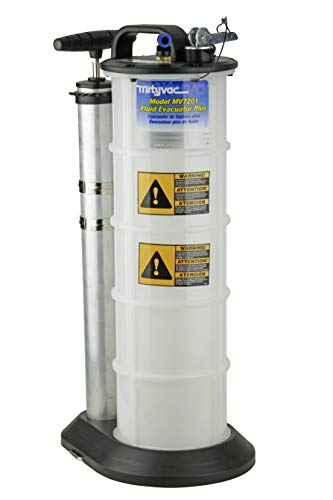
Features: Dual-function tool combines extraction and dispensing with a push-button control for precise operation. Its chemical-resistant polyethylene construction supports exposure to oil, coolant, and other automotive fluids. Best for: users who regularly perform oil changes or need a combined evacuator/dispensing solution. Caution: large-volume extractions may require manual effort with the push-button as the primary control.
VEVOR 6.5L Manual Fluid Extractor

Features: An all-in-one kit with a 6.5L tank, main tube, dipstick, two extension tubes, suction hose, seals, and manual. It uses four tube sizes to reach deep into reservoirs, ensuring thorough extraction. Best for: DIY garages that handle multiple fluid types and need a capable manual option. Caution: manual operation may be slower than pneumatic alternatives for large-volume tasks.
VEVOR 6.5L Pneumatic/Manual Oil Extractor

Features: Dual-mode operation with pneumatic and manual modes for speed or control. The kit includes a 6.5L tank, main tube, dipstick, two extension tubes, suction hose, seals, and manual. Best for: operators who want a fast, high-flow option with a manual fallback. Caution: pneumatic mode requires proper tool handling and a compatible air source.
SEDY 500CC Fluid Extractor
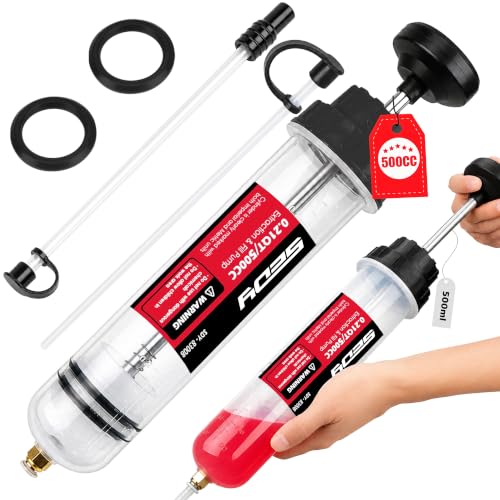
Features: Leak-proof with double-sealed plunger and dual rubber rings, plus precision threading to prevent leakage. Made from oil- and chemical-resistant polypropylene for durability. Best for: precise, small-volume extractions in automotive or marine applications. Caution: check tube seals if using with liquids that can aggressively corrode plastics over time.
H-veenjor 200 CC Automotive Fluid Extractor

Features: Two 9″ extension tubes with 0.24″ and 0.32″ diameters connect to create an 18″ reach, plus a 32″ flexible hose and transparent body with CC/QT markings. It includes a self-locking copper connector and a leak-free double-seal design. Best for: navigating tight engine bays and deep reservoirs. Caution: ensure the extension tubes stay firmly connected to avoid air leaks during operation.
Buying Guide: Key Purchase Considerations
Purpose and capacity: Choose based on typical fluid volumes. Smaller 200 cc units are portable and great for tight spaces; larger 6.5L kits excel for frequent or bulk extractions.
Reach and hose design: Long hoses and multiple extension tubes improve access to hard-to-reach areas, reducing vehicle handling time. Look for soft hoses that bend easily in tight spots.
Seals and leak prevention: Double-seal designs and locking buttons reduce spills. Confirm if the unit uses threaded ends that require secure tightening to prevent leakage.
Materials and compatibility: Oil- and chemical-resistant plastics (like high-grade polypropylene) extend life and compatibility with automotive fluids. Check for corrosion resistance if exposure will be frequent.
Operation mode: Manual extractors work offline without power, while pneumatic/manual hybrids provide faster flow. Decide based on the need for speed versus simplicity.
Kit contents: Consider included tubes, hoses, and seals. All-in-one kits save time when setting up a new extractor.
Frequently Asked Questions
- What is a hand pump fluid extractor best used for?
Best used for transferring and evacuating automotive fluids such as oil, transmission fluid, coolant, and brake fluid in a controlled, portable way.
- Do I need a pneumatic option?
Pneumatic options offer higher speed, but manual models work reliably without an air source and are simpler to maintain.
- How do I prevent leaks with a hand pump?
Ensure all threaded connections are tight, use the double-seal design properly, and verify the locking buttons are engaged during operation.
- Can these tools handle marine fluids?
Yes, many models are designed to resist oil and chemicals common in automotive and marine fluids.
- Which kit is best for beginners?
A compact 200 cc extractor with a few extension tubes is often easiest to learn and use for small tasks.