Best HVAC Refrigerant Recovery Machines for Pros
Reliable refrigerant recovery is essential for every HVAC technician. The right machine speeds up service, minimizes refrigerant loss, and helps stay compliant with environmental regulations. This guide highlights five top models that balance performance, portability, and durability. Each product links to its Amazon listing for quick access, while a compact summary table presents key capabilities at a glance. Whether you’re tackling residential systems or commercial installations, these options cover a range of needs and budgets.
| Product | Brand | Notable Feature |
|---|---|---|
| NAVAC NR7 Recovery Unit | NAVAC | Dual-cylinder, brushless DC motor, purge function, 3-row condenser |
| Fieldpiece MR45 Recovery Machine | Fieldpiece | High RPM twin-cylinder, oil-free, ceramic cylinder |
| Robinair RG3 Portable Recovery Machine | Robinair | Compact and lightweight, supports liquid and vapor |
| Hilmor 1950536 Brushless DC Recovery Machine | Hilmor | Brushless DC motor, digital LCD, hands-free carry |
| NAVAC Master Series Twin Cylinder Unit | NAVAC | Backlit display, twin cylinders, efficient cooling |
NAVAC NR7 Recovery Unit
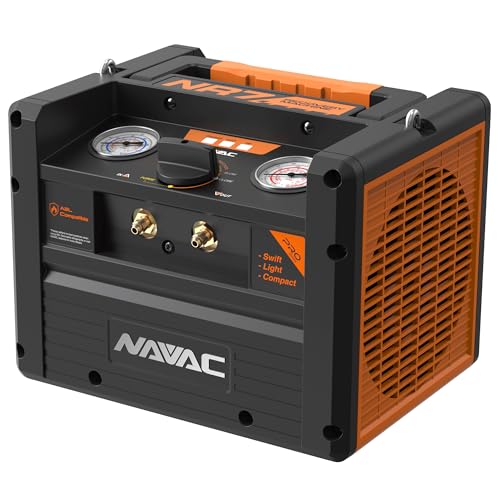
The NAVAC NR7 is built for rapid refrigerant recovery with a dual-cylinder design and a brushless DC motor. This configuration delivers dependable performance while maintaining a compact footprint. The unit features an oil-free compressor suitable for all common refrigerants and is A2L compatible, aiding modern low-GWP systems. A purge function helps remove residual refrigerant once recovery is complete, minimizing maintenance downtime. Additionally, a three-row condenser with dense fins promotes efficient heat dispersion, supporting longer operation during demanding tasks.
Operational efficiency is enhanced by a digital-ready interface and sturdy construction designed for field use. Technicians benefit from streamlined recovery times, consistent performance across various refrigerants, and a design that resists the rigors of daily service. While not the lightest option, the NR7 emphasizes reliability and effective heat management, making it a solid choice for shops and retrofit jobs where fast recovery matters.
Fieldpiece MR45 Recovery Machine

The Fieldpiece MR45 emphasizes high-speed refrigerant recovery with a micro-channel condenser and a twin-cylinder, oil-less compressor. The system is designed to deliver more refrigerant recovery at higher RPMs (up to 3,300), with doubled horsepower (1 HP) to handle tougher jobs. Its ceramic cylinder reduces friction and wear, contributing to longer life in demanding environments. The unit is built to withstand exposure to wet conditions and direct rain, reflecting Fieldpiece’s focus on durability for field service teams and service vans where weather exposure is common.
In practice, the MR45 helps technicians complete tasks faster, especially on larger residential and small commercial systems. The compact form factor and robust ports provide straightforward access for hose connections, while the oil-free design reduces maintenance needs between calls. This model sits well for technicians who prioritize speed, reliability, and rugged construction in a single, portable package.
Robinair RG3 Portable Recovery Machine

The Robinair RG3 focuses on portability without sacrificing essential recovery capability. With a compact footprint that is 40 percent smaller and a weight around 18 pounds, this unit is easy to transport between job sites. The RG3 uses a compressor-based cooling method and is capable of handling almost all refrigerants, including R-410A, using a 1/3 HP, 115V AC single-cylinder, oil-less compressor designed for recovery of both liquid and vapor refrigerants. Its light, simple design makes it a practical option for technicians who need a travel-ready machine for quick service calls.
Despite its small size, the RG3 remains capable for common HVAC tasks. The portability does not come at the expense of reliability, as the unit provides dependable performance with straightforward operation. It’s particularly well-suited for technicians who prioritize ease of use and travel-friendly equipment, especially when working on multiple sites in a day.
Hilmor 1950536 Brushless DC Recovery Machine

The Hilmor 1950536 pairs a brushless DC motor with a compact, portable form to deliver reliable recovery at a manageable weight. Its digital LCD display makes it easier to monitor performance and settings during operation, reducing guesswork and operator fatigue. The unit is designed for professional use, with a focus on precise control and quick feedback, allowing technicians to complete tasks with improved accuracy and efficiency. The hands-free carry feature, via built-in hoist points, further enhances ease of transport on jobsites.
Performance and usability converge in this model through clear readouts and a lightweight design that still provides solid recovery capability. The combination of a brushless motor and a digital interface helps technicians maintain consistent results while reducing the physical strain of daily use. For teams seeking a blend of modern electronics and rugged, field-ready construction, the Hilmor MR45 offers a compelling mix of features.
NAVAC Master Series Twin Cylinder Unit

The NAVAC Master Series blends a twin-cylinder design with a brushless DC motor to deliver strong, dependable recovery performance. Operating from standard 115V/60Hz electrical service, the unit draws about 12 amps, offering a robust yet efficient power profile for long job sequences. The piston-style compressor supports steady recovery times, while built-in cooling coils help shed heat with two rows of oversized microchannel fins. A backlit digital interface provides clear visibility in dim conditions, supporting precise control and monitoring during complex recovery tasks.
Designed for professional environments, the Master Series emphasizes reliability, speed, and operator convenience. The combination of high-efficiency cooling, a durable motor, and accessible controls makes it suitable for busy shops and field crews that handle a variety of refrigerants. The unit’s twin-cylinder architecture supports faster recovery, while the digital readout streamlines setup and troubleshooting on-site.
Buying Guide
Key purchase considerations
When selecting an HVAC refrigerant recovery machine, consider refrigerant compatibility, recovery speed, and the type of motor. Brushless DC motors offer smoother performance and longer service life, but may come at a higher upfront cost. Oil-free compressors can lower maintenance needs, though some models still require regular checks. A2L compatibility matters for newer, low-GWP refrigerants, so confirm compatibility with your typical workload. Evaluate portability—the weight, handle design, and hoist points affect on-site usability. Finally, look for a clear digital display and purge capabilities to simplify operation and ensure complete recovery.
Comparative perspectives
For high-volume workloads, prioritize speed and heat management. Machines with multi-row condensers or advanced cooling coils can sustain rapid recovery over extended periods. If you frequently travel between job sites, portability becomes a deciding factor, making lighter units with robust builds attractive. For shops handling diverse refrigerants, a model with wide refrigerant compatibility and a purge function reduces maintenance time and improves workflow. Safety features such as automatic shut-off at safe pressures can protect both the equipment and the technician during heavy use.
Practical shopping notes
Assess the total cost of ownership, including expected maintenance, availability of replacement parts, and ease of service. Consider vendor support and warranty terms, especially for professional fleets. Review user feedback on real-world reliability and post-purchase service. Finally, align your choice with typical job profiles—residential vs. commercial—and pick a model that provides a balanced mix of speed, reliability, and portability to maximize uptime on service calls.