Best Jigsaw Blades for Plywood: Sharp, Durable Picks for Clean Cuts
Plywood projects demand blades that deliver clean, precise cuts without chipping or splintering. The right blade depends on your plywood thickness, whether you’re making curved cuts, and whether you’re cutting laminates or core plywood. This guide highlights five top jigsaw blade sets that excel on plywood, offering a mix of durability, versatility, and value. Each option is chosen for reliability, availability, and compatibility with common jigsaws. Use the buying tips below to match the blade to your project and tool.
| Product | Brand | Best For | Shank |
|---|---|---|---|
| MRCGTCE 50 Piece Contractor Jigsaw Blades Set | MRCGTCE | Versatile wood, plywood, metal, and plastic cutting | T-Shank |
| BOSCH TPW005 5-Piece Pro-Wood Set | Bosch | Laminate and wood, clean top surfaces | T-Shank |
| Diablo DJT101B5 High Carbon Steel Blades | Diablo | Fine finish wood cuts, plywood and softwoods | T-Shank |
| DEWALT DW3742C 14-Piece Jigsaw Blade Set | DEWALT | General wood and metal applications | T-Shank |
| Bosch T101AO 5-Piece Clean Wood Blades | Bosch | Clean cuts in plywood and laminates | T-Shank |
MRCGTCE 50-Piece Jigsaw Blades Set
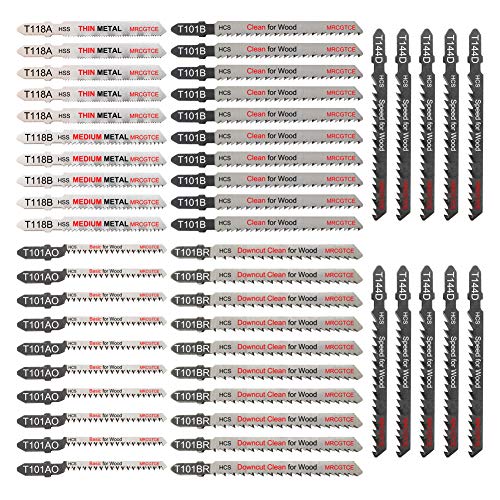
The MRCGTCE 50-piece contractor blade set targets everyday cutting tasks, including wood and plywood. It includes T118A and T118B blades for metal, alongside multiple wood-focused blades: T101AO and T101B for clean wood cuts, T101BR for downcuts, and T144D for faster wood cutting. Crafted with SK5 high-carbon steel and HSS for wear resistance and long blade life, these blades aim to balance cost with performance. A storage case keeps the assortment organized for on-site work. For plywood, the mix of wood blades supports both straight and curved cuts with reduced splintering when used correctly. Lubrication is suggested when cutting metal.
Pros include broad compatibility with many jigs and a generous count of wood-cutting teeth, which helps manage different plywood densities. The down-cut options help minimize tear-out along the top surface, especially in laminated plywood. The set’s value-focused pricing makes it appealing for hobbyists and professionals who tackle a range of tasks beyond plywood. Consider this set if you want a single purchase that covers most common cutting scenarios in woodworking forward, especially when working with mixed materials.
Bosch Pro-Wood T-Shank Blades

Bosch’s Pro-Wood T-Shank set is designed for laminated surfaces and wood, with a focus on clean top surfaces and minimal splintering. The package includes blades optimized for laminate and wood with a reverse-pitch design that reduces tear-out on top surfaces during straight or gently curved cuts. This is particularly helpful when working with veneer plywood or laminated plywood, where edge quality matters as much as speed. The blades fit most modern jigsaws with a T-shank, ensuring broad compatibility on a wide range of tools.
In plywood applications, these blades help achieve smoother edges on both sides due to the reverse-tooth configuration. They’re well-suited for straight cuts in plywood sheets and can handle light laminates when necessary. While designed for wood and laminate rather than heavy metals, the blades offer solid performance for craft and cabinet projects where precision and finish are important. Consider this set when top-surface finish and edge quality are a priority in plywood work.
Diablo Fine Finish Jigsaw Blades

Diablo’s DJT101B5 blades are built for fine finish wood cuts, making them a solid choice for plywood where smooth faces are essential. The high-carbon steel edge delivers strong, clean cuts with less effort, and the tooth design is optimized for smooth bottom finishes and intricate curved cuts. The 4″ length and 10 TPI give a balance between rigidity and flexibility, helping reduce splintering in softwood and plywood alike. These blades are particularly effective for plywood where a precise curve or border is required, as well as for finishing off joints with a neat edge.
For projects involving plywood with exposed laminate, the fine finish blades can minimize tear-out near edges. The blade set benefits from reliable wear life and consistent performance across multiple cuts, provided you match the blade to the correct plywood thickness and cutting direction. If your project emphasizes finish quality over raw speed, these blades are a strong match.
DEWALT DW3742C Jigsaw Blade Set

DEWALT’s DW3742C 14-piece set covers both wood and metal applications, with a T-shank design that fits most popular jigsaws. The assortment includes blades optimized for wood and metal, providing a broad toolkit for mixed-material plywood projects and laminates. The included case aids organization and transport, a practical feature for job sites or shop use. In plywood work, these blades offer dependable performance for straight cuts and gentle curves, with a balance of speed and edge quality across different thicknesses.
Consider this set if you want a widely compatible option with a diverse blade mix that supports various woodworking tasks beyond plywood alone. The large selection helps you optimize for both finishing and rough cuts, making it a versatile addition to any tool chest. For maintainable results, pair these blades with proper feed and cutting speed to preserve plywood edges.
Bosch T101AO Clean Wood Blades

Bosch’s T101AO set is crafted for clean wood cuts with pointed teeth to reduce splintering on both sides of the workpiece. The narrow blade body is optimized for curved cuts and scrolling, making it a strong choice for plywood where precision curves or decorative edges are needed. The 20 TPI configuration supports fine cuts in plywood, laminates, and hardwoods, and the blades are compatible with most T-shank jigsaws. This makes the set particularly useful for cabinet work or craft projects where edge quality matters as much as cut speed.
In plywood work, the T101AO blades excel when you’re performing curved grooves, intricate patterns, or tight radius cuts. They’re designed to deliver a smooth finish with minimal tear-out when used with appropriate cutting technique. If your projects emphasize detailed craftsmanship and clean profiles in plywood, these blades are a dependable option to consider.
Buying Guide
When selecting jigsaw blades for plywood, several factors drive performance and results. Understanding blade material, tooth geometry, and shank compatibility helps you choose blades that deliver clean cuts and long life for your typical plywood projects.
- Blade material and durability: High-carbon steel blades offer sharp edges and good life for softwoods and plywood. Some sets use SK5 or high-speed steel (HSS) for enhanced wear resistance, especially when cutting harder plywood or laminates. For budget projects, a mixed set can cover most needs, while premium blades excel in finish quality.
- Tooth configuration and TPI: For plywood, a higher tooth count (e.g., 20 TPI) reduces tear-out and produces smoother edges on both faces. For quick, rough cuts, lower TPI blades can help you finish faster, but you risk chipping. Look for blades with fine, sharp teeth designed for wood.
- Blade length and kerf: Common lengths range from 3″ to 6″. Shorter blades are stiffer for accurate curves; longer blades allow deeper cuts but can flex. For plywood, 3″ to 4″ blades are a good balance for curved cuts and edge stability, while 6″ blades are useful for thicker panels.
- Shank compatibility: Most modern jigsaws use a T-shank for quick blade changes and broad compatibility. Ensure the blade set you choose matches your tool’s shank type to avoid fitting issues and ensure secure engagement.
- Wood type and finish needs: For plywood with veneer or laminate layers, blades with reverse-pitch or down-cut features help minimize tear-out on the top surface. If you plan decorative curves, choose blades designed for clean scrolling and fine finishes.
- Budget and value: Sets that include a range of wood, metal, and laminate blades provide good value for mixed projects, reducing the need to buy individual blades repeatedly. For professional shops, investing in higher-quality blades can reduce rework and improve consistency across jobs.
- Maintenance and care: Clean blades after use and avoid cutting through nails or metals not intended for the blade. Lubricants can extend blade life when cutting metal; blades intended for wood may not require lubrication for plywood cuts.
- Storage and organization: A sturdy case or compact tray helps prevent blade dulling and loss. Proper storage keeps teeth aligned and edges clean for the next cut.
- Application strategy: For plywood, start with a light pass to establish the cut path, then increase speed gradually to minimize tear-out. Use clamps to secure the sheet and reduce vibration, which helps achieve smoother results with fine-finish blades.
In summary, choose blades with higher tooth counts and wood-focused design for plywood, and consider a versatile set if you handle laminates, metals, or plastics occasionally. Prioritize shank compatibility and blade quality to ensure reliable performance across multiple plywood projects. The right combination of blade material, tooth geometry, and blade length will consistently produce clean, accurate cuts with minimal edge damage.