Best Low Angle Block Planes for Precision Woodworking
Low angle block planes excel at trimming end grains and fitting joinery where a standard block plane may chatter or tear out. The five models below cover classic steel and modern ductile iron bodies, with adjustable mouths for fine tuning. Each option offers precise control, durable construction, and reliable edge retention, making them suitable for cabinetmaking, trim work, and furniture that demands clean, sharp cuts. From established makers to newer toolmakers, this selection balances performance, ease of tuning, and value. Use the buying guide after exploring the product highlights.
| Product | Brand | Key Benefit |
|---|---|---|
| Jorgensen No.60-1/2 | Jorgensen | Durable ductile iron body with adjustable mouth |
| Woodriver Low Angle Block Plane | WOODRIVER | Classic knuckle-cap design, 12° bed angle |
| Taytools 777060 | Taytools | End-grain friendly, precision-lapped body |
| Melbourne Tool Company Low Angle Block Plane | Melbourne Tool Company | M2 high-speed steel blades with strong edge |
| Bench Dog No. 60-1/2 | Bench Dog | Adjustable mouth with case, sock, and inspection certificate |
Jorgensen No.60-1/2 Low Angle Block Plane

The Jorgensen No.60-1/2 pairs a ductile iron body with a professional-grade O1 steel blade, delivering solid cuts for detail woodworking. The blade is finely sharpened to reduce tearing and can be re-sharpened and re-set for long service life. This combination emphasizes durability and repeatable performance for small trims and precise work in tight spaces.
Its rugged body design emphasizes daily-shop durability, with a zinc-alloy lever cap and stainless steel components that resist rust. Adjustment is straightforward: rotate the depth knob to set the cut and tweak the mouth width for different grain directions, providing reliable control across a range of stock.
Woodriver Low Angle Block Plane With Adjustable Mouth
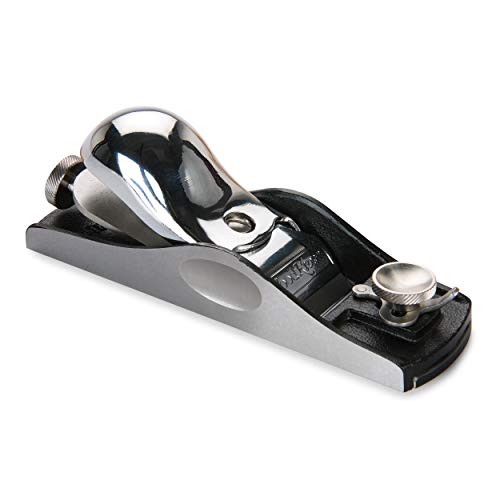
Woodriver’s Low Angle Block Plane is rooted in a classic knuckle-cap design with a 12-degree bed angle, optimized for end grain and tight trimming. The low-angle geometry enhances control when working with difficult stock, helping reduce tear-out during fine paring and fitting tasks.
The adjustable mouth and sturdy construction support consistent shaving and reliable alignment for joinery, small moldings, and cabinet work. This model appeals to woodworkers seeking a traditional setup with modern reliability and ease of tuning for precise results.
Taytools 777060 Low Angle Block Plane

The Taytools 777060 uses a durable ductile cast iron body with a low-angle design that excels at slicing through end grain. The body’s strength supports long sessions of precise planing without flex or chatter, which is crucial for fine trimming tasks in cabinetry and furniture work.
The sole and sides are precision-lapped to within 0.001 inches, ensuring flatness and uniform shaving along the plane’s length. An easily adjustable mouth lets you tune control for different stock, enhancing performance when working with varied grain and densities.
Melbourne Tool Company Low Angle Block Plane

Melbourne Tool Company’s Low Angle Block Plane relies on M2 high-speed steel blades for high abrasion resistance and longer edge life. The blade is designed to hold a sharp edge even with dense or figured woods, making it suitable for demanding trimming and fitting tasks.
Blade depth is adjusted with a wheel, and the blades fix down hard on the plane casting to maximize cutting edge support. This setup promotes consistent performance across repeated passes and longer tool life in a busy shop environment.
Bench Dog No. 60-1/2 Block Plane

Bench Dog’s No. 60-1/2 emphasizes trimming end grain and edge grain with a finely adjustable mouth and precise machining. The low-angle design provides control in tight spots, making it a reliable choice for delicate work and small moldings.
The finely cast body sits true under load, and the kit includes a protective case, sock, and an inspection certificate with measurements for sole flatness and blade hardness. This combination supports consistent results and traceable quality for professional shop use.
Buying Guide
When selecting a low-angle block plane, prioritize blade material and sharpness, the range of mouth adjustments, and the overall build quality. A robust body and a well-lapped sole help maintain accuracy across sessions and different wood species.
Blade material matters for edge retention and ease of sharpening. O1 steel blades are common for their balance of edge life and ease of sharpening, while high-speed steels like M2 resist wear longer in dense timber. Replacement blade availability can also affect long-term costs and uptime.
Mouth adjustment and depth control are essential for end-grain work and tear-out prevention. An adjustable mouth allows you to tailor the opening for the stock at hand, while a clear depth adjustment helps manage cut depth and consistency across passes.
Durability and maintenance influence tool longevity. Ductile iron bodies typically absorb impacts better and resist cracking, while cast iron bodies can be lighter and affordable. Look for durable levers, corrosion-resistant hardware, and well-secured blade seats for reliable performance over time.
Practical usage considerations include the task at hand and your experience level. Beginners may prefer planes with clearly labeled adjustments and a forgiving mouth, whereas seasoned woodworkers might prioritize ultra-flat soles and the ability to rotate or replace blades quickly. Consider compatibility with existing blades and accessories to maximize value.
Quick Feature Comparison
| Aspect | Jorgensen | Woodriver | Taytools | Melbourne Tool Co | Bench Dog |
|---|---|---|---|---|---|
| Body Material | Ductile iron | Cast iron | Ductile cast iron | Cast body / robust casting | Fine-grain castings |
| Bed Angle | Low-angle (not specified) | 12 degrees | Low-angle (not specified) | Low-angle (not specified) | Low-angle (not specified) |
| Adjustable Mouth | Yes | Yes | Yes | Yes | Yes |
| Blade Material | O1 steel | Standard blade | Not specified | M2 high-speed steel | Not specified |
| Inclusion | — | — | — | — | Case, sock, certificate |