Best Midi Wood Lathe for Hobbyists and Professionals
Midi wood lathes balance compact footprints with robust turning capacity, making them ideal for hobbyists, makers, and small shops. They combine powerful motors with versatile speed control to handle fine detailing and heavier material removal alike. A good midi lathe should offer smooth, adjustable speeds, solid stability, and accessible belt change mechanisms to keep projects flowing. This guide reviews five top Amazon options, highlighting motor power, speed ranges, build quality, and practical features. Use these insights to compare performance, ease of use, and value for your woodworking projects.
| Product | Brand | Swing / Centers | RPM Range | Power | Notable Features |
|---|---|---|---|---|---|
| RIKON 70-150VSR Midi Lathe | RIKON Power Tools | 12″ Swing | Wide, variable | 1 HP | Digital RPM readout; forward/reverse rotation; pivoting belt cover |
| FindBuytool 12-Inch Midi Wood Lathe | FIND BUY TOOL | 12″ Swing / 21″ centers | 300–1200 RPM; 750–3500 RPM | 3/4 HP | All-cast-iron design; two speed ranges; rubber feet |
| Delta Midi Lathe 46-460 | Delta | 12-1/2″ Swing | 250–700, 600–1800, 1350–4000 | Not specified | All cast-iron construction; belt tensioning system; onboard storage |
| JET 12×21 Variable-Speed Lathe | Jet | 12″ Swing / 21″ centers | 60–900, 1100–1800, 220–3600 | 1 HP | Ratchet-style belt tension; redesigned controls with larger DRO |
| WEN LA3424 Midi Lathe 12×18 | WEN | 12″ Swing / 18″ centers | 250–3550 | 4.5 A | Includes 4″ faceplate; soft-start motor |
RIKON 70-150VSR Midi Lathe

RIKON’s 70-150VSR Midi Lathe provides a powerful 1 HP DC motor, supporting a broad turning range for spindles, bowls, and light furniture parts. The electronic variable speed control expands operational speeds, enabling precise cutting for hardwoods and softwoods alike. A digital RPM readout helps set accurate forward and reverse rotation speeds, improving finishing quality on pieces with grain direction considerations. A pivoting belt cover facilitates belt changes without interrupting workflow, reducing downtime in busy shops. The combination of torque, speed versatility, and accessible maintenance makes it a strong option for mid-sized projects.
The 1 HP motor offers robust torque to tackle denser materials, while the wide speed range supports both delicate detailing and aggressive stock removal. The digital readout and forward/reverse capability help operators fine-tune finishing passes. Overall, this lathe emphasizes practical usability and consistent performance in everyday turning tasks.
FindBuytool 12-Inch Midi Wood Lathe

The FindBuytool Marchorool FL1221 lathe delivers a capable 3/4 HP motor with 6 amps, designed to handle hardwoods and tough materials with consistent torque. Its 12″ swing and 21″ between centers provide space for mid-sized turnings, making it a versatile choice for bowls, spindles, and larger pens. The lathe features two RPM ranges—300-1200 RPM for fine detailing and 750-3500 RPM for material removal—allowing smooth transitions between tasks. An ultra-stable cast-iron design reduces vibration, while rubber feet or bench mounting further dampen movement for precise cuts, especially at higher speeds.
Users benefit from stable voltage and reliable speed control, ensuring predictable results across repeated sessions. The combination of a sturdy build, dual-range speed control, and practical bed length makes this lathe appealing for home shops expanding into more ambitious projects without stepping up to full-size machines.
Delta Midi Lathe 46-460

Delta’s 46-460 MIDI Lathe emphasizes stability and long-term durability through a heavy-duty, all-cast-iron frame. This design contributes to reduced vibration during extended turning sessions and supports precise finishes. A patented belt tensioning system makes speed changes quick and consistent, helping maintain optimal torque transfer. The three-pulley speed ranges provide flexibility for different projects without constantly reconfiguring belts, while onboard storage keeps tools and accessories within reach for quick adjustments during a session.
The RPM options (250-700, 600-1800, 1350-4000) cover a wide spectrum of work, from light spindle work to more aggressive wood removal. The build quality and belt management are hallmarks of Delta’s mid-range midi machines, making it a dependable option for hobbyists moving toward more complex turns.
JET 12×21 Variable-Speed Lathe

JET’s JWL-1221VS combines a 12″ swing with 21″ between centers and a 1 HP motor, offering substantial turning capacity in a compact package. The lathe provides three distinct speed ranges: 60-900 RPM, 1100-1800 RPM, and 220-3600 RPM to accommodate bowls, spindles, and mixed-piece turning. A ratchet-style belt tension system enables quick belt changes, minimizing downtime during projects with varied parts. Redesigned controls featuring a larger digital readout and recessed power switch enhance usability and safety in busy workshops.
With a focus on stability and control, this model suits turners who require reliable performance across a range of project types. The combination of a solid bed, intuitive belt system, and accessible electronics makes it a versatile choice for both beginner and intermediate users pursuing higher-quality finishes.
WEN LA3424 Midi Lathe 12×18
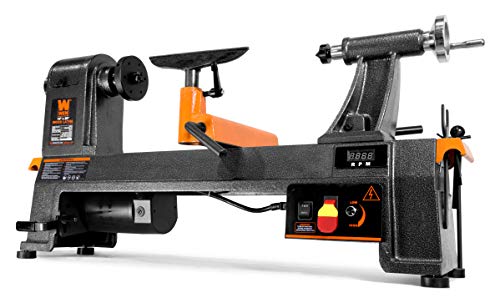
WEN’s LA3424 Midi Lathe offers a practical 12″ by 18″ bed with a 4.5-amp motor, delivering five speeds suitable for a wide spectrum of projects—from pens and bowls to small platters. The soft-start feature helps protect the motor and bearings by easing into operation, which is beneficial for beginners and seasoned turners who perform delicate cuts. The compact footprint makes it appealing for smaller shops where space is at a premium, while the five-speed range provides enough flexibility for most mid-sized turning tasks.
Included accessories and thoughtful design features, such as a faceplate and straightforward belt access, contribute to easier setup and ongoing maintenance. The reliable performance and value-oriented build make this model a strong entry among midi lathes for hobbyists expanding their toolkits.
Buying Guide
Selecting a midi wood lathe requires balancing project needs with workspace realities. Consider swing and bed length to determine whether you’ll primarily turn spindles, bowls, or larger projects. Center distance matters for longer pieces, and a compact footprint helps in tight workshops. Motor power matters for dense hardwoods and ambitious pieces; a 1 HP motor provides ample torque for most hobbyist work, while higher amperage models support larger tasks with ease.
- Speed control: Decide between continuously variable speed with electronic control or fixed belt-based ranges. Lathes with electronic variable speed often offer smoother transitions and broader RPM ranges for different materials.
- RPM range coverage: Look for at least two distinct ranges to switch quickly between delicate finishing and material removal. Three-range systems provide even more versatility for bowls, bowls-with-chips, and spindles.
- Build quality and stability: Cast-iron beds and heavy bases dampen vibrations and improve finish quality. Rubber feet or mounting options help isolate noise and movement on busy benches.
- Accessory ecosystem: Check compatibility with common chucks, faceplates, centers, and tailstock accessories. A lathe that supports widely used accessories reduces long-term costs.
- Ease of maintenance: Pivoting belt covers, accessible belt changes, and clear speed readouts simplify operation and reduce downtime during projects.
- Safety features: Look for features such as soft-start, recessed power switches, and stable tool rests. Adequate guards and proper instruction are essential for safe turning.
- Space and footprint: Measure your workspace to ensure the lathe fits while allowing safe operation and workflow around the machine.
- Warranty and support: A solid warranty and responsive customer support can save time and money if parts or service are needed down the line.
In practice, the best midi lathe for you depends on project scope and space. For compact work with versatile speed control, models like the RIKON VSR MIDI or JET JWL-1221VS offer strong performance and robust feature sets. If you prioritize stability and long-term durability, Delta’s 46-460 provides a stable platform with a focus on belt tension and bed quality. For beginners or budget-conscious buyers, WEN models often deliver reliable mid-range capability with accessible maintenance. For large center distances and heavier turning, FindBuytool and Delta provide solid mid-sized options with practical features.