Best Pressure Washer for Starting a Cleaning Business
Starting a professional cleaning business requires reliable, efficient tools that can handle daily jobs like deck cleaning, fence restoration, and driveway rejuvenation. The following five pressure washers balance power, portability, and maintenance considerations to help you pick a machine that scales with demand. From rugged gas units that tackle heavy grime to compact electric models ideal for client sites with noise restrictions, these picks support repetitive work, customer turnover, and varying job sites. The table below provides a quick snapshot to compare core specs at a glance.
| Product | Type | PSI | GPM | Notable Features |
|---|---|---|---|---|
| DeWalt DXPW3425E-S | Gas | 3400 | 2.5 | Electric-start engine; durable frame |
| Westinghouse WPX3400 | Gas | 3400 | 2.6 | 5-nozzle set; onboard soap tank |
| Greenworks Compact Electric | Electric | 1600 | 1.2 | CSA certified; lightweight |
| Westinghouse ePX3500 | Electric | 2500 | 1.76 | Pro-style wand; anti-tipping design |
| Westinghouse WPX3000e | Electric | 3000 | 1.76 | Induction motor; onboard soap |
DeWalt DXPW3425E-S 3400 PSI Gas Pressure Washer

The DeWalt DXPW3425E-S is engineered for demanding exterior cleaning tasks with a focus on dependable startup and steady performance. Powered by a 208cc premium residential engine, it offers strong cleaning power suitable for decks, patios, outdoor furniture, siding, and surface preparation before painting. Its electric-start feature speeds up daily job-site routines, reducing downtime between tasks.
- 3400 PSI at 2.5 GPM
- Electric-start 208cc engine
- Axial cam pump with thermal relief valve
- Welded steel frame with powder coating
- Lightweight, portable design with 10″ pneumatic tires
- Compact footprint: L 23″ x W 21.5″ x H 23″
For a small business that needs to process frequent residential jobs, this unit delivers robust cleaning while maintaining mobility on typical work sites. Regular maintenance and fuel logistics are considerations for long-term operation, but the machine’s durability supports steady daily use in a service-oriented workflow.
Westinghouse WPX3400 Gas Pressure Washer

The Westinghouse WPX3400 is built for serious outdoor cleaning with a balance of power and efficiency. Its 3400 PSI output and 2.6 GPM flow rate are well-suited for heavy-duty tasks on driveways, fences, siding, and garage floors. A versatile nozzle set lets you adjust from broad surfaces to concentrated jets, optimizing time on site and minimizing rework.
- 3400 PSI and 2.6 GPM
- Onboard 1 gallon gas tank and 0.5 gallon onboard soap tank
- 25′ abrasion-resistant hose with 5 quick-connect nozzles
- Spray gun and wand included; M22 fittings
- Compatible with surface cleaners and foam cannons
Gas-powered models like this one are advantageous for medium- to large-scale cleaning jobs or on jobsites where power outlets are scarce. They demand fuel management and regular maintenance but offer sustained, high cleaning capacity for a growing cleaning business.
Greenworks Compact Electric Pressure Washer

The Greenworks compact electric model is designed for low-noise, low-emission operation, making it a practical choice for on-site work near homes or in noise-sensitive neighborhoods. It provides sufficient cleaning power for cars, fences, patios, and smaller decks, with simple setup and everyday usability that suits an entry-level or backup business option.
- 1600 PSI at 1.2 GPM
- 20 ft hose and 35 ft power cord
- CSA certified
- Lightweight and portable
- Effective for cars, fences, patios, decks
Electric operation reduces fuel handling and maintenance time, which can help a new business maintain steady service without the complexities of a gas engine. It pairs well with a service plan that prioritizes quick turnaround times on smaller jobs.
Westinghouse ePX3500 Electric Pressure Washer
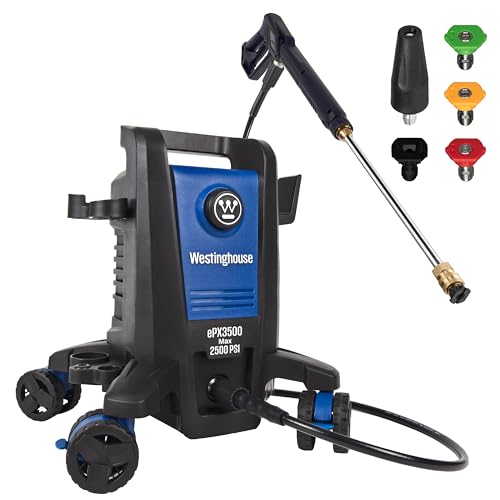
The Westinghouse ePX3500 combines power with a compact, user-friendly design. It delivers up to 2500 max PSI and 1.76 GPM, making it capable of tackling decks, driveways, and vehicles without the bulk of some gas units. The onboard soap tank and a pro-style wand with five nozzles enhance cleaning precision and efficiency on a range of surfaces.
- 2500 max PSI, 1.76 GPM
- Onboard soap tank
- Pro-style steel wand; five-nozzle set
- Anti-tipping, compact design
- 20 oz onboard soap tank
This model suits businesses that prioritize quiet operation and easier storage while handling moderate cleaning workloads on residential properties and smaller commercial sites.
Westinghouse WPX3000e Electric Pressure Washer
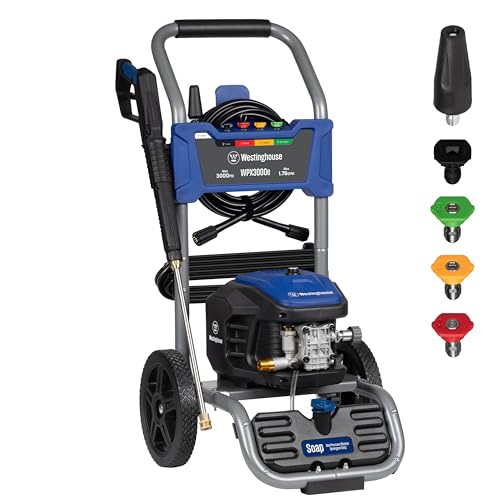
The WPX3000e provides strong cleaning ability with an electric footprint designed for steady daily use. It offers up to 3000 max PSI with 1.76 GPM, and it uses an induction motor for reliable operation. The onboard soap tank, five-nozzle set, and a 25-foot hose make it a capable option for a wide array of exterior cleaning jobs, from siding to patios.
- Max 3000 PSI; 1.76 GPM
- Induction motor
- Onboard soap tank; 5 nozzle set
- 25′ hose; auto-stop pump
- Compact and easy to store
Electric models like this are ideal for businesses prioritizing consistent pressure with lower noise and emissions, especially in client-driven environments or residential neighborhoods where fuel-powered machines may be impractical.
Buying Guide
Power Source And Intended Use
Gas-powered units deliver higher PSI and GPM and are well-suited for heavy-duty, frequent use on large exterior surfaces. They are powerful and versatile but heavier, louder, and require fuel and maintenance. Electric pressure washers are quieter, cleaner, and simpler to maintain, making them ideal for smaller jobs, noise-restricted sites, and daily client work where emissions matter. Consider how often you’ll work on large driveways versus small patios and whether you’ll operate near populated areas or on construction sites with dense power access.
Performance Metrics To Prioritize
PSI and GPM together determine cleaning effectiveness. For most residential exterior cleaning tasks, aim for 1800–3200 PSI with at least 1.6–2.5 GPM. For concrete, brick, and stubborn grime, higher GPM can reduce cleaning time. If you anticipate frequent use across multiple sites, a model with a robust pump design (such as axial cam or triplex options) and a thermal relief valve helps prevent overheating during extended sessions.
Durability, Maintenance, And Warranties
Serviceability matters for a business. Gas engines need regular fuel maintenance and engine care, while electric models typically require less ongoing maintenance. Look for a sturdy frame, corrosion-resistant components, and accessible service intervals. A longer warranty can offset higher upfront costs by reducing long-term ownership risks. Check the availability of replacement parts, especially for rotation-critical components like pumps and motors.
Accessory Compatibility And Expandability
Accessory ecosystems influence versatility and speed on the job. Surface cleaners, foam cannons, and additional nozzles extend use cases. Ensure that hoses, connectors (such as M22 fittings), and wands are compatible with the units you’re evaluating. A model with a decent hose length (around 25 feet or more) reduces the need for frequent repositioning, while the ability to upgrade with optional accessories can protect your investment.
Cost Considerations And Return On Investment
While price is a factor, evaluate total cost of ownership, including fuel, electricity, maintenance, and potential downtime. Gas units typically incur higher ongoing costs but may offer more performance on very large or stubborn jobs. Electric models lower operating costs and simplify maintenance but may require access to power outlets at each job site. For a new business, a balanced mix of a reliable gas machine and flexible electric options can cover a wide range of client needs.