Best Primer for Painting Over Powder Coat Finishes
Choosing the right primer is essential when refinishing powder‑coated surfaces. This guide reviews five credible primers and base coats that adhere to powder‑coated metals, resist corrosion, and provide a solid base for topcoats. Whether you’re touching up hobby parts or restoring a car frame, these options cover epoxy‑based primers, corrosion resistance, and common prep products. The following summary table helps you compare key features at a glance.
| Product | Brand | Type | Notable Feature |
|---|---|---|---|
| PRISMATIC POWDERS Epoxy Primer | PRISMATIC POWDERS | Epoxy Primer | Grey base coat with glossy finish |
| Eastwood Hotcoat Powder Coat Corrosion Resistance Primer | Eastwood | Epoxy‑based Primer | Durable base for powder finishes; bake recommended |
| Rust‑Oleum 363525 Automotive Guide Coat Primer | Guide Coat Primer | Highlights low points to ensure full coverage | |
| US GYPSUM First Coat Primer | U S GYPSUM | First Coat Primer | Simple, multi‑surface primer option |
| Perfect Primer Encapsulant | Perfect Primer | Encapsulant/Primer | Encapsulates hazardous materials; bonds to new coatings |
PRISMATIC POWDERS Epoxy Primer

PRISMATIC POWDERS Epoxy Primer provides a grey base coat designed for epoxy adhesion on powder‑coated surfaces. The powder form yields a solid tone with a glossy finish when cured, creating a uniform base for topcoats. It is formulated to pair with subsequent powder or liquid coatings, offering strong adhesion to metal substrates and resistance to polishing marks when applying final finishes. Preparation should involve cleaning and scuffing the powder surface to improve bite, followed by even application in a well‑ventilated area. Adhere to local safety guidelines for powder products and solvent handling.
The epoxy foundation helps seal micro‑imperfections and improves corrosion resistance before applying color or clear coats. Users typically benefit from applying multiple thin coats rather than one heavy layer to avoid runs and pinholes. Drying and curing timelines depend on ambient conditions and the manufacturer’s instructions; ensuring a clean, dry surface is essential for optimal bonding and gloss retention. This primer is particularly suitable for solid color finishes where a smooth, reflective topcoat is desired.
Eastwood Powder Coat Corrosion Primer

Eastwood Hotcoat Powder Coat Corrosion Resistance Primer is an epoxy‑based primer designed to boost adhesion and durability on powder‑coated parts. It is intended to be used on clean bare metal surfaces and, in many cases, may be baked in a preheated oven to promote flow‑out and maximum adherence. The epoxy formulation provides a robust foundation that resists chipping, scratching, and corrosion, which is particularly important for outdoor or high‑moisture environments. Following surface preparation guidelines—such as removing oils, lightly scuffing the powder, and ensuring complete dryness—will help achieve a uniform finish.
For best results, apply in a thin, even coat and allow adequate recoat times between layers. The recommended oven bake setup (where applicable) aids in achieving a smooth film with good scratch resistance. This primer suits projects where long‑term durability and corrosion resistance are priorities, including automotive components and metal hardware that will bear regular wear and weather exposure.
Rust‑Oleum Automotive Guide Coat Primer
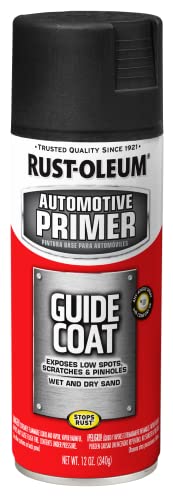
Rust‑Oleum 363525 Automotive Guide Coat Primer is designed to aid in identifying surface irregularities by highlighting low points, scratches, and pinholes before coating. While it functions as a primer, its guide coat capability helps ensure thorough coverage when painting over powder‑coated metal. The formula provides corrosion resistance through its base coat and dries to the touch quickly; it can be wet or dry sanded, allowing for flexible finishing schedules. It is a practical choice when preparing a powder‑coated surface for a new topcoat and when a smooth, defect‑free finish is required.
Application guidance emphasizes light, even spraying to prevent buildup and ensure consistent film thickness. Given its dual role as a primer and guide coat, this product is especially useful for bodywork, restoration projects, or any scenario where precise surface feedback is needed before the final color is applied. Always follow the substrate preparation steps and recoat windows to maintain bonding integrity with subsequent finishes.
US GYPSUM First Coat Primer

US GYPSUM First Coat Primer is presented as an easy‑to‑use primer intended for first coats on various surfaces. While the product description notes its simple use and manufacturing origin, its role as a first‑coat primer makes it a potential starting layer for projects involving powder‑coated metal that will receive additional topcoats. When applying this primer over powder coatings, ensure the surface is clean, free of oils, and lightly scuffed to improve adhesion. Recoat intervals should respect the manufacturer’s guidelines to avoid lifting or peeling.
In projects requiring multi‑material compatibility, this primer can serve as a versatile underlayer that helps achieve uniform color and improved grip for subsequent coatings. As with any primer, environmental conditions, ventilation, and personal protective equipment are important considerations during application and curing. For best outcomes, test on a small area before full‑scale use and adhere to the recommended film thickness and curing times.
Perfect Primer Encapsulant

Perfect Primer Encapsulant combines encapsulation with priming, offering a solution for surfaces that may harbor old mastics, coatings, or staining. It is advertised as a multi‑surface product suitable for floors and walls, and as an encapsulant it can seal problematic substances while bonding to new coatings such as epoxy, tile, or latex paints. When painting over powder coatings, encapsulants can be useful if there are legacy coatings or contaminants that require isolation before applying a fresh primer. Always follow the product’s instructions for surface preparation and curing times to ensure a sound bond with your topcoat.
Because this product emphasizes containment and bonding with a range of finish materials, it can be advantageous in renovation scenarios where old materials may interfere with adhesion. However, visual results may vary depending on the existing substrate and the subsequent coating system. As with all primers, ensure proper ventilation, PPE, and a compatible topcoat to maximize durability and finish quality.
Buying Guide
Key purchase considerations
- Substrate compatibility: Powder‑coated metal often requires a primer that can bond to both the coating and the new topcoat. Look for epoxy‑based primers or products explicitly designed for powder coatings.
- Adhesion and surface prep: A light scuff, cleaning, and dry surface are crucial for strong adhesion. Some primers mention “bake” or flow‑out steps; follow those guidelines if applicable.
- Topcoat compatibility: Ensure the primer will pair with the intended finish (epoxy, enamel, polyurethane). Some primers are better suited for durable automotive finishes, while others are multi‑surface.
- Drying and curing: Dry times affect workflow. Some primers require oven curing to achieve maximum hardness and gloss retention; others air‑dry.
- Finish and appearance: Grey, black, or clear primers affect the final look. For color accuracy, pick a primer that provides a neutral base and minimizes shine variability.
- Safety and VOCs: Check ventilation needs, respiratory protection, and VOC content. Powder coatings and primers can produce fine particulates and fumes during application.
- Packaging and cost: One‑pound containers are common for hobby projects, while larger packages may suit ongoing manufacturing or restoration work.
How to choose among the options
- For maximum adhesion on powder coatings with excellent corrosion resistance, epoxy primers like the PRISMATIC POWDERS or Eastwood options are strong choices.
- If you need a product to reveal surface defects before final coating, a guide coat like the Rust‑Oleum option helps ensure even coverage and defect identification.
- When facing legacy materials or hazardous substrates, a encapsulant primer like Perfect Primer Encapsulant may be beneficial to seal and bond before applying a modern topcoat.
- For quick, straightforward projects with simple recoat steps, a basic first coat primer such as US GYPSUM First Coat Primer can be appropriate, provided it adheres to the powder coating surface.
Practical tips and best practices
- Always read the product data sheet for surface prep, recommended film thickness, and curing conditions.
- Test on a small panel to verify adhesion and finish before committing to a full project.
- Maintain clean, dust‑free spraying or brushing environments to prevent contamination of the primer film.
- Consider a multi‑layer approach: a thin base coat, followed by a uniform topcoat, rather than a single thick layer.
- Document your process (surface prep, coat order, curing times) to ensure repeatable results on future projects.