Best Radiant Floor Heating System for Warm, Even Floors
Choosing a radiant floor heating system involves balancing coverage, voltage, installation method, and thermostat features. The five products below illustrate common options for tile and laminate installations across the United States, from compact mats to large, room-scale kits and a hydronic panel. Each entry includes a brief overview, the included components, and how the thermostat communicates with the system. Use this guide to compare installation needs, efficiency, and long-term reliability to determine the best radiant floor heating solution for your home.
| Product | Brand | Coverage (Sq Ft) | Voltage | Notable Feature |
|---|---|---|---|---|
| GTDsupply All-In-One Electric Floor Kit | GTDsupply | 27 | 120V/240V | Ditra Heat DUO membrane compatibility |
| Warming Systems Electric Floor Heating System | Warming Systems | 220 | 240V | Includes uncoupling membrane and programmable thermostat |
| LuxHeat 120 Sq Ft Electric System | LuxHeat | 120 | 120V | UDG4 thermostat with GFCI, uncoupling membrane |
| LuxHeat 30 Sq Ft Mat Kit | LuxHeat | 30 | 120V | UWG4 WiFi thermostat, self-adhesive mat |
| BLARALA 30 Sq Ft Mat Kit | BLARALA | 30 | 120V | Programmable thermostat with floor sensor |
GTDsupply All-In-One Electric Floor Kit
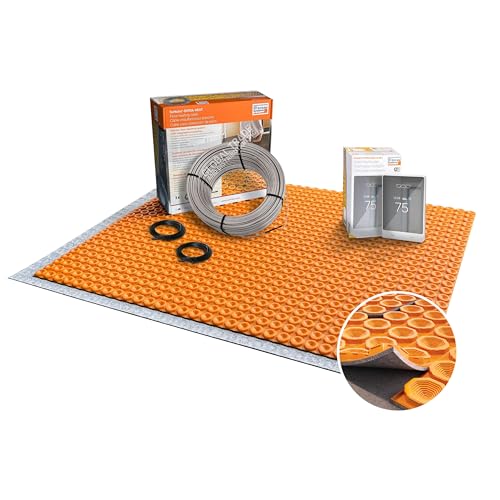
The GTDsupply kit provides a complete electric radiant floor solution for up to 27 square feet. It includes the heating cable and the DHERT105/BW Smart WiFi programmable thermostat, with compatibility for Ditra Heat DUO membranes by Schluter Systems. The thermostat supports wireless programming via a smartphone app, enabling remote control of temperature settings and schedules. The kit also includes a floor sensor to monitor actual floor temperature, supporting accurate, responsive warming beneath tile, stone, or other resilient flooring. The system is designed for both 120V and 240V operation, offering flexibility for different homes and remodel projects. Installation integrates with Schluter’s Ditra Heat DUO membranes, which helps with crack isolation and waterproofing underlayment in tiled areas.
In practice, this solution is well-suited for retrofit projects where a tile floor needs even warmth without radiant water pipes. The 27-square-foot coverage is ideal for bathrooms, small kitchens, entryways, or adjacent zones in a larger open-plan space. The WiFi thermostat enables scheduling and geofencing, which can improve comfort and energy efficiency. As with any electric floor heating setup, professional electrical planning is recommended to confirm circuit capacity and proper wiring. The Ditra Heat DUO compatibility adds a robust installation pathway for tile floors, enhancing longevity and performance.
Warming Systems 220 Sqft Electric Floor Heating System

This expansive 220-square-foot system is designed for larger areas, using a 240-volt supply. The kit includes 880 linear feet of heating cable and 322 square feet of uncoupling membrane, facilitating straightforward installation and effective crack isolation beneath tile or other floor coverings. The digital, programmable thermostat (TH115-AF-240) provides precise control and includes an underfloor temperature sensor for accurate feedback. A built-in monitor alarm alerts installers to potential cable damage during installation, improving safety and reducing the risk of mid-project delays. The UL-listed components are rated for use in wet areas, supporting bathrooms and other moisture-prone spaces.
Installation flexibility is a key feature: the uncoupling membrane allows for easier routing of cables, and the system can be used with tile, engineered wood, laminate, or luxury vinyl coverings after proper securing and leveling. The large footprint makes it suitable for whole-room heat or for multi-room configurations that share a common heating circuit. While the upfront cost and complexity are higher than smaller kits, the long-term comfort and even heat distribution across larger zones can justify the investment in homes with extensive tiled or stone areas.
LuxHeat 120 Sq Ft Electric Radiant Floor Heating System

This LuxHeat package targets larger rooms or open-plan spaces, providing 120 square feet of radiant heat at 120 volts. It includes a UDG4 programmable thermostat with GFCI, a Prova Flex-Heat uncoupling membrane, a floor sensor, an alarm, and the necessary heating cable. The system offers dual sensing (air and floor), power logging, and a 7-day/4-event programming schedule to balance comfort and energy use. The thermostat is designed for UL/cUL approval in USA and Canada, and LuxHeat backs the kit with a 3-year warranty. The uncoupling membrane helps manage cracks and movement, improving longevity under tile or stone floors.
Installation requires embedding heating wires under a suitable subfloor, followed by grout or leveling compound to create a stable surface for tile or other compatible floor coverings. The combination of a robust thermostat with floor-sensing capabilities and a durable membrane makes this kit a solid option for bathrooms, kitchens, or living spaces that demand consistent warmth. As with any 120V system, ensure the circuit capacity matches the load to avoid tripping breakers during peak use.
LuxHeat 30 Sq Ft Floor Heating Mat Kit

The LuxHeat 30-square-foot mat kit is designed for smaller spaces where tile or laminate is popular, such as bathrooms or kitchens. The kit includes a 30 sq ft self-adhesive heating mat, a cable monitor/alarm, and the UWG4 WiFi programmable thermostat with floor sensor and built-in GFCI. The installation process emphasizes cutting and routing the mat with care, as the heating cables must be embedded in a self-leveling underlayment or mortar. The mat’s pre-spaced design allows easier placement and expansion potential. The UWG4 thermostat supports app connectivity and local control, enabling flexible scheduling and remote monitoring of floor warmth.
Notable considerations include the need to cover the heating mat with an appropriate self-leveling compound to ensure even heat distribution and to protect the heating elements. The inclusion of a floor sensor helps maintain accurate temperatures, avoiding overheating. This kit is well-suited for bathrooms or small kitchens where precise zoning is desired without committing to larger, more complex floor heating installations. As with other electric kits, verify circuit capacity and ensure proper moisture protection for the installation area.
BLARALA Electric Radiant Floor Heating System

The BLARALA 30-square-foot system provides a complete 120V radiant floor solution with a 30 sq ft heating mat, a programmable thermostat, a cable monitor, and temperature sensors. The thermostat features built-in GFCI detection and four operating modes, plus dual sensors (air and floor) for enhanced safety and accuracy. With a total load of about 12W per square foot, this kit delivers steady warmth under tile, laminate, or other compatible flooring. The inclusion of temperature sensors and a monitored alarm adds extra protection against overheating and wiring issues during installation, making it a practical choice for smaller bathroom projects or kitchens.
As with other mat-based systems, installation requires careful placement of mats to avoid overlaps and to ensure the cable is fully embedded in the leveling material. The 30 sq ft footprint makes it a good match for compact spaces or as a zoned heat option within a larger room. The thermostat’s multiple modes and safety features support controlled operation, while the overall package provides an approachable entry into electric radiant floor heating for homeowners and installers alike.
Buying Guide
Key purchase considerations.
- System type: Electric mat or cable kits are generally easier to retrofit into existing floors, while hydronic panels (not shown here) use heated water loops and are typically used for larger installations. Electric kits tend to be simpler to install in small to medium rooms and can be powered from standard home circuits, depending on the load.
- Coverage and zoning: If you are warming an entire bathroom or a larger open area, larger kits (like 120–220 sq ft) provide more even heat distribution and fewer zoning challenges. For smaller spaces, 20–30 sq ft kits can be installed quickly and expanded later if needed.
- Voltage and current: Most residential kits use 120V with varying amperage; larger systems may require 240V or dedicated circuits. Check the thermostat’s wiring requirements and ensure your electrical panel can accommodate the load without overloading circuits.
- Thermostat features: Look for programmable or smart thermostats with floor-sensing capabilities, GFCI protection, and the ability to create schedules. This improves comfort and energy efficiency while preventing overheating.
- Uncoupling membranes and subfloor prep: Many kits rely on uncoupling membranes to manage movement and cracks under tile. Proper subfloor prep and leveling are crucial for performance and longevity.
- Sensor placement: Floor sensors help maintain accurate temperatures. Ensure sensor placement is appropriate for the room geometry and not exposed to direct heat sources or heating elements.
- Safety and codes: Verify that components are UL-listed or UL/cUL-approved for the United States and Canada, especially in moist areas like bathrooms or basements. Ground-fault protection (GFCI) is a recommended safety feature in wet spaces.
- Warranty and service: Look for kits with robust warranties (several years) and accessible customer support. This can be valuable for troubleshooting and future upgrades.
- Floor type compatibility: Tile and stone floors are common applications, but some products also support laminate or vinyl with appropriate underlayment and self-leveling compounds. Always follow manufacturer guidance for floor coverings.
In choosing among these options, consider your room size, existing electrical infrastructure, and whether you prefer a single-room solution or a broader installation plan. Electric systems offer quick installation and straightforward zoning, while hydronic panels can be more cost-effective for whole-house warmth but require boiler-based infrastructure and more extensive installation work. The right choice balances initial installation effort with long-term comfort, energy use, and maintenance needs. Always consult with a qualified installer or electrician to confirm compatibility with your home’s layout and electrical system.