Best Radiation Suits for Nuclear Fallout Protection and Related Gear
Preparing for nuclear fallout scenarios involves reliable heat and radiation protection, quick donning, and clear monitoring tools. This article highlights five top Amazon picks that address high-temperature exposure, radiation shielding, and situational awareness. Each product section provides a concise overview, practical use notes, and how it fits into a broader safety strategy. A buying guide at the end reviews key considerations to help you choose the right combination of protection and practicality.
| Product | Brand | Key Benefit | Best Use |
|---|---|---|---|
| EYCOMTOM Fire Resistant Suit | EYCOMTOM | Extreme heat resistance with aluminized fireproof materials | High-heat environments, near heat sources |
| Consfly Heat Resistant Suit (Large) | Consfly | 1000℃ heat protection with comfortable lining | Industrial, firefighting, high-heat projects |
| Consfly Heat Resistant Suit (Medium) | Consfly | Lightweight, flexible protection | Active tasks in high heat |
| Lead Radiation Protection Suit | Goudergo | Lead shielding vest and collar for radiation exposure | Medical settings, X-ray environments |
| WALFRONT Nuclear Radiation Detector | Walfront | Real-time radiation monitoring with alarms | Home safety, emergency response |
EYCOMTOM Fire Resistant Suit Overview

The EYCOMTOM Fire Resistant Suit is designed for high-temperature environments, featuring an aluminized fireproof and flame-retardant exterior. It provides robust heat insulation and resistance to heat buildup, helping workers stay cool and protected near heat sources. The suit is offered in extra-large sizes (XL and XXL) to accommodate taller wearers, with sizing guidance that accounts for body shape variability. This option is suitable for industrial settings, firefighting contexts, and scenarios requiring a distinctive, protective appearance at elevated temperatures.
Key considerations include the suit’s heat insulation performance, durability, and fit. While it provides notable protection against heat and flames, users should verify compatibility with motion requirements and ensure proper sizing for mobility. The product’s versatility also allows use in themed events or demonstrations where visibility and protection are valued.
Consfly Heat Resistant Suit — Large

The Consfly Large heat-resistant suit combines a high-reflectivity aluminum foil layer with a durable outer shell to block heat transfer. It maintains its temperature-resistant properties up to 1000 degrees Celsius and is designed to resist shrinkage, melting, and brittle carbonization. The cotton lining aids moisture management for extended wear, and the loose cut supports comfortable movement during climbing, running, and other activities. Direct contact with intense flames should be avoided, as with most protective suits, to prevent damage.
Practical use focuses on protection during high-heat tasks and rapid response activities. The suit’s comfort and mobility aspects are balanced against limitations in direct flame exposure, so it is best paired with other cooling or ventilation strategies in demanding environments.
Consfly Heat Resistant Suit — Medium
The Consfly Medium suit shares the same core construction as its large counterpart, using a reflective aluminum foil-based insulation system. It emphasizes a light, loose fit to support movement, including running, climbing, and jumping in high-temperature environments. The design aims to maintain protective properties while reducing thermal burden on the wearer. As with other heat-protective garments, avoid direct, prolonged exposure to open flames to preserve the suit’s integrity.
Ideal contexts include industrial environments, emergency response drills, and settings where protection from radiant heat is essential but full firefighter gear is unnecessary or impractical.
Lead Radiation Protection Suit

This lead-based radiation protection vest and collar assembly offers a lead equivalent of 0.5 mmPb for enhanced shielding against X-ray exposure. The kit is sized to fit a broad range of heights, making it suitable for clinical and patient-care environments where radiation safety is paramount. The integrated design—with vest, apron, and collar—provides comprehensive coverage and a practical solution for medical workers and technicians. It is not intended for direct flame exposure and should be used in conjunction with appropriate PPE for other hazard types.
Considerations include the level of radiation protection needed, the size fit for the wearer, and the overall ergonomics of wearing a vest-and-apron system during procedures that require mobility and prolonged use.
WALFRONT Nuclear Radiation Detector

The WALFRONT detector provides real-time radiation monitoring with an LCD display and audible/visual alerts for X, gamma, and beta signals. It enables quick assessment of current dose rates (0.00-10000 uSv/h) and cumulative exposure, which is useful for home safety, workplace monitoring, and emergency response planning. The device emphasizes straightforward operation and immediate feedback, supporting decision-making in potentially hazardous environments. It is best used as a portable monitoring tool alongside protective clothing and shielding where appropriate.
Eujgoov Nuclear Radiation Detector Dosimeter
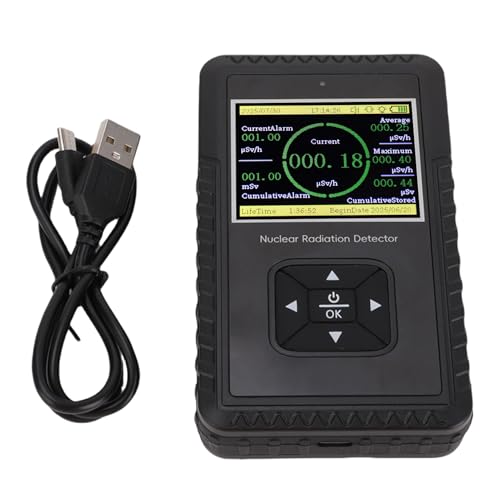
The Eujgoov detector features LCD readouts for real-time and averaged dose data, with alarms for dose thresholds and cumulative exposure. A rear buzzer provides audible warnings up to 80 dB, and continuous vibration alerts add a tactile layer of awareness. This makes it suitable for scenarios where visual attention may be divided, such as team operations during decontamination or shelter-in-place drills. Proper calibration and periodic testing help ensure accurate readings in dynamic environments.
LOCADENCE Geiger Counter Kit Module

The LOCADENCE Geiger counter kit module supports computer data acquisition and compatibility with multiple Geiger tubes (M4011, STS 5, SBM20, J305, etc.). It detects γ-ray and β-particle emissions in the 20 mR/h to 120 mR/h range, enabling analysis and processing of radiation data in real-time. This module is well-suited for hobbyists, educational settings, and professional teams requiring portable, expandable radiation monitoring with data logging capabilities.
Hazard Pattern Nuclear Skull Luggage Cover

While not protective gear, this novelty luggage cover features a nuclear hazard design for easy identification and added protection against minor travel wear. Made from stretchable fabric with reinforced stitching, it provides a snug fit across a range of suitcase sizes and includes accessible openings for handles and zippers. This item supports visibility and identification in crowded settings, which can be a practical complement to safety gear when transporting equipment to training sites or drills.
Buying Guide: Key Considerations For Selecting Radiation Protection And Monitoring Gear
- Protection level vs. mobility: High-heat suits offer strong protection but may limit movement. Balance protection with the tasks you expect to perform and consider lighter, more flexible options for active duty scenarios.
- Heat insulation vs. flame exposure: Aluminum foil-based suits excel at heat reflection but are not substitute for direct flame barrier; always use in combination with appropriate PPE when flames are present.
- Radiation shielding needs: Lead-based garments provide shielding for X-ray and other ionizing radiation. Evaluate required shielding thickness (e.g., 0.5 mmPb) and ensure proper fit for comfort and mobility.
- Monitoring and alarms: Real-time detectors and dosimeters enable rapid hazard assessment. Look for clear displays, alarm types (audible, visual, vibration), and data logging capabilities for trend analysis.
- Sizing and fit: Protective suits come in multiple sizes; verify height and body dimensions to ensure full coverage and freedom of movement during use.
- Durability and maintenance: Fire-resistant suits require careful cleaning and inspection for wear, tears, or coating degradation. Check care instructions and warranty where available.
- Usage scenarios: For nuclear fallout planning, combine heat protection gear with reliable radiation monitoring devices and shielding garments to address both thermal and radiological hazards.