Best Rated Gas Power Washers for Tough Outdoor Cleaning
Gas-powered pressure washers deliver high cleaning power for decks, driveways, siding, and more. This guide highlights five top-rated gas models, with a concise buying overview to help American homeowners compare performance, portability, and maintenance needs.
| Product | Brand | PSI | GPM | Notes |
|---|---|---|---|---|
| Westinghouse WPX3400 Gas Pressure Washer | Westinghouse | 3400 | 2.6 | Onboard soap tank; 25′ hose |
| Westinghouse WPX3200 Gas Pressure Washer | Westinghouse | 3200 | 2.5 | Onboard soap tank; 25′ hose; 212cc engine |
| IvyBess 3500PSI Gas Pressure Washer | IvyBess | 3500 | 2.4 | 1.0 gallon gas tank; 25′ hose |
| Steupoek 4200PSI Gas Power Washer | Steupoek | 4200 | 4.0 | 7HP engine; 25′ hose; 5 nozzles |
| Steupoek 4200PSI Gas Pressure Washer (Alternative) | Steupoek | 4200 | 4.0 | 6.5HP engine; 25′ hose; 5 nozzles |
Westinghouse WPX3400 Gas Pressure Washer

Brand: Westinghouse. Features include 3400 PSI and 2.6 GPM for deep cleaning on decks, sidewalks, fences, and patio furniture. It carries a 1 gallon gas tank with a half-gallon onboard soap tank, and a 25-foot abrasion-resistant hose. The lightweight spray gun accepts multiple nozzles for versatile tasks, and compatibility with common pressure washer accessories expands cleaning options.
Westinghouse WPX3200 Gas Pressure Washer

Brand: Westinghouse. Delivers 3200 PSI and 2.5 GPM with a 212cc engine. Features include an onboard soap tank, 25-foot hose, manual choke, and five quick-connect nozzles (0°, 15°, 25°, 40°, Soap). Designed for heavy-duty tasks across outdoor surfaces, vehicles, and build surfaces, with a recoil-start, maintenance-friendly pump.
Westinghouse WPX3000e Electric Pressure Washer
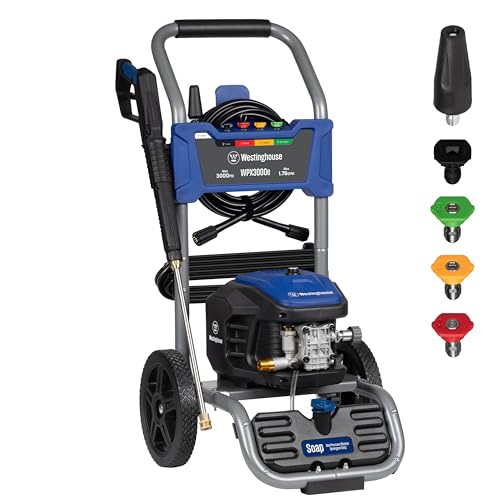
Brand: Westinghouse. Although electric, this model is included here for comparison of power ranges. It offers 3000 max PSI and 1.76 max GPM, with a 0.45 gallon onboard soap tank and five quick-connect nozzles. Suitable for lighter outdoor cleaning where electricity access is convenient.
Steupoek 4200PSI Gas Power Washer (Green & Black)

Brand: Steupoek. This gas-powered unit generates up to 4200 PSI at 4.0 GPM, powered by a 7HP 212cc engine. It features a 25-foot hose and five nozzles (0°, 15°, 25°, 40°, Soap), plus a 1L soap tank. Engineered for heavy-duty cleaning across siding, driveways, decks, and more, with CARB compliance and rugged construction.
Steupoek 4200PSI Gas Pressure Washer (Alternative)

Brand: Steupoek. Similar 4200 PSI performance with a 7HP 212cc engine and recoil start. Includes multiple nozzles for versatile cleaning and a robust 25-foot hose. Emphasizes deep cleaning capability for outdoor surfaces and vehicles, with durable pump technology and maintenance-friendly design.
SOORAITON 4200PSI Gas Pressure Washer

Brand: SOORAITON. A 4200 PSI 4.0 GPM gas-powered machine with a 212cc engine and 25-foot hose. Comes with five nozzles and a soap option, suitable for heavy-duty exterior cleaning. Designed for contractors and homeowners tackling tough cleaning tasks in yards, driveways, and vehicles. CARB/ETL compliant.
Buying Guide: Key Purchase Considerations
- Power needs: Higher PSI and GPM models deliver stronger cleaning, useful for tough jobs like weathered siding, concrete, and tire grime. For routine home use, 3000–3500 PSI with 2.0–2.5 GPM is usually sufficient.
- Engine and maintenance: Gas engines vary in displacement and horsepower. Look for models with reliable axial cam pumps and carburetor compliance to local emissions rules. Plan for routine oil checks and air-filter maintenance.
- Fuel and tank capacity: Tank size affects runtime before refueling. Gas models with larger tanks reduce downtime but add weight. Consider fuel availability and operating costs.
- Mobility and accessories: A steel frame, wheels, and a compact footprint improve portability. Ensure the unit includes or supports compatible surface cleaners, foam cannons, and undercarriage cleaners via standard fittings (such as M22).
- Hose length and nozzle set: A longer hose enables greater reach and safer operation away from the water source. A five-nozzle configuration (0°, 15°, 25°, 40°, plus soap) covers a wide range of tasks from delicate surfaces to heavy cleaning.
- Emissions and safety: Check CARB/EPA/ETL compliance if you live in emissions-regulated areas. Verify warranty terms and safety features like automatic shutoff pumps and recoil-start reliability.
- Electric versus gas: Electric units are quieter and lower-maintenance but generally offer less cleaning power. Gas models provide maximum cleaning performance for outdoor, heavy-duty tasks where electricity isn’t readily available.
- Intended tasks: Align model choice with typical jobs—patios, driveways, siding, or vehicle cleaning. Smaller units are adequate for light maintenance, while larger units excel in deep cleaning and restoration projects.