Best Residential Sump Pumps for Basement Dryness and Reliability
Choosing a reliable residential sump pump hinges on power, durability, and automatic operation. This guide highlights five top-rated models well-suited for basements, sump basins, and drainage needs. Each option balances flow, lift, and solid handling with durable construction, helping you keep your space dry during heavy rain or snowmelt. The quick-reference summary table below provides a snapshot of key specs for easy comparison.
| Product | Brand | Discharge | Max GPH | Lift (ft) | Material / Notes |
|---|---|---|---|---|---|
| LANCHEZ 1HP 6600 GPH | LANCHEZ | 2″ NPT | 6600 | 27 | Cast Iron; Auto Float; Thermal Protection |
| Acquaer 3/4HP Submersible Sewage | Acquaer | 2″ NPT | 6400 | 29 | Cast Iron; Auto Float; 10′ Cord |
| Aquastrong 1HP Grinder | AQUASTRONG | 2″ NPT | 3962 | 46 | Stainless Steel Shell; Grinder; Auto Float; Exhaust Valve |
| Superior Pump 93020 1/2HP | Superior Pump | 2″ Discharge | 4800 | 25 | Cast Iron; Tethered Float; 30 gal Basin Included |
| Schupethauer 1HP Sump Pump | Schupethauer | 2″ NPT | 6400 | 40 | Stainless Steel Shell; Auto Float; 2″ Solids |
LANCHEZ 1HP Submersible Sewage Pump
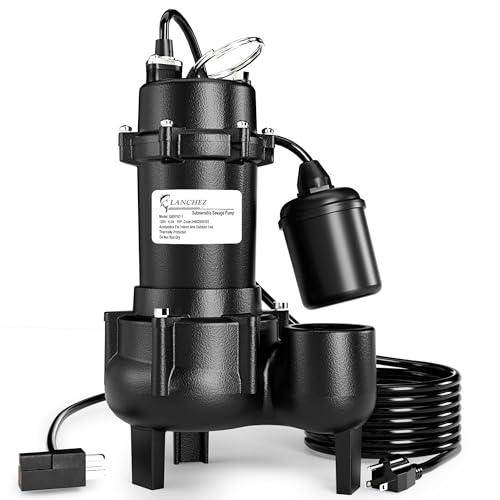
The LANCHEZ unit uses a 1HP PSC copper motor to deliver robust flow while remaining energy efficient and quiet. In testing, it can pump up to 6,600 gallons per hour with zero head and about 5,644 GPH at a 5-foot head, lifting water up to 27 feet. The cast iron housing enhances durability and cooling, and the pump includes built-in thermal overload protection to guard against dry running. An adjustable tethered float switch provides automatic on/off action as water levels rise and fall, making it suitable for residential basements and sump basins where reliability is critical.
- 1HP PSC copper motor for high efficiency
- Up to 6,600 GPH at 0 ft; 5,644 GPH at 5 ft
- Maximum 27 ft lift
- Cast iron casing with thermal overload protection
- Automatic tethered float switch
Aquastrong 1HP Sewage Grinder Pump

The Aquastrong grinder pump features a stainless steel cutting blade that can shred tough solids, helping prevent clogs in residential sewage lines. With a max flow of about 3,962 GPH and a head up to 46 feet, this unit handles challenging basement wastewater scenarios. It has a rugged cast iron base, anti-clog impeller, and an integrated exhaust valve to reduce air lock for smoother operation. An adjustable tether float switch enables automatic on/off cycling, and a portable design with a cable lock makes installation and adjustments easier in tight spaces.
- Grinding capability with stainless steel cutting blade
- Max 3,962 GPH; head up to 46 ft
- 2″ NPT discharge; solid handling up to typical debris
- Auto operation via tether float; exhaust valve reduces air locks
- Cast iron base; stainless steel shell for durability
Acquaer 3/4HP Submersible Sewage Pump

The Acquaer 3/4HP sewage pump delivers up to 6,400 GPH with a 29-foot lift, making it well-suited for residential basements and sump pits. It uses a cast iron construction for durability and includes an adjustable mechanical float switch for automatic operation. The unit ships with a standard 10-foot cord and a 2″ NPT discharge, and it is designed to handle typical solids in residential wastewater. It is important to note it should not be used in septic tanks, and care should be taken to avoid stressing the power cord during operation.
- 3/4HP motor; 6,400 GPH; 29 ft lift
- Cast iron body; auto/manual float operation
- 2″ NPT discharge; 10′ power cord
- Solid handling up to 2 inches; not for septic tanks
Superior Pump 93020 1/2HP Sump Pump

The Superior Pump 93020 is a 1/2 HP cast iron sump pump designed for reliability in residential basements. It can move up to 4,800 gallons per hour and lift water up to 25 feet. The non-clogging vortex impeller handles solids effectively, and it features a 2″ discharge with 2″ solids handling capabilities. The kit includes a 30-gallon structural foam basin and a 2″ inlet hub, plus torque stops to reduce vibration and wear. This model emphasizes straightforward installation and consistent performance for standard sump applications.
- Up to 4,800 GPH; 25 ft lift
- 2″ discharge; non-clogging vortex impeller
- Cast iron construction; tethered float
- Includes 30 gal basin and durable inlet hub
Schupethauer 1HP Sewage Sump Pump
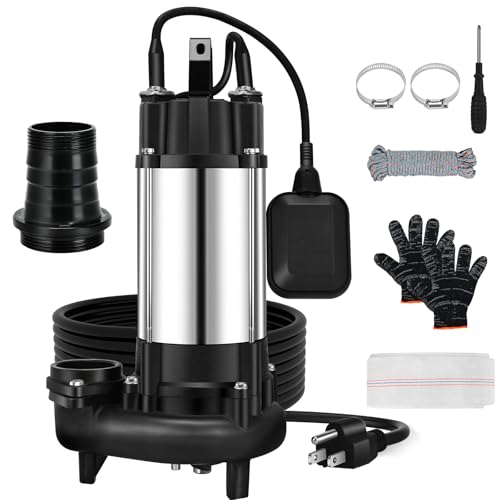
The Schupethauer 1HP unit combines a stainless steel shell with a robust cast iron impeller to deliver up to 6,400 GPH with a 40-foot lift. It features a 2″ NPT discharge and an adjustable mechanical float for automatic operation. The pump includes a sturdy handle for easy transport and vertical installation in basins or pits. It is designed to handle solids up to 2 inches in diameter, making it suitable for residential sewage and sump applications. A prudent note is to avoid lifting the pump by the power cord and to use the built-in handle for lifting.
- 1HP motor; 6,400 GPH; 40 ft lift
- 2″ NPT discharge; 2″ solids handling
- Stainless steel shell with cast iron impeller
- Automatic float; portable handle; avoid lifting by cord
Buying Guide
When selecting a residential sump pump, buyers should balance performance, durability, and installation considerations. The following factors help clarify options across these five models and similar units:
Key purchase considerations
- Flow rate (GPH) and vertical lift: Higher GPH and greater lift support rapid water removal from basements or sump pits, especially during heavy rain or snowmelt.
- Discharge size and solids handling: 2″ NPT is common for residential units; grinders handle larger solids but require more maintenance and may consume more power.
- Durability and material: Cast iron housings offer longevity and cooling, while stainless steel shells provide corrosion resistance in harsher environments.
- Automatic operation and float type: Tethered floats are simple and affordable; vertical or electronic float switches can provide more reliable actuation in tight spaces.
- Debris and clog resistance: Non-clog impellers and grinder mechanisms reduce blockages but may require more routine checks.
- Power efficiency and noise: Higher horsepower models move more water but can be noisier and less energy-efficient; consider the trade-off for your basement conditions.
- Installation considerations: Check sump basin size, check valve compatibility, power supply, and local electrical codes. Proximity to living spaces and noise tolerance may influence choice.
- Maintenance and warranty: Look for accessible service parts, ease of disassembly, and manufacturer warranty terms for long-term reliability.
Performance comparisons and recommendations
For heavy basement drainage or frequent flooding, models with higher GPH and taller lift—such as LANCHEZ (6,600 GPH at 0 ft; 27 ft lift) or Schupethauer (6,400 GPH; 40 ft lift)—offer strong capability. If solids management is a concern, the Aquastrong grinder pump provides shredding action to prevent clogs, though it adds complexity and potential maintenance. For standard sump basins with regular water, the Superior Pump offers solid performance at a practical 4,800 GPH and a compact footprint. Finally, Acquaer and similar submersible pumps deliver reliable performance with robust cast iron construction and automatic operation, suitable for typical residential basements.
Choosing between a grinder pump and a traditional impeller pump depends on wastewater characteristics and the presence of solids in the effluent. If solids are common (hair, wipes, clothing fibers), a grinder or enhanced solids-handling pump may reduce service calls. If the system mainly handles clear or slightly dirty water, a straightforward submersible pump with a strong ambient design can be more energy-efficient and easier to maintain. Always match the pump’s discharge size and electrical requirements to your sump basin and wiring capabilities, and consider a professional installation if you’re unsure about local code requirements.