Best Right Angle Square Tool Picks for Precise Woodworking and Cabinetry
The best right angle square tools help you confirm 90-degree corners, mark accurate angles, and keep frames, drawers, and cabinets perfectly square. This guide targets hobbyists and professionals who need dependable tools for framing, trimming, and layout. Below are five top options, each chosen for different use-cases—from quick framing checks to multi-function layout work—so you can pick the right one for your project. A quick comparison table is included to help you decide at a glance.
| Product | Best For | Key Benefit |
|---|---|---|
| DIYLOG Corner Clamp for Woodworking | Frame and cabinet assembly | High-precision 90-degree alignment with durable aluminum construction |
| Mr. Pen Metal Carpenter Square 8×12 | General layout and marking | Dual units (imperial/metric) with easy readability |
| ALLWIN 7 Inch Aluminum Rafter Square | Roofing, rafters, and multi-angle marking | Dual-side engravings for quick angle reference |
| Swanson 7 Inch Speed Square | Versatile layout and marking on boards | Five-in-one tool with built-in guide and protractor |
| IRWIN 12” Combination Square | Precise layout and measurement | Stainless blade and durable cast zinc body |
DIYLOG Corner Clamp for Woodworking

Best for assembling frames and cabinets where precise 90-degree joints are critical. This 4-pack uses aluminum alloy for rigidity and resistance to rust, with red-anodized surfaces and CNC-processed edges that reduce marring of parts. The slightly chamfered edges help prevent hand injuries during clamping and alignment. Suitable for picture frames, boxes, and furniture components, ensuring joints stay square during gluing or assembly. Caution: ensure clamps are fully aligned before tightening to avoid slight deviations if hardware binds.
Mr. Pen Metal Carpenter Square 8×12
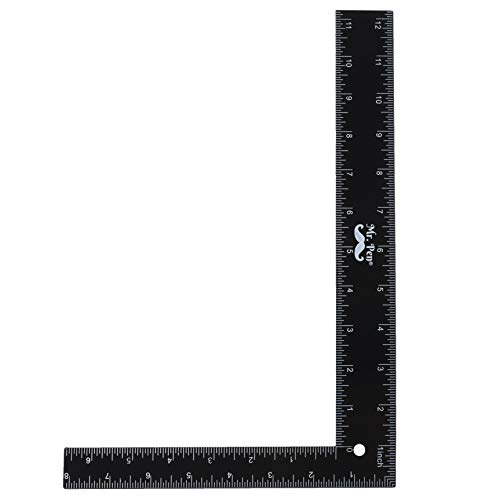
This L-shaped ruler serves general woodworking layouts with imperial units on one side and metric on the other. The square features clear, high-contrast markings for quick reading, making it ideal for beginners and seasoned woodworkers who need reliable 8″ and 12″ measurements. Best for laying out frames, tiles, and joints where both metric and imperial references are useful. Limitation: not as robust as heavier framing tools for high-load applications, so avoid excessive force on delicate cuts.
ALLWIN 7 Inch Aluminum Rafter Square

Designed for precision in carpentry and roofing projects, this 7-inch aircraft-grade aluminum rafter square offers a durable, matte finish that resists wear. Dual-sided scales provide white frost graduations for better visibility in low-light spaces. With 0.1 mm precision claims and a 3x longer lifespan than stamped alternatives, this tool is well-suited for quick pitch, angle marking, and layout tasks. Choose this if you need a compact, long-lasting multi-purpose square for frequent fieldwork. The limitation is that it may not cover very large framing layouts as efficiently as bigger squares.
Swanson Speed Square S0101 7 Inch

Best for quickly marking common, hip, valley, and jack rafters, the Swanson Speed Square combines several layout tools into one compact unit. It includes a built-in guide to help with various angle and cut calculations, and the blue body with white markings improves readability. This tool is ideal for tradespeople and DIYers who need a portable, all-in-one solution for square cuts and angle marking. Limitation: while versatile, it may not replace dedicated protractor tools for highly specialized angle measurements.
IRWIN Combination Square 12”

This 12-inch combination square offers a robust set of features for layout and measurement. The stainless steel blade resists rust, while the durable cast zinc body provides stability during use. Ideal for long runs and precise layout across larger projects, such as cabinetry and roofing layouts. Best for professionals who require a reliable, long-reach square and a clean blade edge for accurate marks. Caution: ensure the blade stays clean and dry to maintain true readings over time.
Buying Guide
What are your primary tasks? If you frequently assemble frames and cabinets, prioritize corner clamps or combination squares with solid clamping capability and long-lasting materials. For quick angle marking and multi-function use, look to 5-in-1 tools or speed squares that offer built-in guides and protractors. Consider the size you will work with most often: larger 12-inch squares suit expansive layouts, while 7-inch and 8-inch tools excel in tight spaces. Material matters: aluminum tools resist corrosion and stay light, while steel tools offer longer wear under heavy use. Readability is essential—contrast markings and dual scales help in low-light environments. Always verify that the tool provides true 90-degree angles and minimize burrs or sharp edges that could mar workpieces.
Usage scenarios by hobbyist type:
- Beginner DIYers: Swanson Speed Square and Mr. Pen Carpenter Square for versatile, easy-to-use layouts.
- Cabinetmakers: DIYLOG Corner Clamp for precise frames and 90-degree joints; IRWIN for long runs and accuracy.
- Roofing and framing pros: ALLWIN and 7-inch rafter squares for quick pitch and marking on larger projects.
Maintenance tips: keep edges clean and free of debris, wipe down after use to reduce corrosion, and store in a dry place to extend tool life. When selecting, prioritize items with proven alignment accuracy, durable construction, and clear scale readability to ensure long-term performance.
FAQs
- What is the primary difference between a speed square and a combination square?
Answer: A speed square focuses on quick angle marking and rafter calculations, while a combination square offers precise depth and transfer measurements with a movable rule. - Is aluminum or stainless steel better for tool longevity?
Answer: Stainless steel resists corrosion and can endure heavy use, while aluminum is lighter and sufficient for most hobbyist tasks. - Can these tools be used for metalworking?
Answer: Most are designed for wood and framing, though some can support metalworking layouts if measurements are within range and materials are compatible. - What size should I choose for cabinet work?
Answer: 8–12 inch ranges are common for cabinets, offering ample reach without sacrificing precision on smaller components. - Do I need multiple tools or can one tool cover most tasks?
Answer: A versatile tool like a 5-in-1 square or a combination of a speed square and a carpenter square generally covers most tasks well. - How do I verify a 90-degree angle on a new tool?
Answer: Use a known square reference or check with a calibrated triangle, and test against a true square edge before use on critical projects.