Best Roofing Materials for Flat Roofs: Durable Waterproof Options
Flat roofs require durable, waterproof materials that resist weather while remaining affordable and easy to install. This guide highlights five roofing products designed for flat or low-slope applications, focusing on underlayment, sealants, and fabric reinforcement. You’ll find options that improve adhesion, create reliable moisture barriers, and extend roof life for carports, sheds, porches, and other flat-roofed structures. Each selection is evaluated for ease of installation, versatility, and long-term performance in American climates.
Summary table of selected products:
| Product | Brand | Type / Use | Key Benefit |
|---|---|---|---|
| Gueevin Self-Stick Roll Roofing | Gueevin | Self-stick underlayment for flat or low-slope roofs | Excellent adhesion and weather resistance |
| Sasylvia Self-Stick Roll Roofing Panels | Sasylvia | Self-stick underlayment with reflective surface | Strong waterproofing and followability with thermal expansion |
| DuPont Roof Protector Underlayment | DuPont | Four-layer underlayment roll | Durable moisture barrier with slip-resistant grip |
| Liquid Rubber Elastomeric Sealant | Liquid Rubber | Elastomeric coating for flat or sloped roofs | Flexible, seamless membrane; wide compatibility |
| Ames Contouring Roof Fabric | AMES | Reinforcement fabric for coatings | Extends life of low-slope roof coatings |
Gueevin Self-Stick Roll Roofing

Gueevin’s 6-inch- wide self-stick roll roofing provides a quick, durable underlayment option for flat and low-slope roofs. The package includes a substantial length to cover large areas with fewer seams. Constructed from galvanized steel, the material offers strong wind resistance and corrosion protection, making it suitable for carports, sheds, porches, and pergolas that face varying weather conditions.
The roll design supports fast installation on both pitched and flat surfaces, with overlap and edge joints that help seal joints effectively. The 35.5″ width and 32.8-foot length optimize coverage while maintaining manageability on ladders and rooftops. The 1 mm thickness delivers a balance of rigidity and flexibility, enabling secure screw-fastening and steady performance against temperature fluctuations.
- Self-adhesive backing with screw mounting
- 35.5″ width, 32.8′ length
- 1 mm thickness for strong yet flexible panels
- Galvanized steel for wind and corrosion resistance
- Ideal for flat or low-slope roofs
Sasylvia Self-Stick Roll Roofing Panels

Sasylvia’s self-stick roofing rolls offer a compact, reliable underlayment option with a reflective aluminum surface. The kit features a 6-inch width and 33-foot length roll, designed to seal effectively on metal or flat surfaces. The butyl rubber composition provides good adhesion, waterproofing, and tolerance for thermal movement, helping protect roofs from leaks while contributing to heat management on sunny days.
With a thickness of approximately 0.05 inches, this product balances tack, flexibility, and rigidity to accommodate irregular deck shapes and detailing around dormers and porches. It supports quick repairs and new installations alike, making it a versatile choice for small to mid-sized flat-roof projects.
- 35.5″ wide by 33′ long per roll (approx. 0.05″ thick)
- Butyl rubber adhesive; good waterproofing
- Reflective aluminum surface for heat resistance
- Easy to install on dormers, porches, and flat roofs
- Suitable for metal and other roof surfaces
DuPont Roof Protector Underlayment
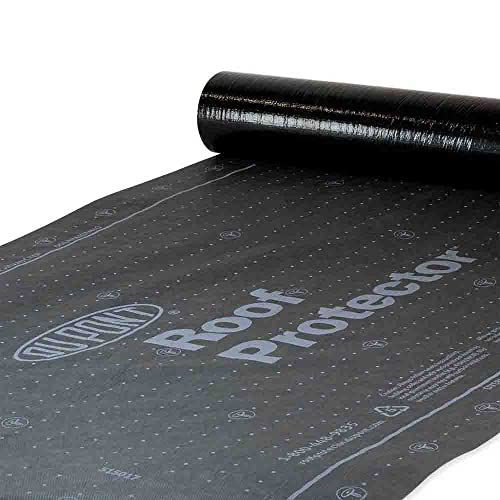
DuPont Roof Protector Underlayment is a four-layer roll designed to be a primary moisture defense on flat and low-slope roofs. This product emphasizes durability and protection during installation, helping to preserve the roof deck and provide a robust secondary moisture barrier. Its layered construction contributes to long-term performance under a variety of weather conditions.
The four layers include a top grip surface for walkability during installation, a lamination layer that acts as a water barrier, a woven polypropylene scrim for strength, and a slip-resistant coating to aid traction on the roof deck. Together, these features create a reliable foundation for subsequent roofing systems or coatings.
- Four-layer construction for durability
- Top layer with good grip for safety
- Lamination layer as a water barrier
- Woven scrim for strength; slip-resistant coating
- Designed for flat and low-slope roofs
Liquid Rubber Elastomeric Sealant

Liquid Rubber Color Waterproof Sealant provides a flexible, elastomeric membrane ideal for flat or sloped roofs and foundations. This coating creates a seamless barrier that stops leaks and protects against water intrusion on metal roofs, concrete, and other surfaces. The color options offer a finishing touch for visible sections or mismatched substrates while maintaining performance.
One gallon covers a substantial area (approximately 150-250 sq ft, depending on the surface), and the product can be applied with a brush, roller, or sprayer. The coating remains 5X more flexible than traditional roofing tar or shingles, enabling expansion and contraction with seasonal changes. Typical cure time is about 48 hours in dry conditions, with proper surface preparation and layering (2-3 coats for vertical areas and 3-4 coats for flat surfaces).
- Flexible, seamless waterproof membrane
- Compatible with metal, concrete, and other substrates
- Covers 150-250 sq ft per gallon (varies by surface)
- Easy application by brush, roller, or sprayer
- Dries to a durable, elastomeric coating within 48 hours
Ames Contouring Roof Fabric

Ames Contouring Roof Fabric reinforces coatings on low-slope roofs, lowering the risk of punctures, tears, and movement damage. The fabric is designed to be embedded into acrylic or elastomeric coatings to enhance adhesion and durability. It can be cut to fit irregular shapes and is useful for leveling ponding areas and supporting large spot repairs while extending the life of coatings on metal, tar, plywood, and concrete surfaces.
Constructed from 100% polyester, the fabric adds structural integrity to roof sealants without adding excessive bulk. Its reinforcing properties help coatings resist tearing under thermal cycling and wind-driven rain, contributing to longer service life for sealed roof systems.
- 100% polyester reinforcement fabric
- Strengthens coatings against tearing and movement
- Can be cut to fit and integrated with sealants
- Suitable for tar, plywood, metal, and concrete surfaces
- 40″ x 81′ dimensions for wide coverage
Buying Guide
Selecting the right roofing material for a flat roof involves balancing waterproofing, durability, ease of installation, and overall cost. The following considerations help compare options and align them with project goals.
- Roof type and slope: Flat or low-slope roofs benefit from materials that create continuous moisture barriers. Underlayment should cover seams thoroughly, while coatings provide long-term flexibility on flat surfaces.
- Climate and exposure: Regions with heavy rain, snow, or salt exposure require robust moisture resistance, corrosion protection, and UV stability. Reflective surfaces can reduce heat absorption on sunny days.
- Material type and compatibility: Underlayment rolls (self-stick or peel-and-stick) are ideal for immediate moisture control, while elastomeric sealants deliver seamless, flexible coverage. Fabric reinforcements extend coating life on vulnerable patches and joints.
- Coverage and thickness: Check roll width, length, and thickness to estimate total material needs. Thicker underlayments and multi-layer systems typically offer longer service life but may increase installation time and price.
- Application method: Self-adhesive products simplify DIY installation but may require clean, dry surfaces and careful handling. Coatings demand even application and proper curing conditions to achieve maximum adhesion and performance.
- Maintenance and inspection: Flat roofs benefit from periodic inspection of seams, flashings, and coated surfaces. Reapplication or recoating intervals depend on weather exposure and substrate condition.
- Environmental and safety considerations: Look for low-VOC products and consider disposing of old materials responsibly. Protective equipment and ventilation are important when applying coatings.
- Labor and cost efficiency: DIY projects can save money but require time and proper tools. Professional installation may be preferred for complex structures or large areas.
- Longevity and warranties: Longer-lasting products with manufacturer warranties offer greater peace of mind for flat-roof systems prone to leaks and ponding.