Best Saws for Cutting Metal: Top Tools for Precise Metal Cuts
Metal cutting demands the right tool and blade combinations. A precise cut improves safety, reduces waste, and speeds up work. To help buyers choose confidently, this guide highlights five top metal-cutting options available on Amazon, spanning compact hand tools, heavy-duty chop saws, and premium blades for cordless and corded machines. Each pick balances durability, performance, and value, with practical tips on when to reach for a hacksaw, a metal blade, or a power saw. Consider blade material, tooth geometry, compatibility, and safe handling when shopping.
| Product | Brand | Focus | Notes |
|---|---|---|---|
| KATA Hacksaw | KATA | Compact Hand Hacksaw | Includes extra blades |
| Caliastro Blades | Caliastro | Bi-Metal Reciprocating Blades | 8-pack, 18 TPI |
| Evolution S355CPSL | EVOLUTION | 14-Inch Chop Saw | Carbide-tipped blade; Dry-Cut |
| Milwaukee M18 Fuel | Milwaukee | Metal Cutting Circular Saw | Cordless, 3900 RPM |
| FOXBC Blade | FOXBC | 8-Inch Metal Cutting Blade | 48T, 5/8″ arbor; 4300 RPM |
KATA Hacksaw: Compact 10-Inch Frame

The KATA Hacksaw features a lightweight yet sturdy aluminum alloy frame, designed for durability without sacrificing maneuverability. Its ergonomic, dual-injection anti-slip grip reduces hand fatigue during extended use and improves control when making delicate cuts in tight spaces. A simple screw mechanism lets you loosen and fix the blade, enabling quick blade changes in the field without special tools. This close-quarters saw is particularly useful for confined work, where precision matters and space is at a premium.
Included with the hacksaw is a 10″ x 1/2″ x 24T Bi-Metal HSS blade, plus two spare blades for replacement. The bi-metal construction supports tougher metals while maintaining flexibility. This kit is suitable for cutting wood, PVC, plasterboard, metal sheet, and even foam, making it a versatile addition to a craftsman’s toolkit. The compact design and blade versatility make it a solid starter option for metal and mixed-material projects.
Caliastro 6-Inch Bi-Metal Reciprocating Blades

These Caliastro blades come in an 8-pack of 6-inch blades built with bi-metal construction. The 18 TPI teeth are designed for fast cutting of metal while maintaining tooth durability, thanks to the HSS teeth bonded to a tough HCS body. The blades are 0.05 inches thick, which helps minimize bending and deflection during aggressive cuts. They’re engineered to deliver smooth, straight cuts with precision-set teeth that reduce chatter and provide cleaner results. These blades fit most standard reciprocating saws, making them a practical upgrade for metal-cutting tasks.
Ideal for cutting metals up to roughly 1/4 inch thick, these blades are well-suited for steel pipe, conduit, rebar, and other common metalwork. The reliable bi-metal construction balances toughness and flexibility, helping blades last longer under demanding conditions. If you frequently switch between materials or need a dependable metal-cutting blade set for a cordless or corded reciprocating saw, Caliastro’s blades offer solid value.
Evolution S355CPSL Heavy-Duty Chop Saw
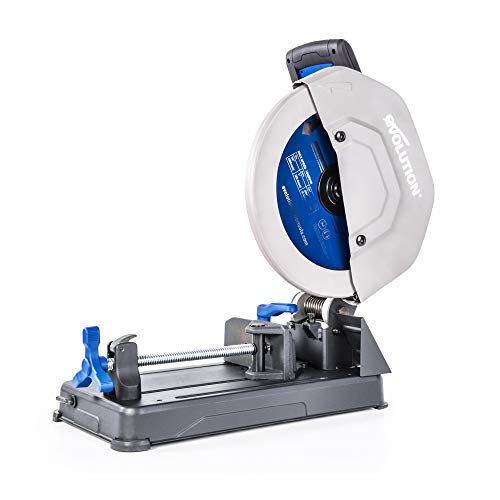
The Evolution S355CPSL is a heavy-duty 14-inch chop saw designed for professional metal cutting. It features a powerful 15 Amp motor and a lightweight pressed steel base that supports stable, accurate cuts while remaining portable. A chip deflector directs debris away from the operator, simplifying cleanup after use. The dry-cut technology uses a premium tungsten carbide-tipped blade to minimize heat buildup and sparks, yielding smoother, burr-free finishes on mild steel. The saw offers adjustable miters from 0 to 45 degrees, helping you perform precise angled cuts with a cast steel vise and fence and a quick-release clamping mechanism for fast, secure workpieces.
Designed for reliability, the Evolution S355CPSL emphasizes clean metal cuts with minimal post-processing. Its combination of robust construction, efficient cooling, and accurate clamping makes it a strong choice for workshop-heavy metal cutting where consistency and repeatability matter. The tool is suited to fabrication, metalworking, and shop environments that require steady performance over time.
Milwaukee M18 Fuel Metal Cutting Circular Saw

The Milwaukee M18 Fuel Metal Cutting Circular Saw is built around a brushless motor delivering high performance with a long tool life. The 3900 RPM motor enables rapid metal cuts, while the brushless design minimizes wear and maintenance. This bare-tool offers flexibility for users who already own M18 batteries, delivering cordless convenience for metalworking on-site or in workshops. With optimized RPM and power output, it’s capable of cutting through metal efficiently, reducing waiting time on job sites. The tool is designed to balance speed with reliability for all-day operation in professional settings.
Battery compatibility and overall efficiency are central to Milwaukee’s design philosophy. The M18 platform provides robust runtime with Redlithium batteries, enabling substantial cutting cycles on EMT, angle stock, and other common metal profiles. This model suits professionals who value portability, predictable performance, and the ability to scale up with existing M18 battery systems.
FOXBC 8-Inch Metal Cutting Circular Saw Blade

The FOXBC 8-Inch Metal Cutting Circular Saw Blade is designed for steel and other metals, featuring 42 teeth with a TCG configuration and a .075″ kerf. The blade uses a 5/8″ arbor and is rated for up to 4300 MAX RPM, making it suitable for fast, aggressive metal cuts on studs, angle iron, EMT conduits, and other metal stock. The blade geometry minimizes wandering and deflection to deliver precise cuts and reduce rework. For workers seeking a dedicated metal-cutting blade to upgrade a circular saw, this blade offers dependable performance and compatibility with common saws.
Buying Guide
When choosing a saw or blade for metal, it helps to tailor the selection to the specific material, project scope, and equipment you own or plan to buy. Below are key considerations from multiple perspectives to help balance performance, durability, and cost.
- Blade material and tooth geometry: Bi-metal teeth (HSS on HCS backing) offer a blend of durability and flexibility for metal cutting. Carbide-tipped blades provide long life for continuous cuts in harder metals, while high-tooth-count blades (like 48–60T) produce smoother finishes on thin metals; choose according to material hardness and finish requirements.
- Saw type and duty cycle: For precise, clean cuts on mild steel or aluminum, consider chop saws with carbide-tipped blades and good chip deflection. For portable, on-site work, cordless circular saws with compatible metal-cutting blades deliver flexibility. Hand saws and hacksaws remain valuable for tight spaces and quick, controlled cuts.
- Arbor size and compatibility: Ensure blade arbor size matches your tool (common sizes include 1/2″ and 5/8″). Miter saws and table saws have specific arbor requirements; mismatches can cause unsafe operation or poor cuts. Check RPM ratings to prevent blade failure at high speeds.
- Cut material and thickness: Thicker or harder metals (like stainless or thicker steel) benefit from carbide-tipped blades or blades designed for heavy-duty use. For very thin materials, slower speeds and precise blade geometry help minimize burrs and deflection.
- Safety and maintenance: Always use appropriate PPE—eye protection, gloves, and hearing protection as needed. Clamp workpieces securely, avoid pinched blades, and inspect blades for wear or damage before each use. Regularly clean and store blades to prevent corrosion and maintain performance.
- Budget versus value: Higher-quality blades may cost more upfront but resist dulling longer and yield cleaner cuts with less rework. For occasional metal cutting, consider a set of versatile blades; for frequent fabrication, invest in carbide-tipped or premium bi-metal blades and a capable saw.
- Brand reputation and warranty: Reputable brands commonly offer consistent edge geometry, standardized tooth patterns, and reliable customer support. Warranties can provide additional peace of mind for professional use and heavy workloads.
- Use-case scenarios: Hack saws excel in confined spaces; reciprocating blades are great for detail and rough cuts; chop saws and metal-cutting circular blades are efficient for long, straight cuts on thicker materials. Align the tool to the job, then prioritize blade durability and safety features.
Overall, the best choice depends on whether your priority is portability, speed, or finish quality. The five picks above cover a spectrum—from compact hand tools to powerful cordless saws and durable blades—so users can select the option that best fits their metal-cutting needs while maintaining safety and efficiency in the workshop or on the job site.