Best Scissor Lifts for Cars: Top Portable and Mid-Rise Picks
Choosing a scissor lift for cars requires balancing capacity, lift height, power source, and safety features. This guide highlights five highly rated mid-rise and portable lifts, suitable for home garages and professional shops. They span 6,000 to 8,000 pounds, offer lift heights from 28 to 55 inches, and include options with 110V or 220V operation and pneumatic releases. Each model is selected for reliability, build quality, and value, with practical notes on suitability for different vehicle types and workspace sizes.
Use the quick reference table to compare specs at a glance, then review detailed product sections to identify the lift that best matches your vehicles, floor space, and electrical setup.
| Product | Lift Capacity | Max Height | Power / Type |
|---|---|---|---|
| Motool AK-X66 Mid Rise | 6,000 Lbs | 48″ | Mid Rise |
| APlusLift HW-SL6600X | 6,600 Lbs | 55″ | 110V Portable Mid-Rise |
| KATOOL ME-8XP-110V | 7,700 Lbs | 38″ | 110V Pneumatic Release |
| Albott 7000 Lbs Portable Lift | 7,000 Lbs | 28″ | Portable Car Lift |
| KATOOL 41.25″ Mid Rise Lift | 8,000 Lbs | 41.25″ | 110V/220V Mid Rise |
AK-X66 Mid Rise Lift: 6,000 Lb Capacity

The Motool Technology AK-X66 is a mid-rise scissor lift with a 6,000-pound lifting capacity and a 48-inch maximum lift height. This configuration makes it suitable for a broad range of passenger cars and light trucks, providing enough vertical clearance to access components underneath the vehicle. The mid-rise design helps maintain a compact footprint in tighter garages while delivering substantial undercarriage access for maintenance tasks such as oil changes, brake service, and exhaust work.
Key spec details include a 48-inch lift height and a 6,000-pound capacity, which align well with common household and small-to-mid-size commercial fleets. The model is described as a portable mid-rise lift, offering versatility for spaces that require mobility between bays or temporary setups. When installing or using any scissor lift, ensure the floor is level, free of debris, and capable of supporting dynamic loads. Regular inspection of hydraulic lines, locking mechanisms, and frame integrity is recommended to maintain safe operation over time.
APlusLift 6600Lb Portable Mid-Rise

The APlusLift HW-SL6600X delivers 6,600 pounds of lifting capacity with a generous 55-inch maximum height, making it a capable choice for larger sedans, SUVs, and light trucks. It is powered by a standard 110V electrical supply and is marketed as a portable mid-rise lift, which can be advantageous for home garages with limited space or temporary workshop setups. The unit includes adjustable screw pads for stable support and height alignment, plus a set of two 3/4-inch tall truck adapters, aiding in accommodating different wheel bases and frame configurations.
Warranty is a notable feature, with a 3-year structural warranty offering a baseline of long-term reliability. The combination of a robust 55-inch lift height and the included adapters makes this model well-suited to garages that require both elevated access and compatibility with larger vehicles. As with all powered lifts, proper grounding, level flooring, and adherence to manufacturer guidelines for bolt tightening, lubrication, and inspection are essential for safe operation and durability over time.
KATOOL ME 7700Lb Mid-Rise Lift
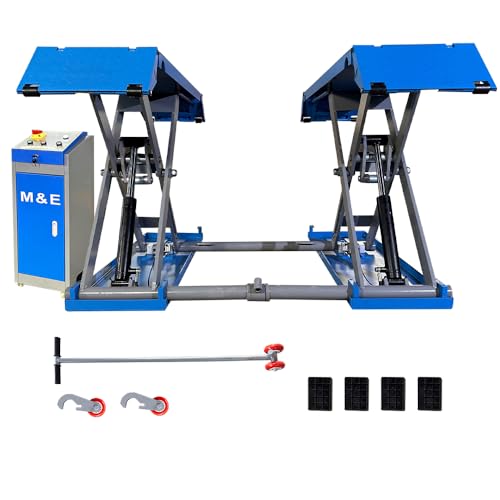
The ME 7700lbs lifting capacity mid-rise lift from KATOOL provides substantial capacity for heavier maintenance tasks, with a 38-inch lift height that supports a wide range of undercarriage inspections and repairs. The unit features a 110V power setup with a pneumatic release mechanism, enabling controlled lowering during service work. This combination of a high load rating and pneumatic release is aimed at professionals and serious hobbyists who perform regular, demanding maintenance in home shops or small commercial settings.
The 38-inch maximum height strikes a balance between reach and footprint, making it practical for garages with moderate ceiling clearance. Operators should ensure safe operation by verifying electrical supply stability, maintaining a clear operator area, and performing routine checks on hydraulic lines, safety valves, and lockbars. The 110V system can be a cost-effective solution for facilities without heavy compressor infrastructure, while still delivering reliable performance for frequent service tasks.
Albott 7000 Lbs Portable Car Lift

The Albott 7000 Lbs Portable Car Lift is designed for versatility, supporting up to 7,000 pounds. It includes multiple locking levers for safe operation, an upgraded spring design for faster height recovery, and a practical 28-inch maximum lift height with four height increments and two extension panels. This configuration provides flexibility for undercarriage access across a variety of vehicles, from cars to light trucks, while maintaining a manageable footprint for home garages or small shops. The frame is built from Q235B high-strength steel with an anti-corrosion coating to withstand long-term use in different environments.
It’s important to note that this lift requires a minimum load (around 220 pounds) to descend, a safety feature that helps prevent sudden drops if the vehicle is left unattended. The 28-inch maximum height is suitable for routine maintenance and inspections, including brake, suspension, and exhaust work, when there is sufficient overhead clearance. As with any heavy-duty lift, ensure even floor support, proper anchoring if recommended by the manufacturer, and regular inspection of locking mechanisms and frame integrity to maintain safe operation over time.
KATOOL 41.25″ Mid Rise Lift
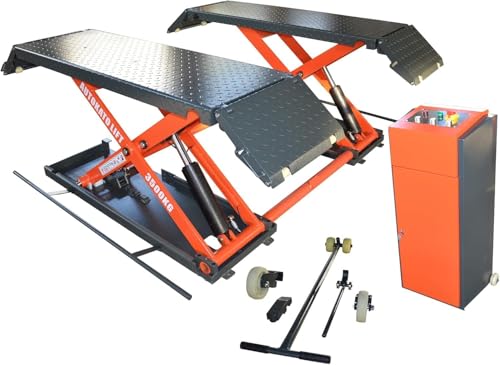
The KATOOL 41.25″ Mid Rise Lift offers a robust 8,000-pound lifting capacity and a maximum working height of 41.25 inches, making it suitable for a wide range of vehicles from sedans to larger SUVs. This model supports 110V or 220V single-phase operation (1PH) and includes a pneumatic safety release, ensuring controlled descent. The height range is complemented by a low 4.25-inch minimum height, which simplifies vehicle positioning for low-ground-clearance models. A self-lubricating bearing system and a top-level hydraulic assembly contribute to smooth performance and long-term durability, while the drive-up ramps and platform extension provide flexible service angles for extended vehicle sizes.
Key features such as the 110V/220V compatibility and a thorough safety release system make this lift a strong option for professional shops and ambitious home garages. When choosing, confirm electrical capacity, floor adequacy, and alignment requirements for ramps and extension panels. Regular maintenance, including checking the hydraulic fluid levels, hydraulic seals, and motor cooling performance, will help maintain reliability and uptime in busy shop environments.
Buying Guide
The following considerations help buyers match a scissor lift to their vehicles, space, and workflow. This guide presents a balanced view of capacity, height, power, safety, and long-term ownership costs without assuming a single perfect option for every user.
Key Factors To Consider
- Lift capacity vs. vehicle weight: Choose a unit with a rated capacity well above the typical gross weight of your vehicles. A common guideline is to target 1.5 to 2 times the vehicle’s weight for safety and service versatility.
- Maximum lift height: Ensure the tallest tasks you anticipate (oil changes, exhaust work, frame access) can be completed with the lift’s maximum height, while still fitting within your garage ceiling clearance.
- Power source and electrical setup: Decide between 110V and 220V options. Pneumatic releases offer smooth lowering but require an air supply; electric releases simplify wiring and control in most home shops.
- Locking mechanisms and safety features: Look for multiple locking points, stable footpads or screw pads, and a reliable emergency lowering system to prevent accidents during maintenance.
- Floor compatibility and installation: A flat, level, reinforced concrete floor is typically required. Check manufacturer recommendations for floor thickness, anchoring, and load distribution.
- Portability vs. permanence: Portable mid-rise lifts suit space-constrained garages or temporary setups, while fixed units may provide greater stability for frequent heavy-duty work.
- Maintenance and service support: Consider warranty length, availability of replacement parts, and access to service technicians in your region. Structural warranties (such as a 5-year warranty) offer longer-term protection against frame failure.
- Vehicle range and upgrades: If you anticipate upgrading to larger SUVs or lightweight trucks, prioritize higher lift capacity and taller maximum height to accommodate future vehicles.
Safety and Operational Best Practices
- Always work on a level, clean surface and verify the lift is properly aligned with vehicle wheels and jacking points.
- Use the locking levers or braces as soon as the vehicle is raised to prevent movement during maintenance.
- Follow the manufacturer’s guidelines for hydraulic maintenance, lubrication schedules, and inspection intervals for hoses, seals, and fittings.
- Do not exceed the rated capacity. If a vehicle weighs near or above the limit, use a lift rated higher than the vehicle weight.
- Wear appropriate PPE and ensure the work area is clear of spectators and obstacles.
In sum, the best choice depends on your vehicle mix, garage height, power availability, and how often you need to move the lift between bays. For lighter daily use in compact spaces, portable mid-rise models around 6,000–7,000 pounds offer a solid balance of capacity and footprint. For shops with frequent heavier maintenance, models in the 7,000–8,000 pound range with higher lift heights and robust safety features provide a durable solution that supports a broader range of service tasks.