Best Septic Leach Field Pipe Solutions for Healthy Drainage
Leach field pipes are a critical part of a residential septic system. Keeping them clear and free of buildup helps prevent backups, odors, and costly repairs. The right treatment plan combines maintenance products with occasional deeper-cleaning to tackle organic solids, soaps, and minor root intrusion. Below you’ll find five well-matched options that focus on leach field health, ease of use, and environmental compatibility. This guide compares enzyme-based cleaners, shock treatments, and root-control solutions to help you choose a regimen that fits your system’s needs.
| Product | Brand | Main Use |
|---|---|---|
| Roebic K-570-Q 32-Ounce Leach And Drain Field Opener Concentrate | Roebic | Biodegradable opener that breaks down clogs and buildup to restore drain field flow |
| Drain Field Cleaner Tablets by Dr Pooper | Accelerator by Dr. Pooper | Clear organic clogs, sludge and scum; supports aerobic & anaerobic systems; easy to use |
| Adios! Enzyme Drain Field Cleaner | ADIOS! | Enzyme-based restoration of leach fields; safe for plastics and metals; helps prevent future clogs |
| Septi-Flow Shock Septic Drainfield Repair Solution | Septi-Flow | Heavy-duty cleaner to remove buildup in drain field lines; biodegradable |
| GREEN PIG Drain Field Cleaner | GREEN PIG | Enzyme-based cleaner that tackles clogs and controls odors; septic-safe |
Roebic K-570-Q Leach Field Opener

Roebic K-570-Q is a 32-ounce leach and drain field opener that emphasizes environmentally friendly action. It employs Roetech enzyme-producing bacteria to break down proteins, starches, and other debris that commonly accumulate in leach lines and drainage fields. The formulation is biodegradable and designed to resist interference from soaps and detergents, which can otherwise hamper microbial activity. This product targets clogs at their source, helping to restore flow and reduce the risk of septic system failure over time. Its emphasis on an aerobic, spore-bearing bacterial blend supports a natural, steady cleanup of organic matter.
Used as a maintenance treatment or a targeted cleanup, K-570-Q aims to improve lateral line flow and overall field performance without the harsh chemicals that can disrupt beneficial septic microbes. The concentrate format allows for controlled dosing within a broader maintenance plan. While not a quick fix for severe roots or inorganic obstructions, it helps support the septic biome and steady system operation, aligning with households seeking an eco-friendly option that still delivers measurable improvements in drain-field health.
Drain Field Cleaner Tablets By Dr Pooper

Dr Pooper’s Drain Field Cleaner Tablets are designed to clears drain fields and septic tanks of organic clogs, sludge, and scum. They are described as suitable for use with both aerobic and anaerobic systems, offering a flush-and-forget approach that helps restore lateral line flow and may reduce pumping needs. The tablets work by introducing beneficial bacteria that re-establish the septic biome and reawaken sluggish fields. The product emphasizes ease of use—drop the tablet(s) into the system and let the bacteria do the work—while noting it does not address roots or inorganic material.
According to its features, the cleaner can rejuvenate previously dormant drain fields and extend system life by reactivating the microbial ecosystem. It is positioned as a cost-saving option that minimizes disruptive pumping, especially in systems showing early signs of failure due to organic buildup. The guidance also points out limitations, such as its ineffectiveness against roots or non-organic debris; users should consider complementary root-control strategies if roots are a known concern.
Adios Enzyme Drain Field Cleaner

Adios! Enzyme Drain Field Cleaner is a gallon-size enzyme-based treatment designed to restore leach fields and pipes by breaking down fats, greases, and other organic matter. The formula is described as safe for plastic and metal surfaces, without caustic chemicals or harmful VOCs, making it suitable for households with pets and children. The cleaning action continues after application, as enzymes keep working to prevent future clogs and maintain smooth flow across the septic system, including tanks and fields. The product promotes a lower-toxicity maintenance approach rather than a single harsh intervention.
Its management emphasis centers on ongoing flow and odor control. A monthly treatment cadence is suggested to sustain performance, reflecting a long-term maintenance strategy rather than a one-off fix. This can be advantageous for homes facing recurring slow drains or mild blockages, particularly in areas with kitchen grease or heavy use. However, it does not address root intrusion directly, so it should be paired with root-control measures if roots are present in the system.
Septi-Flow Shock Septic Drainfield Cleaner
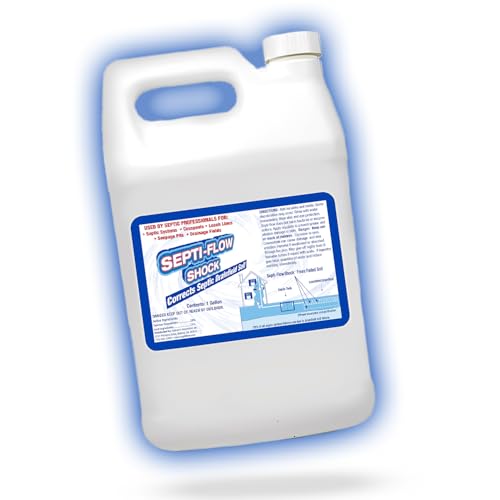
Septi-Flow Shock Septic Drainfield Repair Solution is a heavy-duty cleaner designed to clean and clear drain field lines, addressing buildup from soaps, detergents, sodium, and sulfate runoff. The product is marketed as biodegradable and safe for all septic systems and pipes, aiming to eliminate stubborn residues that hinder drainage. This option is positioned for situations where a strong cleaning intervention is warranted, such as after long-term neglect or unusually high solids buildup. It is not a routine maintenance product but a targeted treatment for problematic drain fields.
Septi-Flow Shock represents a more aggressive category within septic care. It complements ongoing maintenance by providing a robust cleanup when typical enzymatic treatments prove insufficient. For homeowners with persistent slow drains, mixing strategies—such as following a heavy-duty shock with a regular enzyme maintenance—can help restore flow while preserving system integrity. Users should follow label directions and avoid combining with incompatible cleaners to protect pipes and beneficial bacteria.
Green Pig Drain Field Cleaner

Green Pig Drain Field Cleaner uses enzyme-based action to tackle clogs and control foul odors in septic systems. The formula is described as septic-safe and environmentally friendly, making it suitable for households aiming to minimize chemical exposure while maintaining field performance. The product is marketed for quick action against organic blockages and associated odors, supporting a healthier drain field environment. It is positioned to work with standard septic systems and is compatible with typical household usage patterns, including regular maintenance applications to prevent future problems.
In practice, Green Pig emphasizes odor reduction as a key benefit alongside clog prevention. The product is often used in moderate to ongoing maintenance cycles and can be part of a broader plan that includes periodic pumping based on tank size and usage. Like other enzyme cleaners, it does not target roots directly, so root-control strategies may be needed if plant growth is an issue in the surrounding landscape.
Buying Guide
Choosing the right septic leach field treatment involves balancing effectiveness, safety, and long-term system health. The following considerations help you tailor a plan to your home’s needs and local conditions.
Biological vs Chemical Cleaners
Biological cleaners rely on enzymes and beneficial bacteria to digest organic matter over time, supporting a natural septic ecosystem. They are typically gentler on pipes and microbes but may require longer to show results. Chemical or “shock” cleaners can deliver quick improvement by dissolving buildup, yet they risk harming beneficial bacteria and corroding components if misused. For most households, a combination approach—biological maintenance plus periodic shock cleanings for stubborn clogs—offers a balanced path.
Root Intrusion and Pipe Health
Root-killer products specifically target invading roots at pipe entry points and help maintain flow, which is essential in many areas with mature trees or shrubs nearby. If roots are a known problem, choose a product that explicitly addresses roots or plan a complementary root-control method. Root intrusion can undermine leach field performance, so coordinating root management with field cleaners is prudent for long-term reliability.
Usage Frequency and Time to Work
Maintenance enzyme products typically require periodic applications (monthly or quarterly), delivering gradual improvements and sustained flow. Shock treatments are designed for occasional deep-cleaning sessions, often requiring careful adherence to dosing instructions. For homes with recurring clogs, combine a maintenance schedule with targeted shocks when needed. Always follow product-specific directions to protect the septic system and prevent overuse.
System Compatibility and Safety
Verify that products are compatible with your septic system type (PVC or other materials) and tank size. Look for biodegradable and non-caustic formulas to protect microbial balance and environmental safety. Some products are explicitly safe for plastics and metals, which can matter if your distribution boxes or components include sensitive materials. Avoid mixing products unless the label confirms compatibility to prevent unintended chemical reactions.
Cost, Availability, and Value
Consider how often you need to use a product and the per-treatment cost when evaluating value. Maintenance enzymes often provide ongoing benefits at a predictable price, while shock cleaners deliver strong immediate results but can be more expensive per use. Factor in the potential savings from reduced pumping and avoided repairs. In some cases, pairing a reliable enzyme maintenance plan with periodic shock treatments yields the best overall value.
Practical Comparisons Across Options
Enzyme-based cleaners (like Adios and Green Pig) are well-suited to regular maintenance and odor control without harsh chemicals. Shock cleaners (Septi-Flow Shock) are best reserved for severe or persistent blockages. Root-control products (such as Roebic K-77) address intrusion from trees and shrubs and should be integrated if roots are a factor. When selecting, match product type to the specific challenges you face—organic buildup, odor, roots, or a combination of issues—and align with your maintenance schedule and budget.
Overall, effective septic field care blends regular, environmentally conscious maintenance with targeted interventions for clogs, roots, and stubborn buildup. The 5 products highlighted here offer a spectrum of options to support leach field performance, depending on your system’s age, local soil conditions, and household usage patterns. Always start with a clear assessment of the most pressing issues—whether odors, slow drainage, or recurring backups—and choose a plan that emphasizes long-term field health and safe, simple maintenance.