Best Slot Cutter Router Bit Picks for Precise Woodworking
Answer: Slot cutter router bits are the go-to tools for creating clean grooves, slots, and rabbets in woodworking projects. This guide highlights five top choices suited for different needs—from fine joinery to heavy-duty rabbeting. Best for detailed joinery are Yonico and Meihejia sets; best for rabbeting and broader grooves are Newdeli and MEIGGTOOL kits; the Freud bit offers robust performance for deeper slotting. The buyer most likely seeking reliable, easy-to-find options will benefit from this lineup.
Overview at a glance:
| Product | Best For | Shank | Notable Point |
|---|---|---|---|
| Yonico Top Bearing Slot Cutter Router Bit | Fine joinery slots | 1/4″ | Top bearing for guided cuts |
| Meihejia 1/4″ Shank Slot Cutter Set | All-round groove cutting | 1/4″ | Six sizes for versatility |
| Newdeli Rabbet Router Bit Set | Rabbet slots and biscuits | 1/4″ | Interchangeable bearings |
| YONICO Slot Cutter Router Bit 1/8″ | Shallow slots and rabbets | 1/4″ | Two carbide cutters |
| Freud 63-162 Slotting Cutter Set | Deeper slotting with heavy-duty use | 1/2″ | Includes bearing and arbor |
Yonico Top Bearing Slot Cutter Router Bit
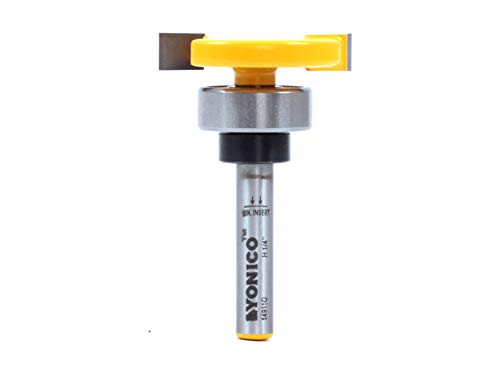
Product name: Yonico Top Bearing Slot Cutter Router Bit (1/4″ Height – 1/4″ Depth – 1/4″ Shank). Overall diameter is 1-1/4″, shank is 1/4″. This bit specializes in routing a 1/4″ x 1/4″ slot, suitable for joinery and general groove work.
Who it’s best for: This is ideal for woodworkers who need precise, guided slots in cabinet making or panel joining. The top-bearing design supports clean, repeatable cuts when used with a router’s edge guide or fence.
Why selected: Its combination of a sizable cutting diameter and a common 1/4″ shank makes it compatible with many routers and guides while producing a stable slot. The top bearing aids alignment, reducing drift in narrow cuts.
Limitation: The 1/4″ depth slot may require multiple passes for deeper grooves; consider a bit with greater height if you routinely need deeper slots. Ensure the surrounding stock is securely clamped to minimize tear-out on end grain.
Meihejia 1/4 Inch Shank Slot Cutter Set

Product name: Meihejia 1/4 Inch Shank Slot Cutter Router Bit Set – 6 Size. Set includes six sizes with a 1/4″ shank. Max cutting depth is 1/2″, with sizes 5/64″, 3/32″, 1/8″, 5/32″, 3/16″, 1/4″.
Who it’s best for: Ideal for hobbyists or small shops needing a broad toolkit to handle a range of groove depths without swapping bits frequently.
Why selected: The six sizes provide flexibility for joinery and groove work, letting you tailor the slot width and depth precisely to each project. The blades feature C3 micro-grain tungsten carbide for a longer edge life in typical woods.
Limitation: The set uses a carbide system that can wear faster with hard woods or metals; always confirm material compatibility prior to use. The 1/2″ maximum depth means double passes may be necessary for deeper slots.
Newdeli Rabbet Router Bit Set

Product name: Newdeli Rabbet Router Bit Set 1/4 Inch Shank – 4Pcs Rabbeting Router Bits with multiple heights and 6 bearings. Heights: 1/8″, 1/4″, 3/8″, 1/2″ with 6 interchangeable bearings for varying depths (1/2″, 5/8″, 3/4″, 7/8″, 1″, 1-1/8″).
Who it’s best for: This set suits users who perform multiple rabbeting steps or biscuit-style joinery across frames, panels, and shelving.
Why selected: The interchangeable bearing system expands depth options without multiple separate bits. High-quality YG8 carbide blades support consistent cuts and longer service life in typical hardwoods.
Limitation: The set requires careful bearing changes for each depth; ensure bearings are correctly seated to avoid misalignment. Do not use on non-wood materials.
YONICO Slot Cutter Router Bit 1/8-Inch x 5/16-Inch

Product name: YONICO Top Bearing Slot Cutter Router Bit 1/8-Inch x 5/16-Inch 1/4-Inch Shank 14914q. It routes a 1/8″ x 5/16″ slot with a 1/4″ shank and top bearing for guided cuts. Features premium C3 micro-grain tungsten carbide blades.
Who it’s best for: This is well-suited for precise, shallow grooves in cabinetry or panel work where tight tolerances matter.
Why selected: The dual carbide cutters provide a sharp, long-lasting edge, and the top bearing simplifies alignment for consistent results across repeated passes.
Limitation: The shallower slot depth may require more passes for thicker stock. The 1/8″ cutting height means it’s less suited for deep rabbets compared with larger-bit options.
Freud 63-162 Slotting Cutter Set

Product name: Freud 63-162: 9/16″ Depth Slotting Cutter Set with 1/2″ Shank, 1/4″ Carbide Height. Includes three wing slotting cutters, arbor, and bearing. Features Silver ICE coating.
Who it’s best for: Best for projects requiring deeper slots and robust performance in hardwoods or larger panels, where a stronger tool helps reduce drift and chatter.
Why selected: The included arbor and bearing simplify setup and alignment, and the 9/16″ depth capability expands the range of possible joinery and dado-like cuts. ICE coating offers corrosion resistance and edge retention benefits in many woods.
Limitation: This set uses a 1/2″ shank, which may limit compatibility with smaller routers or chucks without proper adapters. The larger shank also means it may require a sturdier router and table setup.
Buying Guide: Slot Cutter Router Bits
What should I consider when choosing a slot cutter router bit?
- Shank size and router compatibility: Most home routers accept 1/4″ shanks; larger shanks (1/2″) are less common on compact models.
- Slot depth and diameter: Determine whether you need shallow grooves or deeper rabbets. Some sets offer adjustable depths via bearings.
- Bearing type: Top bearings provide guided cuts along edges; contact bearings are simpler for freehand slots.
- Blade quality: Micro-grain carbide blades (C3 or better) offer longer edge life and sharper cuts in typical woods.
- Stock material: Hardwoods demand sharper edges and possibly tougher carbide; some coatings help resist resin buildup.
- Maintenance: Keep blades clean and free of resin; proper lubrication and storage extend life.
What are common use cases for slot cutter bits?
- Joining grooves for panels, cabinet backs, and drawer fronts.
- Grooves for shelves, dados, and decorative inlays.
- Rabbeting for frames, doors, and edge rebates in cabinetry.
How to maximize accuracy and safety?
- Clamp stock securely and use a straight edge or router table when possible.
- Make multiple shallow passes rather than one deep cut to reduce tear-out and heat buildup.
- Inspect bearings and blades before each use; replace if dull or chipped.
Choosing between sets vs. single bits
- Sets offer breadth for varied depths and groove widths, reducing swaps and improving workflow.
- Singles are better if you only need a specific depth or if space and budget are limited.
Maintenance and safety quick tips
- Wear eye protection and hearing protection when operating routers.
- Clean chips from the bit after use to prevent resin buildup.
- Store bits in a dry, organized case to prevent corrosion and nicks on cutting edges.
FAQ
- What is the typical shank size for slot cutter bits? Most common is 1/4″, with some 1/2″ shanks for heavier-duty work.
- Can I use slot cutter bits for metal or plastic? They are designed for wood and wood-based materials; avoid non-wood materials unless specified by the manufacturer.
- Do top-bearing bits require a router table? They can be used with a handheld router when guided by a straightedge or fence, but a router table often improves accuracy.
- Are carbide blades better than high-speed steel for slotting? Carbide blades hold an edge longer and perform well on woods; HSS can be suitable for softer woods but wears faster.
- How many passes are typical for deep slots? Start with light passes (1/16″ to 1/8″ per pass) and increase gradually as needed.
- Is a precision straight edge recommended? Yes, using a straight edge or router fence reduces wandering and improves slot consistency.