Best Small Hand Held Buffer Polisher for Car Detailing: Compact Power, Big Finish
Looking for a small hand held buffer polisher that’s easy to maneuver yet capable of delivering a swirl-free finish? This guide highlights compact polishers ideal for tight spots, headlights, and detail work. It targets buyers who want a portable, corded or cordless option for DIY car detailing, bike care, or small furniture polishing. The top picks are selected for portability, ease of use, and practical performance in everyday maintenance tasks. The table below compares the best options among compact polishers to help you choose quickly.
| Product | Type | Best For | Notes |
|---|---|---|---|
| WEN 6010 Waxer/Polisher | Corded | Best for beginners and small finishes | Reliable 3500 rpm, ergonomic palm grip |
| SPTA Cordless Mini Car Polisher | Cordless | Best for tight spaces and portability | 1-inch backing plate, up to 1 hour on a single charge |
| AUTIWOZ Cordless Mini Car Polisher | Cordless | Best for precise spot polishing | DA/Rotor modes, 1-inch and 3-inch backing plates |
| KITLUCK Cordless Buffer Polisher | Cordless | Best value kit with accessories | Two batteries, 0-2000 and 0-6000 RPM |
| AACGIN Mini Cordless Polisher | Cordless | Best starter kit for on-the-go detail | 13-piece kit, portable and easy to use |
WEN 6010 6-Inch Waxer/Polisher
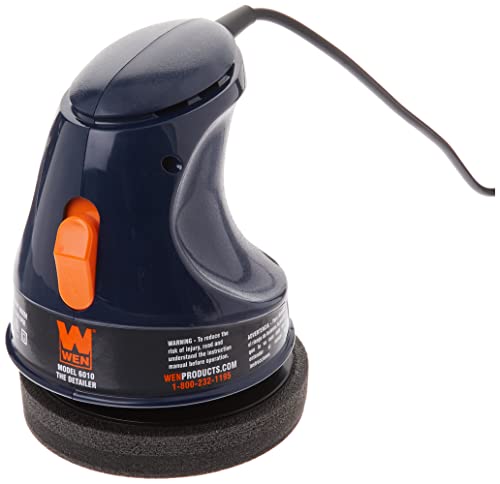
The WEN 6010 is a compact, corded waxer/polisher with a 6-inch pad. It runs on a 120 V, 0.5 amp permanent magnet motor and reaches up to 3500 RPM. Its ergonomic palm-and-body grip supports comfortable one- or two-handed operation. Best for entry-level detailing and small-area polishing where corded power is preferred. A potential limitation is cord management for mobile use, which makes it less ideal for distant or outdoor spots without an outlet.
Who it’s best for: Beginners and hobbyists who want a simple, reliable polisher for small surfaces or detail work in a stationary workspace.
SPTA Cordless Mini Car Polisher
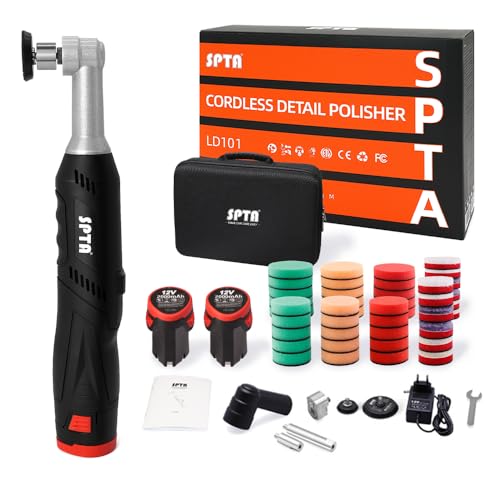
The SPTA mini polisher is designed for portability and maneuverability. Its light weight and 1-inch backing plate allow polishing around emblems, body lines, and tight areas with minimal fatigue. It offers cordless operation and up to roughly an hour of runtime at maximum speed on a single charge. A caveat is that battery life may vary with workload, so having a spare battery can be advantageous for larger detail jobs.
Who it’s best for: Professionals or hobbyists who need a tiny, cordless tool for spot polishing, headlight buffing, and quick touch-ups without a power outlet nearby.
AUTIWOZ Cordless Mini Car Polisher

The AUTIWOZ mini polisher combines dual-mode operation with fast-change drive for DA (dual-action) and rotary modes. It includes 12mm orbital and rotary drive options, with 1-inch and 3-inch backing plates for versatile use on small surfaces, trims, and tight spots. This makes it a strong choice when you need both gentle swirl removal and deeper scratch addressing. A limitation is the complexity of switching modes, which may require a short learning curve for beginners.
Who it’s best for: Car detailers who want a flexible tool capable of both safe swirl removal and deeper defect correction on small areas.
KITLUCK Cordless Buffer Polisher

The KITLUCK kit is a compact, cordless polisher with two 2000 mAh batteries and a 0-2000 RPM or 0-6000 RPM range. It includes multiple pad types and accessories, supporting waxing, polishing, buffing, and light sanding across various materials. This makes it a strong all-around choice for those who want a complete set for multiple surfaces. A potential limitation is the reliance on battery power; expect a brief pause for charging during longer sessions.
Who it’s best for: Detailers who want a feature-rich kit with interchangeable pads and dual-speed control for a wide range of small projects.
AACGIN Mini Cordless Polisher

The AACGIN mini polisher kit emphasizes portability and completeness, offering a 13-piece kit with 5 polishing pads, towels, scratch removers, and a polishing paste. Its handheld, compact design is ideal for touch-ups on small areas like headlights, trims, and emblems. The kit approach provides ready-to-use versatility, though users should confirm pad compatibility with their chosen finishing compounds to avoid incompatibilities.
Buying Guide: Key Considerations For Small Hand Held Buffer Polishers
What should you evaluate before buying a small buffer polisher? Consider power source, size, backing plate options, speed range, and included accessories. Corded models deliver consistent power, while cordless units improve portability at the cost of runtime. A smaller backing plate (1 inch to 2 inches) is ideal for tight spots but may require more passes for larger surfaces. Dual-action (DA) or random orbital motion helps prevent swirls, while rotary modes address deeper defects. Battery type and availability of spare packs are crucial for longer projects.
How to choose between corded and cordless?
- Corded: Steady power, no charging interruptions, best for stationary work or long sessions at a single location.
- Cordless: Maximum portability, ideal for vehicles with difficult-to-reach areas or outdoor use; consider battery life and charger time.
What about pads and polishes?
- Pad types matter: foam for finishing, wool for cutting, microfiber for gentle polishing. Always match pad density to your task.
- Keep a mix of polishing pastes or waxes designed for your finish to avoid marring sensitive surfaces.
Practical tips for best results
- Start with a lower speed and light pressure to map the surface; increase gradually as needed.
- Test on an inconspicuous area first to ensure compatibility with your paint type.
- Keep the polisher moving to avoid heat buildup and swirl marks.
Frequently asked questions
- What is a DA (dual-action) polisher? A DA polisher moves in two simultaneous patterns to reduce swirl marks while polishing.
- Can I use sanding discs with a polish? Only if the product and backing plate support it; otherwise, it can cause damage.
- Do cordless polishers overheat? Some models have overheating protection and will pause for cooling during sustained use.
- Is a larger backing plate better? Larger plates cover more area but are less suitable for tight spots; smaller plates excel in detail work.
- Should I buy a kit or a single polisher? Kits offer versatility and pads, but ensure pad compatibility with your paints and waxes.