Best Solder for Speaker Wire: Top Choices for Clean, Reliable Joints
Choosing the right solder for speaker wire ensures clean, durable joints that withstand vibration, temperature swings, and the demands of home theater or automotive audio projects. The following five products cover traditional tin-lead rosin-core solder and lead-free options, plus solder-seal connectors that simplify quick fixes in tight spaces. Whether you need a low-melt option for delicate work or a weatherproof seal for outdoors, these picks offer dependable performance for speaker-wire installations and repairs.
| Product | Brand | Size / Format | Key Benefit |
|---|---|---|---|
| MAIYUM Tin-Lead Rosin Core Solder Wire | MAIYUM | 0.8 mm, 50 g | Low-melting tin-lead alloy with rosin core for smooth, strong joints in tight spaces |
| Kuject Solder Seal Wire Connectors Kit | Kuject | 120 pcs | Waterproof, heat-shrink connectors for quick, durable junctions without soldering in tight spaces |
| TOWOT Tin-Lead Rosin Core Solder Wire | TOWOT | 1.0 mm, 50 g | 63/37 alloy for dependable flow and solid joints with a slightly larger diameter |
| Enersystec Lead-Free Solder Wire | Enersystec | 0.8 mm, 100 g | RoHS-compliant, lead-free option with good conductivity and clean soldering characteristics |
| Twocorn Tin-Lead Rosin Solder Wire | twocorn | 0.8 mm, 50 g | 63/37 SnPb with rosin flux content for fast flow and solid joints in electronics and wiring |
MAIYUM 0.8mm Tin-Lead Rosin Solder Wire
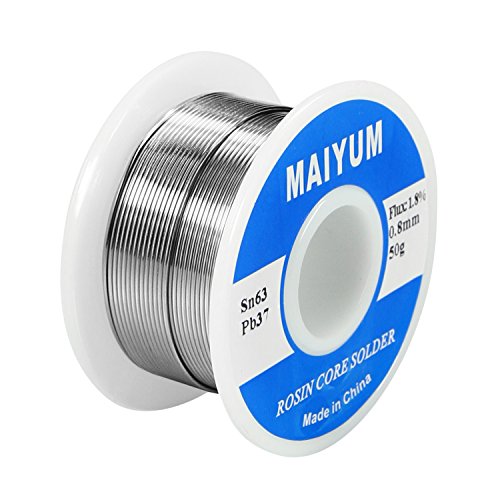
MAIYUM offers a 63-37 tin-lead rosin-core solder wire sized at 0.8 mm (0.0315 inch) with a 50 g spool. The rosin core (about 1.8% flux) facilitates reliable wetting and smooth flow, reducing tip contamination and cold joints on speaker-wire tasks. The tin-lead alloy is forgiving for hobbyist installations, providing a balanced melting point that supports steady, controlled soldering in confined spaces. This makes it suitable for repairing connections behind audio equipment, wiring in speaker enclosures, and creating robust terminations on smaller gauge conductors.
- 63/37 SnPb alloy
- 0.8 mm diameter
- Rosin core flux ~1.8%
- 50 g spool
Kuject Solder Seal Wire Connectors Kit
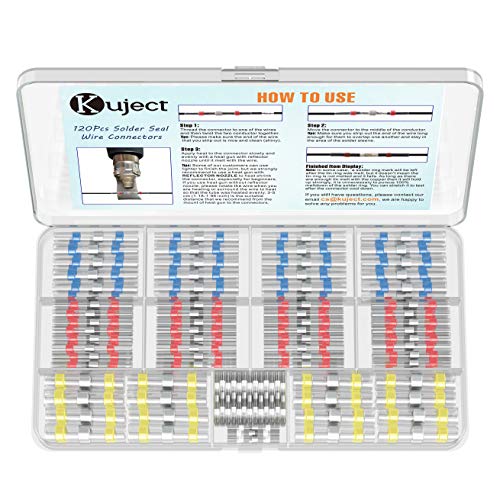
Kuject combines soldering with heat-seal technology in a 120-piece kit designed for fast, reliable connections without traditional soldering. The connectors are pre-sealed with two hot-melt adhesive rings and integrated solder, which enables a water-tight joint when heated with a heat gun. This setup is especially advantageous in confined spaces, marine environments, and automotive speaker installations where moisture resistance and corrosion protection are critical. After heating, the joint forms a sealed, conductive bond that helps prevent oxidation over time.
- Heat-shrink, waterproof butt connectors
- No crimping tool required
- Two adhesive seals per connector
- Designed for confined spaces
TOWOT 1.0mm Tin-Lead Rosin Core Solder

TOWOT’s leaded solder wire uses a 63/37 SnPb alloy with rosin flux at 1.8% and a 1.0 mm diameter, packaged in a 50 g spool. The larger diameter offers confident behavior on thicker speaker wires or jumpers, while the 63/37 composition provides smooth flow and strong fillets for dependable joints. The flux improves wetting and reduces soldering time, making it a solid choice for hobbyists wiring speakers, repairing crossovers, or reflowing connections on quick-fix projects that demand reliable conductivity.
- 63/37 SnPb alloy
- 1.0 mm diameter
- Rosin flux 1.8%
- 50 g spool
Enersystec Lead-Free Solder Wire

Enersystec provides a lead-free option with 0.8 mm diameter and a 100 g spool, aligned with RoHS compliance. The solder composition (Sn99 Ag0.3 Cu0.7, roughly 0.8 mm) yields good electrical conductivity and clean joints suitable for electronics and speaker-wiring tasks that require a non-leaded solution. While the higher melting point of lead-free alloys can demand slightly longer heating times, the absence of lead is advantageous in residential settings and projects where environmental considerations matter.
- Lead-free Sn99 Ag0.3 Cu0.7
- 0.8 mm diameter
- 100 g spool
- RoHS compliant
Twocorn 0.8mm Tin-Lead Rosin Solder Wire
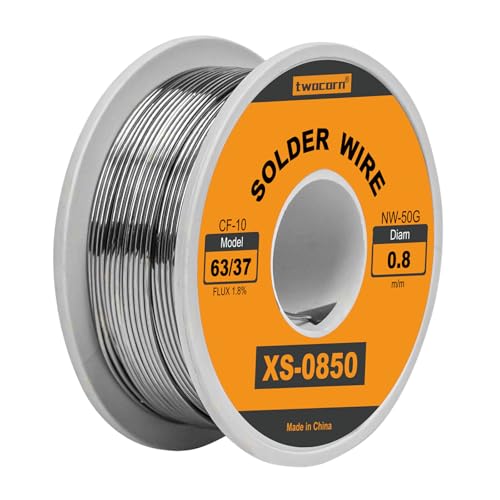
Twocorn’s 63/37 SnPb solder wire comes in 0.8 mm diameter and a 50 g spool, with rosin flux content around 1.8%. The solder is described as having a low melting point, good fluidity, fast soldering speed, and strong adhesion for solid joints. This makes it a practical choice for speaker-wire terminations, crossover connections, and quick field repairs where reliable electrical contact is essential and space is limited.
- 63/37 SnPb alloy
- 0.8 mm diameter
- Rosin flux 1.8%
- 50 g spool
Buying Guide
Choosing the right solder for speaker wire involves balancing chemistry, form, and practical use in audio installations. The following considerations help compare the five picks and decide what fits your setup best.
Key purchase considerations
Material and alloy: Tin-lead (63/37) solder offers easy wetting and a low-melting point, which is forgiving for hobbyist work and dense connections behind audio gear. Lead-free options (such as Sn99 Ag0.3 Cu0.7) meet environmental standards but typically require a higher processing temperature and longer heating times. For longevity in moist or outdoor conditions, solder-seal connectors provide a moisture barrier, though they unite the need for compatible heat tools and may alter impedance at the joint.
Diameter and compatibility
Speaker-wire work often involves smaller conductors, so 0.8 mm diameter wires are common in hobby audio projects. A 1.0 mm diameter solder is suitable for somewhat thicker runs or for splicing thicker speaker wires. The key is matching the solder’s flow characteristics to the conductor gauge, ensuring a smooth fillet without excessive heat that could damage insulation or nearby components.
Flux content and joint quality
Rosin-based flux cores (around 1.8%) assist wetting and reduce flux residue after soldering. Higher flux can speed up the process but may require more cleaning in sensitive audio paths. For corrosion resistance and longevity, especially in marine or outdoor setups, lead-free options paired with proper cleaning and sealing are advisable.
Sealants versus traditional soldering
Solder-seal connectors offer a rapid, waterproof seal suitable for environments where moisture penetration is a risk. They’re particularly convenient in tight spaces, such as behind wall plates or inside speaker enclosures. Traditional soldering delivers a high-conductivity, low-impedance joint with long-term reliability when performed with quality flux and clean surfaces. In any case, allow adequate cooling and inspect joints for burrs, cold joints, or stray flux residues.
Practical recommendations
For routine speaker projects in dry indoor spaces, a leaded SnPb solder around 0.8 mm can provide reliable joints with minimal effort. In environments exposed to moisture (outdoor installations, marine) or where lead is a concern, lead-free solder wires paired with water-resistant connectors or heat-shrink seals offer robust protection. Keep a clean work area, flux residue management, and a suitable temperature profile for your soldering iron to avoid insulation damage or wire lift-off.
Storage, safety, and handling
Store spools in a dry, cool place away from moisture and direct sunlight. Use eye protection and ventilation when soldering to avoid fumes, and clean excess flux from joints to prevent corrosion. When using solder-seal connectors, follow manufacturer instructions for heat gun temperature and dwell time to ensure a proper seal. Proper disposal of waste flux and discarded solder helps maintain a safe workshop environment.