Best Square End Mill Cutter Picks for Precise Metal Milling
When you need crisp square cuts in carbon steel, cast iron, or hardened alloys, square end mill cutters are a reliable choice. This guide highlights five top options, each suited to different workpieces and machining goals. Whether you’re a hobbyist, professional machinist, or a shop owner, these picks balance durability, precision, and value. The table below summarizes the featured products to help you compare quickly.
| Product | Shank | Cutting Dia | Flutes | Best For |
|---|---|---|---|---|
| Rannb End Mill Set, 2pcs | 3/8″ | 3/8″ | 4 | Carbon and alloy steels |
| Joleully 1/2″ Carbide Square End Mill | 1/2″ | 1/2″ | 4 | Higher-carbon steels, general purpose |
| Rannb Square End Mill 1/2″, 2pcs | 1/2″ | 1/2″ | 4 | Finish machining in tough steels |
| LU&MN 1/8″ Shank, 1/8″ Dia, 4 Flute | 1/8″ | 1/8″ | 4 | Precision small-diameter work |
| Hunricho 1/2″ Square End Mill, 2pcs | 1/2″ | 1/2″ | 4 | Alloy and hardened steels |
Rannb End Mill Set 4-Flute, 3/8″

Material: High Speed Steel with good hardness and wear resistance. Shank and cutting Dia: 3/8″ each; cutting depth 1″ and total length 2-3/4″. Application: Suitable for side milling, end milling, and finish machining in carbon steel, alloy steel, die steel, tool steel, cast iron, and titanium. Best for: workshop operators seeking a robust mid-size cutter for general-purpose milling. Limitation: HSS may wear faster on very hard materials compared to carbide alternatives.
Joleully 1/2″ Carbide Square End Mill
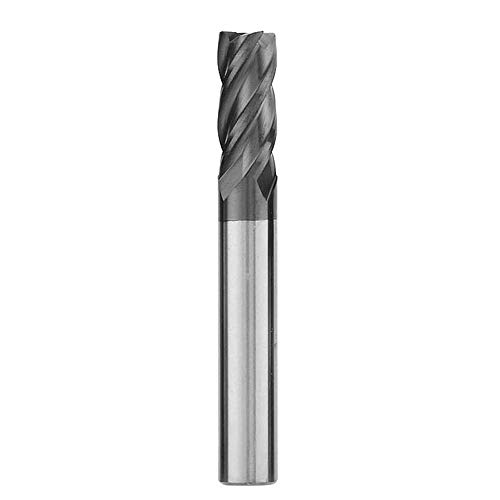
Material: Micro grain carbide with AlTiN coating for hot hardness and oxidation resistance. Coating improves wear resistance and thermal stability. Cutting Dia: 1/2″; Shank: 1/2″. Best for: higher-hardness steels and precision finishing where oxidation resistance matters. Limitation: Carbide tools can be more brittle than HSS when subjected to shock loads.
Rannb Square End Mill 1/2″ 4 Flute, 2pcs

Material: High Speed Steel with high hardness and wear resistance. Shank Dia: 1/2″, Cutting Dia: 1/2″, Cutting Depth: 1-1/2″, Total Length: 3-3/8″. Best for: end milling and finish work on a range of steels, including cast iron and titanium. Limitation: HSS cutter performance may lag behind carbide in high-temperature or continuous cutting tasks.
LU&MN Tungsten Carbide Square End Mills, 4 Flute, 1/8″

Size: Cutting length 3/8″, Shank 1/8″, Cutting diameter 1/8″, Total length 1-1/2″. Material: Solid carbide with TiAlN coating for enhanced hardness and wear resistance. Best for: precision small-diameter work and maintaining surface quality. Limitation: Smaller shanks can limit rigidity on heavy cuts.
Hunricho 2PCS 1/2″ Carbide Square End Mills

Material: Micro grain carbide with AlTiN coating, 4-flute design. Shank: 1/2″, Cutting Dia: 1/2″, Coating provides hot hardness and oxidation resistance. Best for: alloy steels and hardened steels requiring reliable edge retention. Limitation: Two-piece set may not cover broader diameter ranges in a single purchase.
Buying Guide
What should you consider when choosing a square end mill cutter?
- Material: Carbide offers higher hardness and heat resistance; high-speed steel is versatile and less brittle for shock.
- Coating: TiAlN or AlTiN coatings improve hot hardness and wear resistance, extending tool life in tough materials.
- Diameter and shank size: Match to your machine spindle and the desired cut width; smaller diameters excel at detail work, larger for material removal.
- Flute count: More flutes provide smoother finishes but may reduce depth of cut; 4-flute sets are common for general milling.
- Coherence with material hardness: Hardened steels benefit from carbide; softer metals can be milled effectively with HSS.
- Durability vs. cost: Carbide cutters last longer under demanding tasks but can be pricier and more brittle; balance with project needs.
How to choose by project type
- Finishing tasks on hardened steels: Choose carbide with a robust coating and 4-flute configuration for smooth surfaces.
- Rough milling in steel alloys: HSS or carbide with larger diameters and shallower passes may be cost-effective and efficient.
- Precision small-diameter work: Small shank, small diameter carbide cutters with TiAlN coating provide accuracy and longevity.
Usage tips for optimal results
- Use proper feeds and speeds suitable for the material and cutter type to avoid premature wear.
- Securely clamp workpieces to reduce vibrations that degrade surface quality.
- Periodically inspect cutters for wear, chipping, or coating degradation.
FAQ
- Q: Which cutter is best for hardened steel? A: Carbide end mills with high-temperature coatings are typically better for hardened steel than high-speed steel.
- Q: Do I need a coating on my end mill? A: Coatings like AlTiN or TiAlN improve hot hardness and wear resistance, especially at higher speeds.
- Q: How many flutes should I choose? A: Four-flute cutters are common for general purpose and finishing; more flutes yield better finishes, fewer flutes remove material faster.
- Q: Can I use square end mills for all metals? A: They perform well on carbon steel, alloy steel, die steel, cast iron, and titanium, but material hardness and rigidity affect results.
- Q: Is carbide better than HSS for precision work? A: Carbide provides higher hardness and thermal stability, often improving precision and longevity in demanding tasks.
- Q: What size should I buy first? A: Start with a mid-range diameter (like 1/2″) for general use and add smaller and larger diameters for specialized jobs.