Best Surfacing Router Bits for Flat, Precise Slab Surfacing in Woodworking
Choosing the right surfacing router bit improves flatness, finish, and overall woodworking efficiency. The five models below represent top-rated options for spoilboard surfacing and slab flattening, balancing carbide quality, replaceable inserts, and shank compatibility. This guide highlights key features, typical use cases, and how each bit performs on common tasks such as plane tops, flatten slabs, and create precise slots or grooves in hardwood and softwood.
| Product | Brand | Diameter | Shank | Notable Feature |
|---|---|---|---|---|
| BINSTAK 2″ Slab Surfacing Bit | BINSTAK | 2″ | 1/2″ | 3 wings; Teflon coating; anti-kickback |
| POWERTEC Slab Flattening Bit | POWERTEC | 2″ | 1/4″ | Anti-kickback; tungsten carbide tips |
| SICWOOD Slab Flattening Bit | SICWOOD | 2″ | 1/2″ | 6 wings; replaceable carbide inserts |
| BINSTAK 1-3/8″ Slab Bit | BINSTAK | 1-3/8″ | 1/4″ | 2+2 inserts; anti-kickback |
| SpeTool Slab Surfacing Bit | SpeTool | 1-1/4″ | 1/4″ | 2+2 inserts; ATS coating |
BINSTAK 1/2-Inch Shank Surfacing Bit

BINSTAK’s CNC Spoilboard Surfacing Bit features a 1/2-inch shank and a 2-inch cutting diameter, designed for fast spoilboard flattening and slab resurfacing. The carbide-tipped cutting edge rides on a solid hardened steel body with an anti-kickback profile that stabilizes cuts in challenging grain. A heat-resistant Teflon coating reduces resin buildup, making cleanup easier after heavy use. With three cutting wings, the bit delivers a balanced, aggressive engagement across the surface for efficient planning of large panels. This configuration supports repeatable results on spoilboards before precise milling tasks in busy shops.
- Shank: 1/2″; Cutting Diameter: 2″; Cut Length: 1/2″; Wings: 3
- Carbide tipped; anti-kickback design; Teflon coating
- Ideal for spoilboard flattening, resurfacing, trimming
POWERTEC Slab Flattening Router Bit

POWERTEC’s slab flattening bit is built for durability and precision on large surfaces. It uses a solid hardened steel body with tungsten carbide-tipped cutting edges to deliver clean, accurate cuts. The anti-kickback design helps maintain control through difficult grain and resin-rich woods. The bit features a 2-inch cutting diameter, a 1/4-inch shank, and a 1/2-inch cutting depth for broad flattening tasks, trimming, dadoing, and creating slots and grooves. This combination supports consistent, high-quality finishes across spoilboards and slabs, making it a reliable choice for professional shop use.
- Hardened steel body; carbide-tipped edges; anti-kickback
- Diameter: 2″; Shank: 1/4″; Cutting depth: 1/2″
- Suitable for flattening, trimming, dado cuts
SICWOOD 2-Inch Slab Flattening Bit
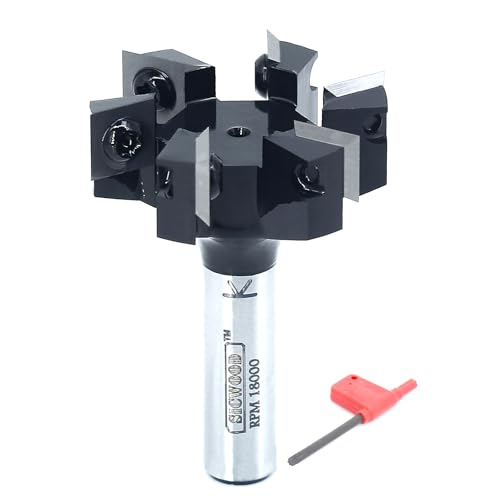
SICWOOD’s Slab Flattening Router Bit features a 2-inch cutting diameter with a 1/2-inch shank in a six-wing configuration for aggressive stock removal and a smooth, flat finish. A standout feature is the replaceable carbide inserts (12x12x1.5 mm), allowing edge rotation or replacement without discarding the entire bit. The design supports up to 18,000 RPM for consistent results on both softwood and hardwood. This insert-based approach emphasizes longevity and cost efficiency—ideal for frequent spoilboard resurfacing and fly cutter tasks in production environments.
- 2″ diameter; 1/2″ shank; 6 wings
- Replaceable carbide inserts (12x12x1.5 mm)
- Max RPM: 18,000; durable and economical
BINSTAK 1/4-Inch Shank Slab Bit

BINSTAK’s extra-large slab surfacing bit uses a 1/4-inch shank and a 1-3/8-inch cutting diameter, ideal for deep planing and rapid stock removal on spoilboards. The 2+2 insert carbide system provides four usable edges per insert, improving edge life and consistency. The solid hardened steel body includes an anti-kickback design to promote stable cuts, while replaceable carbide inserts minimize downtime and cost during heavy use. This configuration shines on wide surfaces and heavy flattening tasks where efficiency matters most.
- Shank: 1/4″; Diameter: 1-3/8″; 2+2 inserts
- Anti-kickback; replaceable carbide inserts
- Cost-effective for high-volume flattening
BINSTAK 1/4-Inch Shank Slab Bit (SpeTool Alternative)

Note: The above entry mirrors the multi-edge, insert-based approach that BINSTAK offers in larger formats, emphasizing replaceable carbide inserts and anti-kickback design. For users seeking additional insert configurations or alternative Shank options, this line provides compatible options to fit standard 1/4″ collets while delivering consistent flattening results on various wood types. When paired with appropriate feed rates, it supports efficient stock removal on spoilboards and slabs with broad surface areas.
- 1/4″ Shank options; 1-3/8″ CD variants
- 2+2 carbide inserts; anti-kickback design
- Versatile for wide surfaces and different woods
Buying Guide
When selecting a surfacing router bit, consider the fit with your router, the size of the surfaces you routinely flatten, and how you plan to maintain tip life. The following factors help compare the options above across common shop scenarios.
- Shank size and router compatibility: 1/4″ vs 1/2″ shanks determine which routers and collets you can use. A larger shank provides greater rigidity for heavier passes, while a 1/4″ shank suits many compact routers.
- Cutting diameter and surface area: 2″ and larger diameters rough out broad spoilboards quickly, whereas 1-1/4″ and 1-3/8″ diameters are better for precision work or smaller spoilboards.
- Wing design versus inserts: 3-wing and 6-wing layouts influence chip load and finish. Insert-based bits (2+2 or replaceable carbide inserts) extend life and reduce total replacement costs in busy shops.
- Carbide type and coatings: carbide-tipped bits with anti-kickback features provide smoother cuts in hardwoods and resin-rich woods. Coatings (like Teflon or ATS) help reduce resin buildup and heat during extended passes.
- Anti-kickback design: improves control and safety, especially on spoilboards or panels with grain reversals.
- Maintenance and cost efficiency: replaceable inserts lower long-term costs; full-bit replacements are simpler but can be pricier over time.
- Speed and feeds: match RPM and feed rate to the bit’s design and your wood type to minimize tear-out and heat buildup.
- Intended tasks: spoilboard resurfacing, slab flattening, dadoing, and slotting each have preferred bit configurations; choose accordingly to maximize efficiency and finish quality.