Best Thermostatic Mixing Valves for Safe, Consistent Water Temperature
Choosing the right thermostatic mixing valve (TMV) helps prevent scalding, maintain comfortable water temperatures, and protect plumbing systems. This guide highlights five top-performing TMVs available on Amazon, covering a range of connection types and installation scenarios—from under-sink setups to tank boosters. Each product summary focuses on safety features, materials, and compatibility to help American homeowners and installers pick a valve that suits their needs without compromising reliability or code compliance.
| Model | Brand | Connection Type | Best Use | Key Feature |
|---|---|---|---|---|
| USG-B-M2 | Watts | 3/8″ Under-Sink | Under sink | Tamper-resistant nut; built-in check valves |
| HG110-D | Cash Acme | 1/2″ SharkBite Union | Compact spaces | Tempered water at 120°F; durable brass |
| HG110 Crimp | Cash Acme | 3/4″ Crimp | Residential | Lead-free brass; integral checks |
| LFMMV-M1-UT | Watts | 3/4″ Union Inlet | General purpose | No lead alloy; 13 gpm |
| Fyeer 3-Way | Fyeer | DN15 G1/2″ | Bathroom mixer | Brass body; temperature range markings; safety stops |
Note: This table aggregates key attributes to help compare installation flexibility, materials, and tempering capabilities. Always verify compatibility with your specific plumbing configuration and local code requirements before purchasing.
Watts USG-B-M2 Guardian Under Sink

The Watts USG-B-M2 Guardian Under Sink thermostatic mixing valve is designed for tight spaces beneath a sink, delivering tempered water with reliable performance. Its lead-free brass body construction enhances long-term durability, while a tamper-resistant locking nut helps prevent accidental misadjustments in shared settings. The valve also features built-in check valves to prevent unwanted migration of hot water to cold and vice versa, reducing the risk of scalding and temperature drift. A cap is provided for three-port applications, expanding installation options.
- Lead-free brass body
- Tamper-resistant locking nut
- Built-in check valves
- Cap for three-port applications
- 3/8″ under-sink connection
Installation considerations: This model is well-suited for under-sink tempering, especially where tamper resistance is a concern in multi-user households. Ensure the supply lines are compatible with a 3/8″ connection and that there is adequate space behind the cabinet for valve access and maintenance. Regular inspection of the valve and check valves helps maintain consistent temperatures over time.
Cash Acme HG110-D Thermostatic Valve

The Cash Acme HG110-D thermostatic mixing valve is designed for compact installations and tight spaces. It blends hot and cold water to deliver a tempered output at 120°F (49°C), a safe and comfortable temperature for most household tasks. The valve is compatible with multiple piping systems, including SharkBite copper tubing, CTS, CPVC, SDR-9 HDPE, and PEX fittings, enabling flexible retrofits and new installs. Made from durable lead-free brass, the HG110-D is built for years of reliable service and consistent performance in daily use.
- Tempered output at 120°F (49°C)
- SharkBite union connections; versatile compatibility
- Lead-free brass construction
- Suitable for tight spaces
Installation considerations: For homeowners upgrading an older system or replacing a single-tamily fixture line, the HG110-D offers straightforward integration with common fittings. Confirm available space for the valve and ensure a clean, debris-free line installation to maintain valve performance. Periodic verification of output temperature helps prevent drift during seasonal supply temperature changes.
Cash Acme HG110 Crimp Thermostatic Valve

The Cash Acme HG110 Crimp model is a robust thermostatic mixing valve featuring 3/4″ connections and crimp-style fittings for secure, solder-free installation. This triple-listed valve maintains a 120°F (49°C) output across outlets, while allowing the water heater to be set higher (up to 140°F / 60°C) without compromising safety at the outputs. The valve’s design supports compatibility with SharkBite copper tubing, CTS, CPVC, SDR-9 HDPE, and PEX fittings. Its lead-free brass construction offers durability and corrosion resistance over time.
- 3/4″ crimp connections
- Temp output at 120°F; heater can be higher
- Lead-free brass; durable and reliable
- Compatibility with multiple piping types
Installation considerations: Crimp-style connections are ideal for professional installations where a clean, solder-free joint is desired. Verify system pressure and verify that the installation location has clear access for maintenance. As with any TMV, a check of temperature stability after installation is recommended to ensure consistent performance throughout the year.
Watts LFMMV-M1-UT No-Lead Thermostatic Valve

The Watts LFMMV-M1-UT is a 3/4″ union-inlet thermostatic mixing valve designed for general purpose use. It emphasizes a no-lead copper silicon alloy composition, aligning with water quality standards in many residential applications. The valve includes an adjustment cap with a locking feature to prevent inadvertent changes, along with integral filter washers and check valves to protect against backflow and debris. This model supports a steady, safe mixed water temperature in households and is suitable for installations where a reliable tempering solution is needed without frequent service.
- No-lead copper-silicon alloy
- Adjustment cap with locking feature
- Integral filter washers and check valves
- 3/4″ union inlet
Installation considerations: The LFMMV-M1-UT is well-suited for standard domestic water lines with union connections. Ensure the supply markings and temperature adjustment are accessible for maintenance. Regularly check for temperature stability, particularly in homes with fluctuating incoming water temperatures or high seasonal demand.
Fyeer 3-Way Thermostatic Mixing Valve
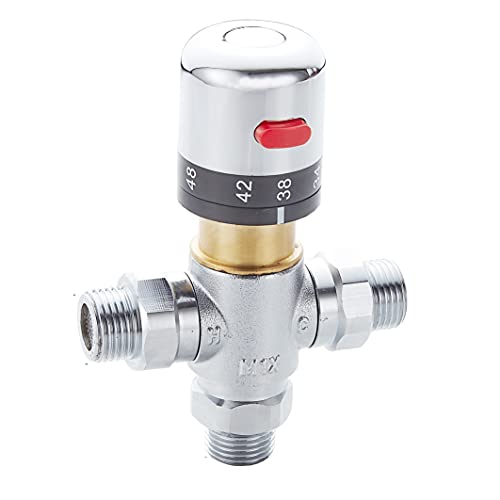
The Fyeer 3-Way Thermostatic Mixing Valve offers a straightforward approach to tempering in bathroom fixtures and showers. It features DN15 G1/2″ male thread connections and a robust brass body with a plastic knob for temperature adjustment. The valve emphasizes a defined temperature range with markings for cold and hot inlets, and includes check valves inside both inlets for backflow protection. The safety mechanism is reinforced by a stated temperature stop at 38°C, helping prevent accidental overheating at the outlet and providing predictable performance in daily use.
- Brass body with plastic adjustment knob
- DN15 G1/2″ male thread connections
- Inlet temperature markings; outlet safety stop at 38°C
- Internal check valves in both inlets
Installation considerations: This valve is particularly suitable for bathroom fixtures where a compact 3-way tempering solution is needed. Verify compatibility with supply lines and ensure the mini-control valve fits within the available space. The temperature stop adds a layer of safety, but users should calibrate the cold and hot inlets to achieve the desired mixed temperature for showers and sinks alike.
Buying Guide
Key considerations when selecting a thermostatic mixing valve include compatibility with your existing piping, the desired connection type, and the installation location. Below are the main factors to assess, followed by practical recommendations for different scenarios.
Connection Type and Compatibility
TMVs come with a variety of connection options, including 1/2″, 3/4″, and 3/8″ sizes, as well as union, SharkBite, crimp, and NPT configurations. Choose a valve that matches your current piping: push-to-connect or SharkBite unions work well for retrofit projects, while crimp or soldered connections may be preferred for new installations. Confirm compatibility with copper, CPVC, PEX, or HDPE lines, and verify whether adapters are needed for seamless integration with existing fixtures.
Temperature Range and Safety Features
A core function of any TMV is to deliver safe, tempered water. Look for a valve that maintains a stable temperature around 120°F (49°C) for general use, with a provision to adjust or limit higher outlet temperatures if needed. Temperature markings, visible adjustment controls, and locking mechanisms help prevent accidental changes, which is especially important in homes with children or shared spaces.
Materials, Durability, and Certifications
Lead-free brass is the standard for reliability and safety in residential plumbing. Check for corrosion resistance, particularly in areas with hard water or mineral buildup. Certifications and compliance with local codes are also important, as they influence warranty coverage and code acceptance during inspections. Durable components like integrated check valves and filters reduce maintenance needs by preventing backflow and debris intrusion.
Installation Location and Space Considerations
Under-sink installations require compact valve profiles and easy access for adjustments and maintenance. Tank booster TMVs may need space near a water heater or utility area, while whole-house or retrofits might call for valves with larger flow ratings and robust mounting options. Always measure available space and verify that the valve’s inlet/outlet orientations align with your piping run to minimize displacement and ensure reliable operation.
Performance and Maintenance
Flow rate (gallons per minute) and response time affect how quickly tempered water is delivered to fixtures. Valves with integral filters and check valves reduce debris-related issues and backflow. Plan for periodic inspections of seals, O-rings, and adjustment caps to maintain performance. When possible, choose a model with a straightforward disassembly process for easier maintenance.
Cost, Warranty, and Supplier Support
While price is a consideration, prioritize durability, material quality, and compatibility with your system. A reputable warranty and responsive supplier support can save time and money on future replacements or repairs. Reading user reviews and manufacturer specifications helps align expectations with real-world performance.
In short, the best thermostatic mixing valve for your home depends on your installation type, available space, and piping materials. The products highlighted above offer a range of connection options and temperature-control features to address common residential needs, from compact under-sink installations to more robust tank booster configurations. Always validate compatibility with your local plumbing codes and consult a licensed professional if you’re unsure about specific installations.