Best TPU 3D Printer Filaments for Flexible, Durable Parts
TPU filaments offer a balance of flexibility, durability, and impact resistance that makes them ideal for wearable parts, phone accessories, flexible housings, and prototyping that needs a little give. The five filaments below are among the most reliable choices for American makers using common FDM printers. Each option emphasizes easy handling, strong layer adhesion, and consistent diameter tolerance to minimize jams and blobs. Read through the highlighted features to compare elasticity, print reliability, drying needs, and storage recommendations before choosing your next TPU spool.
| Product | Brand | Notable Feature |
|---|---|---|
| SUNLU TPU Filament 1.75mm, 1kg | SUNLU | Fast-printing TPU with 95A hardness; smooth layer adhesion |
| Geeetech TPU Filament 1.75mm, 1kg | Geeetech | 24-hour pre-drying, vacuum-sealed packaging; 95A elasticity |
| OVERTURE TPU Filament 1.75mm, 1kg | OVERTURE | Clog-free, bubble-free printing; 95A softness |
| Comgrow TPU Filament 1.75mm, 1kg | Comgrow | Dimensional accuracy ±0.02mm; flexible, durable |
| AMOLEN Glow In The Dark TPU 1.75mm, 1kg | AMOLEN | Glow-in-the-dark effect; 95A elasticity |
SUNLU TPU 1.75mm Filament — 95A, Black

SUNLU’s fast-printing TPU is designed to balance softness and resilience for flexible parts. The 95A Shore hardness supports robust yet bendable prints suitable for wearable cases, lightweight robotics components, and fashion prototyping. The filament emphasizes strong layer adhesion to deliver smooth surfaces and reliable interlayer bonding, reducing visual defects on complex shapes. The 1kg spool is marketed as compatible with most FDM printers, making it a versatile choice for hobbyists and professionals alike.
- TPU for fast printing — prints up to three times faster than standard TPU filaments, ideal for flexible applications and rapid prototyping.
- TPU 3D printing filament — Shore hardness 95A, offering a balance of softness and resilience for everyday wear and tear.
- Excellent layer adhesion — optimized bonding with a smooth finish for durable parts.
Geeetech TPU Filament 1.75mm — 95A, Clear Blue
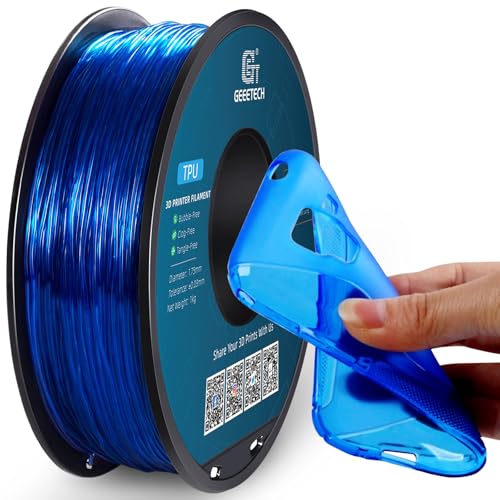
Geeetech’s TPU filament combines high elasticity with practical printability. The 95A hardness supports flexible yet durable parts that resist daily wear and minor impacts, making it suitable for phone cases, insoles, watch bands, and lightweight mechanical components. A key feature is the manufacturer’s claim of a clog-free, bubble-free process thanks to a pre-drying regimen and a vacuum-sealed package. The spool is designed for easy storage and continued performance after opening, with recommended drying to maintain print consistency.
- 95A high-elasticity & wear-resistance — robust enough for flexible, everyday objects.
- Clog-free & bubble-free printing — 24-hour pre-drying and vacuum sealing reduce jams and defects.
- Strong layer adhesion & smooth surface finish — improves print quality and durability over time.
OVERTURE TPU Filament 1.75mm — 95A, Black

OVERTURE’s TPU is engineered for reliable flexible printing with a consistent 95A hardness. The filament emphasizes excellent layer adhesion to produce coherent, well-bonded layers and a smooth finish on curved surfaces. A patented clog-free formula helps minimize extrusion issues, and all spools are thoroughly dried before packaging, then vacuum-sealed to preserve performance. Storage recommendations include keeping the filament in sealed containers with desiccants to prevent humidity-related issues.
- High-quality TPU material with 95A hardness for versatile flexible parts.
- Excellent layer adhesion and smooth finish for accurate, durable prints.
- Clog-free & bubble-free design with 24-hour drying and vacuum packaging.
Comgrow TPU Filament 1.75mm — 95A, Black

Comgrow’s TPU line emphasizes dimensional accuracy and consistent performance. With a 1kg spool and a 95A hardness rating, this filament is suited for flexible yet sturdy parts like protective cases, gaskets, and soft-touch components. The product notes highlight a ±0.02 mm dimensional accuracy range, which helps with fitment for assemblies that rely on precise tolerances. It is positioned as compatible with most FDM printers, enabling broad use across home and professional setups.
- MATERIAL SPECS: Premium TPU at 1.75mm, 95A Shore hardness for a balanced flexible result.
- DIMENSIONAL ACCURACY: ±0.02 mm ensures reliable part-to-part fit in assemblies.
- Fits most FDM printers for broad compatibility and straightforward printing.
AMOLEN Glow In The Dark TPU 1.75mm — 95A, Green
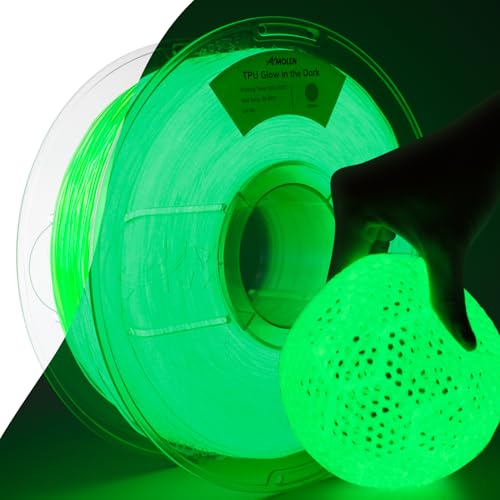
AMOLEN’s glow-in-the-dark TPU adds an eye-catching effect to prints, making it ideal for display pieces, novelty items, or nighttime visibility projects. The filament is rated at 95A, delivering a good mix of softness and resilience for flexible parts. It also emphasizes dimensional accuracy at 1.75mm +/- 0.02mm, aiming for consistent extrusion and reliable prints across various printers. The spool packaging is designed to support long print runs with minimal moisture exposure.
- Glow in the dark — adds a striking, illuminated effect to prints for night-time visibility.
- High elasticity & soft 95A hardness for flexible, durable parts.
- 1.75 mm ± 0.02 mm dimensional accuracy for consistent extrusion across printers.
Buying Guide
Choosing the right TPU filament depends on how you plan to use it, your printer’s setup, and how much handling you want during the printing process. The following considerations cover multiple viewpoints—from performance and reliability to ease of use and project-specific needs.
- Hardness versus flexibility: A 95A TPU provides a strong balance of softness and structural integrity. For highly flexible parts like seals or wearables, a lower hardness may offer more bendability, while 95A is well-suited for general flexible components.
- Dimensional tolerance: Filaments with tighter tolerances (±0.02–0.03 mm) help ensure parts fit together when printed in multiple pieces. If you’re printing assemblies, prioritize filaments with higher dimensional accuracy.
- Drying and storage: TPU absorbs moisture, which can cause bubbles and poor extrusion. Many top filaments arrive pre-dried or vacuum-sealed with desiccants. Drying guidelines (if provided) typically involve controlled heat in a dedicated dryer at moderate temperatures for several hours post-opening.
- Printer compatibility and drive system: Most TPU filaments are 1.75 mm and work with direct-drive or well-tuned Bowden systems. Flexible filaments may benefit from a direct-drive arrangement and slower travel speeds to reduce grinding and stringing.
- Print settings and speed: TPU prints well at moderate speeds with steady retraction and adequate cooling. Starting with manufacturer-recommended temperatures and speeds helps minimize clogs and artifacts, then fine-tune for your printer and nozzle size.
- Surface finish and post-processing: Surface quality depends on layer adhesion, cooling, and print temperature. If you want a smoother surface, enable slower cooling and adjust extrusion flow to avoid thin lines or blisters.
- Color and specialty finishes: Filaments offering glow-in-the-dark effects or transparent finishes open up creative options for art, demonstrations, and consumer products. Consider whether you need specialty features and how they impact print reliability.
- Packaging and long-term storage: Vacuum-sealed bags with desiccants help preserve filament quality. After opening, reseal in airtight containers with desiccants to prevent moisture uptake between print sessions.
The five filaments above provide a range of printing experiences—from fast, rigid-friendly TPU to glow-in-the-dark and highly elastic variants. When selecting, align your choice with the intended application, your printer’s capabilities, and how much effort you want to invest in drying and storage. By balancing hardness, tolerance, and packaging, you can maximize print success and minimize downtime on your next flexible project.