Best Waterproof House Wrap for Durable, Weatherproof Walls
Selecting the right waterproof house wrap is essential for protecting wall assemblies from moisture, air leakage, and temperature swings while supporting energy efficiency. The five products highlighted here offer a practical range—from heavy-duty membranes to sealing tapes and a radiant-barrier option for attics. Each entry summarizes key features and installation considerations to help builders and homeowners compare options and make informed choices for American homes.
| Product | Brand | Key Benefit |
|---|---|---|
| MFM SubSeal40 Waterproof House Wrap | MFM TOYS | 40 mil, high elongation, moisture protection |
| MFM SubSeal60 Waterproof House Wrap | MFM TOYS | 60 mil, enhanced durability, moisture protection |
| Prime Wrap PR-4575 House Wrap | CS Fabric | Exact size, code-compliant, reduces air transfer |
| ATack Construction Seaming Tape Red | ATack | Long-term sealing, does not split, multi-surface adhesion |
| NASA TECH Radiant Barrier White 100sqft | AES | High reflectivity, blocks radiant heat |
MFM SubSeal40 Waterproof House Wrap
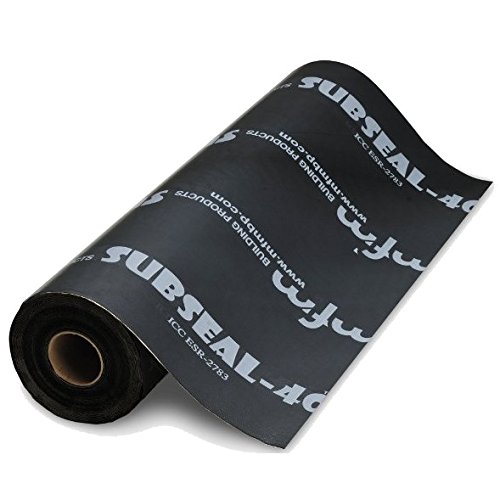
The SubSeal40 wrap combines a moderate thickness with high elongation to accommodate building movement. This 40-mil membrane is designed to resist moisture intrusion while maintaining flexibility so the wrap can stretch and contract with seasonal changes without cracking. The outer film surface is formulated to be compatible with most construction sealants, which supports quicker, more reliable joint sealing during installation.
Ideal for below-grade foundations and structures where sustained moisture exposure is a concern, SubSeal40 aims to provide a reliable barrier against dampness at the wall assembly. Contractors commonly pair this wrap with appropriate seam tapes and sealants to create continuous moisture control along corners and joints. When installing, ensure proper overlap and secure edges to minimize air leakage paths.
- 40 mil thickness for balanced durability and flexibility
- High elongation to move with building surfaces
- Sealant-compatible outer surface
- Designed for extreme moisture protection and below-grade use
Orientation and handling steps matter: keep the wrap clean and free of sharp debris that could abrade the film, and follow local building codes for overlaps and fastener spacing to maximize performance over time.
MFM SubSeal60 Waterproof House Wrap

The SubSeal60 build rises to 60 mil thickness, delivering enhanced puncture resistance and moisture barrier performance while retaining enough flexibility to move with the surface. The outer surface remains compatible with common sealants, facilitating durable, long-lasting joints in high-moisture environments or locations with significant temperature variation.
This wrap is particularly well-suited for wall assemblies in climate zones with heavy rain or humidity, where a thicker barrier adds an extra margin of protection. As with any house wrap, it benefits from proper seam sealing and careful installation of corner and joint areas to prevent air and water intrusion.
- 60 mil thickness for increased durability
- High elongation to accommodate movement
- Sealant-compatible surface for easy sealing
- Specially formulated for extreme moisture protection
In practice, pair SubSeal60 with compatible tapes and sealants, and pay attention to UV exposure recommendations and service life to ensure long-term envelope performance.
Prime Wrap PR-4575 House Wrap

Prime Wrap PR-4575 is marketed as a precise size solution, shipped on a 4.5-foot tube so the 9-foot length can be unfolded from the wrap. The packaging emphasizes standards and codes compliance, giving installers confidence in meeting building regulations while securing the barrier against air transfer that can undermine insulation.
Key benefits highlighted include reduced temperature loads by limiting air movement through the wall cavity, which helps the interior insulation perform its job more effectively. If you are retrofitting or building in regulated areas, PR-4575 provides an approach designed to align with common national building codes and performance expectations.
- Exact size specifications with practical roll design
- Meets standards and codes for safety and performance
- Reduces air transfer to improve insulation effectiveness
- Blocks heat transfer and supports energy efficiency
When using PR-4575, verify compatibility with local codes and ensure proper unfolding and alignment to maximize seal integrity across the entire wall perimeter.
ATack Construction Seaming Tape Red

ATack Red Construction Seaming Tape is a heavy-duty, pressure-sensitive tape designed to seal seams in vapor barriers, house wraps, foam board insulation, and related joints. The tape is engineered to deliver long-term sealing up to 15 years and features a polyethylene backing that resists curling, breaking, or splitting during installation and use.
Adhesion is described as extra sticky across a variety of surfaces—including plastic, wood, PVC, and metal—helping to block moisture, air, and drafts around basements, crawlspaces, windows, doors, and HVAC gaps. It is designed to be durable yet removable with minimal residue on many surfaces, which can simplify adjustments during construction or retrofits.
- Heavy-duty, waterproof pressure-sensitive adhesive
- Long-term sealing up to 15 years
- Does not split lengthwise midroll
- Excellent adhesion on multiple surfaces; removable and residue-free
When using this tape, prepare clean, dry surfaces and apply with firm pressure along full seam lengths to ensure adhesive contact and a durable seal against moisture intrusion.
NASA TECH Radiant Barrier White 100sqft

This NASA TECH product represents a radiant barrier option rather than a traditional moisture barrier. It is described as a solid white, non-perforated barrier designed to block radiant heat with a double-sided reflective surface and 100 square feet of coverage. The material is positioned for attic or retrofit use to reduce cooling and heating loads by reflecting thermal radiation away from living spaces.
Note that while effective at thermal performance, it is not a stand-alone moisture barrier for wall assemblies. When used in conjunction with a compliant wall-wrap system, it can contribute to overall building envelope performance by reducing heat transfer and improving HVAC efficiency.
- Non-perforated, solid white radiant barrier
- Blocks a high percentage of radiant heat (reflectivity-focused)
- 100 square feet of coverage
- Suitable for retrofits, attics, and certain wall assemblies as a supplementary barrier
For best results, pair radiant barriers with an appropriate moisture barrier or house wrap in regions where both moisture control and energy efficiency are priorities.
Buying Guide
Key considerations help determine which products fit a given project. The following points address different roles within a wall assembly and offer a framework for comparing options.
- Purpose and role in the wall assembly: Water and air barriers are typically provided by house wraps, while tapes secure seams. Radiant barriers primarily address thermal performance not moisture control. Combine these elements as needed for climate and code requirements.
- Thickness and durability: SubSeal40 and SubSeal60 differ in mil thickness, affecting puncture resistance and flexibility. Choose based on expected moisture exposure, soil contact, and construction movement.
- Seam integrity and sealing performance: Seaming tapes like ATack Red improve joint durability, reduce air leakage, and help prevent moisture intrusion at seams. Ensure surface compatibility and proper application.
- Code compliance and standards: Products such as Prime Wrap PR-4575 emphasize meeting standards and codes. Verify local building codes and manufacturer warranties when selecting materials for new builds or renovations.
- UV exposure and installation time: Some wraps are designed for longer outdoor exposure; others require quick installation and coverage to minimize UV damage. Plan installation steps to maintain barrier integrity during construction.
- Surface compatibility: Sealants and tapes must bond well with the chosen wrap. Review compatibility data to avoid delamination or adhesive failure at joints and corners.
- Energy and moisture balance: A thicker wrap or barrier may reduce air leakage but is not a substitute for proper ventilation and drainage. Use a holistic approach to energy efficiency and moisture management.
- Cost and availability: Budget considerations include material thickness, roll length, and accessory components (tapes, sealants). Factor in long-term maintenance and potential warranty coverage.
- Installation best practices: For seals, overlaps, and corners, ensure clean, dry surfaces and consistent pressure during application. Avoid stretching too tight and keep edges protected from damage during construction.
- Complementary barriers: Radiant-barrier products can complement moisture barriers in attics and exposed roof assemblies, but they should not replace proper wall moisture protection.
The selection process should weigh climate-specific moisture risks, building codes, and the intended lifetime of the barrier system. By understanding the roles of each product—whether as a primary moisture barrier, seam sealant, or energy-efficient add-on—homeowners and builders can assemble a wall envelope that resists water intrusion, minimizes air leaks, and supports comfort and energy savings over the life of the structure.