Best Wood Hardener for Rotted Wood to Restore and Reinforce Damaged Timber
Wood rot and decay threaten the integrity of structures, furniture, and framing. A reliable wood hardener strengthens weakened fibers, seals remaining pores, and creates a solid base for fillers and finishes. This guide evaluates five leading products designed to stabilize rotted wood, explaining how each penetrates, reinforces, and prepares damaged timber for repair. Details below cover application methods, compatibility with epoxy pastes and fillers, dry times, and practical considerations for interior and exterior projects. Use this overview to choose a product that matches your wood condition, moisture exposure, and finish plans.
| Product | Brand | Core Benefit |
|---|---|---|
| PC-Petrifier Water-Based Wood Hardener (16 oz) | PC Products | Repairs insect- or rot-damaged wood; penetrates pores; no mixing required |
| Minwax High Performance Wood Hardener | Minwax | Deep penetration; resin reinforces fibers; seals moisture |
| Bondo Rotted Wood Restorer (8 oz) | 3M | Stops rot; creates hard surface; base for fillers |
| PC-Products Wood Repair Epoxy Paste + Wood Hardener Kit | PC Products | Bundle of hardener and wood repair paste for comprehensive repairs |
| J-B Weld Wood Restore Liquid Hardener | J-B Weld | Quick-drying liquid; reinforces fibers; prepares wood for filler |
PC-Petrifier Water-Based Wood Hardener

PC-Petrifier is a milky, water-based wood hardener designed to strengthen wood damaged by rot or insects. It penetrates into the pores of soft or decayed wood and stabilizes the structure without requiring mixing. The product is applied by brushing, spraying, or injection, allowing for control in difficult-to-reach areas. Because it hardens as it dries, it provides a solid base for subsequent fillers and finishes. It’s suitable for a range of projects, including window sills, beams, and trim. The liquid form minimizes odor relative to solvent-based options, and its penetrating action helps reduce the risk of further decay when used as part of a broader repair plan.
Minwax High Performance Wood Hardener

Minwax High Performance Wood Hardener penetrates deep into decayed fibers and uses a special resin to bind and reinforce the wood. The formulation aims to seal against moisture intrusion and harden the damaged area into a rock-solid base suitable for lifting and supporting fillers. It is designed for use on interior or exterior rotted wood and is intended to be applied before applying Minwax High Performance Wood Filler. The emphasis on deep penetration and fiber reinforcement makes it a popular choice for structural repairs where stiffness and moisture resistance are priorities.
Bondo Rotted Wood Restorer

Bondo Rotted Wood Restorer is designed to stop rot and harden soft, rotted wood fibers, creating a solid base for subsequent repair work. The formula penetrates deeply into spongy wood, stabilizing decayed areas to prevent further deterioration. After hardening, the product supports the application of Bondo Wood Filler or other fillers for a smooth finish. Its compatibility with stain and paint finishes makes it suitable for both structural repairs and cosmetic restoration on interior and exterior wood projects.
PC-Products Wood Repair Epoxy Paste And Wood Hardener Kit
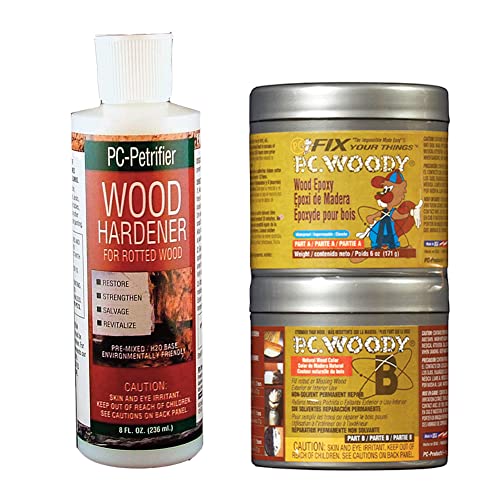
This bundle combines PC-Petrifier with PC-Woody wood repair epoxy paste. PC-Petrifier acts as a deep-penetrating hardener that strengthens deteriorating wood, while PC-Woody provides a repair paste to fill gaps and rebuild damaged sections. The kit is versatile for restoring window sills, frames, beams, columns, and trim, enabling a cohesive approach to rotted wood repair. The combination supports both stabilization and filling, making it convenient for more extensive repairs that require both hardening and structural rebuild.
J-B Weld Wood Restore Liquid Hardener
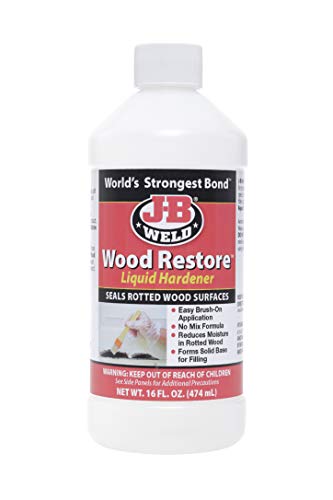
J-B Weld Wood Restore Liquid Hardener is a quick-drying formula designed to seal and reinforce decayed or rotted wood. It helps reduce moisture in affected areas and forms a solid base for subsequent filler work. Professionals often use this product as a preparatory step before applying wood fillers, providing stronger bonding and improved longevity. The liquid formulation is known for easy brush-on application and a no-mix requirement, simplifying repairs where time or mixing equipment is limited.
Buying Guide
Key factors when selecting a wood hardener include the extent of rot, wood type, and whether the project is interior or exterior. Deep-penetrating, water-based formulations reduce moisture ingress and minimize odor, while solvent-based products may offer faster cures in some environments. Consider how well the hardener pairs with fillers or epoxy pastes you plan to use, as compatibility affects bond strength and durability. Surface prep is essential: remove loose fibers, clean dust, and ensure the wood is dry before application. For structural rot, a two-step approach—hardener first, then epoxy paste or wood filler—often yields the best long-term results.
Other considerations include cure time, VOC levels, and finish compatibility. Some products dry clear or milky, which can influence staining or painting plans. Exterior projects benefit from products with enhanced moisture resistance and UV stability, while interior repairs may prioritize low odor and ease of application. Availability and packaging (16 oz vs. 8 oz or bundles) can affect project budgeting and scheduling. Finally, assess whether you need a single-product solution or a kit that combines hardener with a repair paste for a complete restoration workflow.